Oct 19, 2026
How to Adjust a Stainless Steel Ring Size at Home
Stainless steel rings resist traditional resizing - here's what you can honestly adjust at home with inserts and cushions, and when to reorder instead.
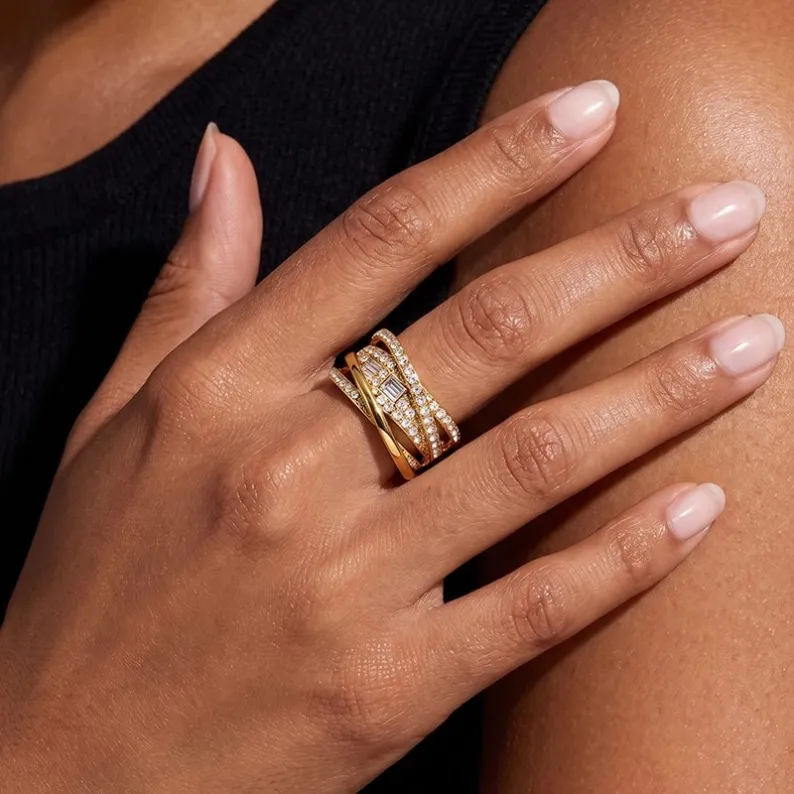
Stainless steel's hardness is the reason these rings keep their finish for years - and the reason traditional resizing genuinely does not work the way it does for gold or silver, so your honest at-home options are all about making a loose ring fit, not stretching a tight one bigger.
Rings arrive from an online order, a market stall or a gift box, and sometimes the size is wrong. With gold or silver the answer is a jeweler's bench; with stainless steel it changes - and pretending otherwise is how rings get damaged. Here is what you can honestly adjust at home, what you cannot, and how to size correctly next time.
The Hard Truth About Resizing Stainless Steel
Most local jewelers cannot resize a hardened stainless steel band, and the few who can will tell you the same thing: prevention beats correction.
Gold and silver sit low on the Mohs hardness scale, around 2.5 to 3, which is why jewelers can cut them, add or remove a sliver of metal, solder the joint and re-round the band. Hardened stainless steel sits far higher - roughly 5.5 to 6.5 - and work-hardens further when bent or forced. Tools that shape soft precious metals struggle or slip on it. Soldering means intense local heat, which discolors the alloy and destroys PVD coatings, and stretching a hardened band risks cracking it, because work-hardened steel has far less give than annealed metal.
This is not a defect - it is the same property that keeps a ring scratch-free for years. But it flips the strategy: with steel, the fix happens before purchase, not after. Sellers who say this openly earn more trust.
What You Can Do at Home: Inserts and Cushions for a Loose Ring
A loose ring is a genuinely solvable problem at home - plastic inserts and spiral cushions take up the slack safely in minutes.
Ring Size Adjuster Inserts, Step by Step
The most common fix is a clear plastic or silicone insert that slides onto the lower part of the band, building up its inner thickness.
- Clean and dry the inside of the ring so the insert grips properly.
- Pick the width that matches your band; a narrow insert on a wide band slides around.
- Slide the insert on and position it at the bottom center of the band.
- Test the fit. The ring should pass the knuckle with a slight tug but resist spinning freely on the finger.
- Rotate the insert so its thickest part sits against the palm side of the finger, where it stops rotation best.
- Replace worn inserts every few months - they compress with wear, and a flattened insert helps no one.
Spiral Cushions and Sizing Beads
Spiral cushions wind around the band like a tiny spring and suit anyone who finds flat inserts bulky. Bead-style adjusters - small fixed bumps inside the band - suit a slight gap: at-home versions clip or slide on, while permanently added metal beads are a workshop job. All three approaches reduce the ring's inner circumference by roughly a quarter to half a size - exactly where most "it spins" complaints live.
What You Cannot Do at Home
Cutting or stretching a hardened stainless steel band is not a DIY project - it is how rings get ruined.
Cutting requires hardened saw blades and a controlled grip most households lack; one slip scores the band, or worse. Stretching is worse: hardened steel does not flow like soft gold, so forcing it with pliers or a mallet stresses the metal until it cracks - often days later, at the thinnest point. Heat is equally fatal: it destroys PVD 18K gold plating, which is applied in a vacuum chamber and cannot be touched up at home. If a ring is too tight, no insert or trick helps; the honest fix is a replacement in the correct size.
Matching the Fix to the Problem
Inserts solve looseness; nothing at home solves tightness - and that asymmetry should shape every buying decision.
Problem | At-home fix | Realistic result |
|---|---|---|
Slightly loose - spins but stays on | Insert or spiral cushion | Takes up about a quarter to half a size; comfortable as a daily fix |
Much too loose - slides off on its own | Thicker insert as a stopgap | Helps short-term; reordering the correct size is the real answer |
Seasonal looseness - cold weather, weight change | Removable insert you can take off | Flexible, adapts as your finger changes through the year |
Too tight - leaves a deep mark, hard to remove | None that is safe | Replace with the next size up or an adjustable design |
The last row matters most for gift buyers: when size is uncertain, choose designs with give rather than smaller sizes.
The Professional Route - and the Smarter One
A jeweler's mandrel tells you the true size of a ring in seconds, and ordering the right size costs less than any repair.
If you are unsure whether a ring is truly off-size or just badly seated, any jewelry shop can measure it on a mandrel - a tapered rod marked with standard sizes. Slide the ring down; where it stops is its size. Compare that with your finger measurement from the next section and the mismatch tells you what to order.
For sellers, the smarter route is upstream: stock a proper size run rather than a single size, and offer open or adjustable designs where sizing confidence is low. Manufacturers such as IVANDA produce rings in standard size ranges and accept OEM/ODM orders, so a brand can specify the size mix its customers actually need.
Size It Right Before You Order
Ten minutes with a strip of paper prevents every problem in this article.
- Cut a strip of paper about 10 cm long, or use a thin, non-stretchy string.
- Wrap it around the base of your finger - snug, not tight. It should slide over the knuckle with slight resistance.
- Mark where the strip overlaps, lay it flat, and measure the length in millimeters against a ruler.
- Convert to a size: the millimeter length is your finger's circumference. Divide it by 3.14 to get the inner diameter, then match it to a standard US or EU ring size chart.
Four habits make the number trustworthy. Measure in the evening, when fingers are largest - morning measurements run small. Measure at room temperature, because cold shrinks fingers temporarily. If your knuckle is wider than the base of your finger, measure both and choose the size that clears the knuckle, even if it spins slightly at the base - an insert fixes that spin. And measure twice, on two different days, before ordering.
Frequently Asked Questions
Can a jeweler resize a stainless steel ring?
Sometimes, but far less often than with gold or silver. Hardened steel resists the cutting, soldering and stretching traditional resizing relies on, and heat can discolor the alloy or destroy PVD coatings. Many general jewelers decline the job - which is why ordering the right size matters more with steel than with soft metals.
Do ring size adjusters damage the ring?
Quality plastic or silicone inserts do not scratch steel. The main risk is trapped moisture: an insert left on for months holds sweat against the band. Remove it occasionally, dry the ring fully and refit, and replace flattened inserts rather than stacking several on one band.
How much can an insert reduce a ring's effective size?
Most inserts and spiral cushions take up roughly a quarter to half a size. Beyond that they become bulky and uncomfortable, and the ring sits oddly on the finger. If a ring is more than half a size too loose, the better answer is reordering the correct size rather than padding the band.
What should I do if my stainless steel ring is too tight?
Nothing at home safely enlarges a hardened steel band - forcing it risks cracking, and heat ruins plating. Remove it with soapy water if needed, then replace it with the next size up or an open, adjustable design. Treat the too-small ring as a sizing lesson, not a project.
How do I find my ring size without a ring sizer?
Use the paper-strip method: wrap a strip around the base of your finger, mark the overlap, measure the length in millimeters, divide by 3.14 to get the diameter, and match it to a standard size chart. Measure in the evening, at room temperature, and repeat on a second day before ordering.
Wholesale Stainless Steel Jewelry from IVANDA
Looking for a reliable stainless steel jewelry supplier? IVANDA supplies 316L pieces with PVD 18K gold plating - waterproof, skin-friendly and made for everyday wear. MOQ 60 pcs per style, in stock and ready to ship, with OEM/ODM services for custom designs. Message us on WhatsApp or email sales01@ivanda-fa.com for the latest catalog and wholesale prices.