Oct 19, 2026
Bangles vs Chain Bracelets: Which Suits Your Wrist?
Bangles or chain bracelets? Fit, comfort, sound, stacking and sizing compared - plus the two-piece wrist formula that uses both to full effect.
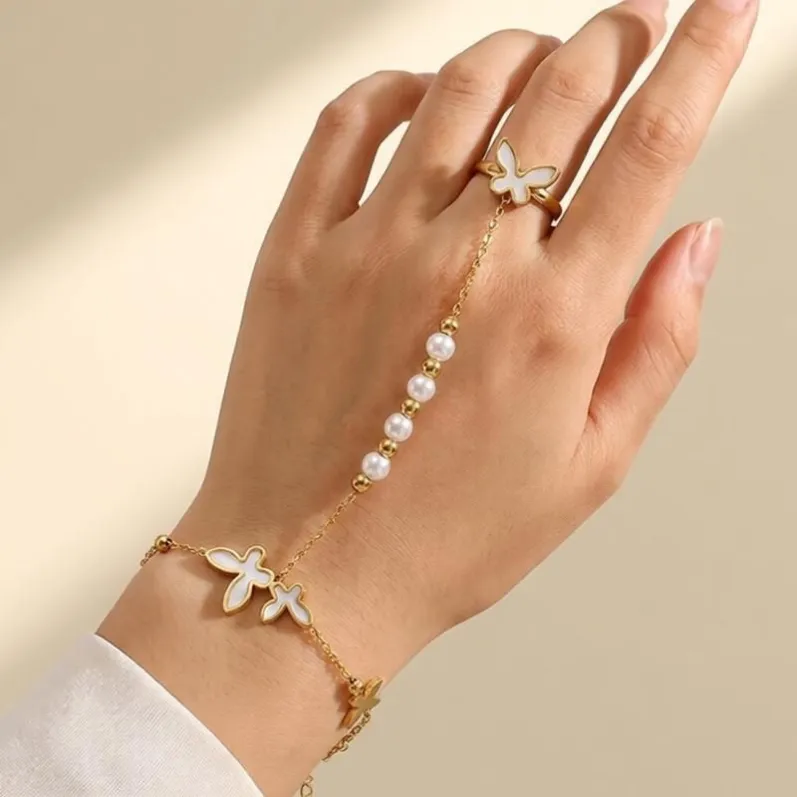
Every practical difference in the bangles vs chain bracelet question flows from one structural fact - a bangle is a rigid loop that holds its shape, while a chain is a string of links that follows yours - so the better choice depends less on taste than on how you actually use your wrist. Style guides argue about outfits, but the real decision happens at the level of structure: a closed circle of solid metal versus a flexible line of links.
This guide compares the two honestly - fit, comfort, sound, stacking and durability - and ends with a formula for wearing both.
One Structural Difference Drives Everything
A bangle is a closed circle of solid metal. It keeps its shape, stands slightly off the wrist, and moves as a single piece. A chain bracelet is built from links: it has no shape of its own, drapes over the wrist bone, and folds wherever your hand folds.
From that single difference come everything else - how each style is sized, how it feels at a desk, how it sounds, how it stacks, and how it eventually fails. So "which one is better" is the wrong question; the useful one is which behavior suits your days.
You are not choosing between two styles of the same object - you are choosing between a structure that holds its shape and one that follows yours.
Bangle vs Chain Bracelet: Side by Side
Factor | Bangle | Chain bracelet |
|---|---|---|
Fit and sizing | Must pass over the hand; sized to the widest point of the hand, not the wrist | Sized to wrist circumference, often adjustable via extender links or clasp positions |
Daily comfort at a desk | Rigid circle can knock and click against desktops and keyboards | Drapes and folds with the wrist; near-silent at a keyboard |
Sound and movement | Swings visibly and audibly as one piece - part of its charm | Hugs the wrist; movement is subtle and quiet |
Layering behavior | Holds its circle, keeps spacing, stacks loud | Intertwines with neighbors; stacks easily but needs declumping |
Durability failure modes | Dents and scratches from hard knocks; can bend out of round | Snaps at its weakest link; links can snag on hair and knitwear |
Comfort is positional: rigid bangles reward wrists that gesture and move, chains reward wrists that type all day.
Stacking: Chains Stack Easy, Bangles Stack Loud
Stacking is where the structural difference becomes a styling difference.
Chains are the easiest stackers in jewelry. Because each one drapes and folds, several can share the same few centimeters of wrist, settling into each other's gaps. Their one weakness is tangling: thin chains braid themselves together over a day of wear and need untangling every time you take them off.
Bangles stack in the opposite direction. Each one holds a rigid circle, refuses to merge with its neighbors, and creates deliberate spacing as it moves. Three thin bangles announce themselves across a room in a way three fine chains never will - spacing, independent swing and sound are all part of the effect. Some wearers love that presence; others find it competes with everything else.
The classic mixed stack deliberately uses both behaviors: chains as the soft base layer that merges, bangles as the accent pieces that stay distinct. If you are building a stack on purpose rather than by accident, the spacing and balance principles in this bracelet stacking guide transfer directly.
Chains merge into one soft mass while bangles stay separate and loud - decide which of those two effects you want before you add a second piece.
Sizing: A Bangle Measurement Is Not a Chain Measurement
The most common sizing mistake in bracelets is measuring a bangle like a chain.
A chain only needs to encircle the wrist, so you measure wrist circumference and add a comfort allowance - typically half a centimeter to a full centimeter of slack, a little more for chunky links. Get it slightly wrong and an extender link or a different clasp position usually rescues the fit.
A bangle must do something harder: pass over the entire hand, knuckles included, every time you put it on or take it off. The number that matters is therefore the width across the widest part of the hand, usually measured with the thumb tucked across the palm. A bangle sized only to the wrist will either refuse to go on or slide off at every handshake, and no clasp can fix a closed circle.
The full method, with both measurements explained, is in how to measure your bracelet size - two minutes worth spending before ordering either style.
Measure your hand for bangles and your wrist for chains - using one number for both is the fastest route to a bracelet that never leaves the drawer.
Who Suits Which
Honest matching by lifestyle beats personality quizzes:
- Desk-bound days: chains. Rigid circles and keyboards do not mix well; a chain folds quietly under the wrist and stays out of the way.
- Expressive, gesturing style: bangles. The visible swing and the sound amplify every movement - the piece does some of the talking.
- Small wrists that want presence: a bangle stands off the wrist and reads larger than its actual metal weight suggests.
- Minimalist single-piece wearers: one clean bangle is a complete look on its own; one fine chain reads quieter and more delicate.
- Dedicated layerers: chains, which merge gracefully as they multiply, or the bangle-plus-chain combination below.
Durability deserves honesty: neither style is indestructible. Bangles collect dents from hard knocks; chains wear at links and clasps, can snap at their weakest point or snag on hair and knitwear. Hard steel resists both failure modes better than soft alloys - what realistically ages a steel piece is covered in how long a stainless steel bracelet lasts.
Chains suit wrists that work at desks and bangles suit wrists that work a room - an honest picture of your typical day beats any style rule.
Having Both: The Two-Piece Wrist Formula
You do not have to choose a side. The two-piece formula pairs one chain with one bangle on the same wrist:
- Chain as the base, worn closer to the wrist bone, where its drape sits naturally.
- Bangle worn beyond it, toward the forearm, so its rigid circle can swing without striking the chain's clasp.
- Match the finish family - steel with steel, or PVD 18K gold plated with PVD 18K gold plated - so the pair reads as one set rather than two accidents.
- Add a second chain before adding a second bangle. Rigid pieces raise a stack's visual mass quickly, while chains fill space quietly.
The result balances the two behaviors: the chain supplies soft movement and quiet, the bangle structure and sound, and neither has to do both jobs alone.
One chain plus one bangle, separated by a centimeter of wrist, gives you both behaviors in a single stack without the clutter.
Frequently Asked Questions
Should I size a bangle the same way as a chain bracelet?
No. A chain wraps the wrist, so wrist circumference plus a comfort allowance works. A bangle must pass over the knuckles, so measure the hand at its widest point with the thumb tucked in. Sizing a bangle to the wrist alone leaves you with a piece you cannot physically put on.
Do bangles or chains last longer?
They fail differently, so the answer depends on your days. Bangles dent and scratch when knocked hard; chains wear at links and clasps, can snap at their weakest link, and snag on hair and knitwear. Hard steel resists both better than soft alloys, and either style lasts for years with basic care.
Can I wear a bangle and a chain bracelet on the same wrist?
Yes, and it is the classic mixed stack. Wear the chain snug near the wrist bone and the bangle beyond it toward the forearm, so the rigid circle swings without striking the clasp. Matching finishes keep the pair reading as one deliberate set rather than two separate pieces.
Why is my bangle so much louder than my chain?
A bangle is a single rigid piece that swings as a whole and strikes whatever it meets, including the bangles stacked beside it. A chain distributes movement across dozens of small links, absorbing its own motion. If you work in quiet spaces, that difference alone may settle the choice.
Which style is better for everyday wear?
Whichever matches your day. Typing-heavy routines favor chains, which drape quietly and fold out of the way; active, gesturing routines show off bangles. Both survive daily wear well in hard steel, and neither is indestructible - bangles collect dents, chains eventually need a clasp check.
Wholesale Stainless Steel Jewelry from IVANDA
Looking for a reliable stainless steel jewelry supplier? IVANDA supplies 316L pieces with PVD 18K gold plating - waterproof, skin-friendly and made for everyday wear. MOQ 60 pcs per style, in stock and ready to ship, with OEM/ODM services for custom designs. Message us on WhatsApp or email sales01@ivanda-fa.com for the latest catalog and wholesale prices.