Oct 26, 2026
Geometric vs Organic Jewelry Designs: How to Choose
Geometric vs organic jewelry design compared: shapes, buyers, production differences in stainless steel and how to balance both in your line.
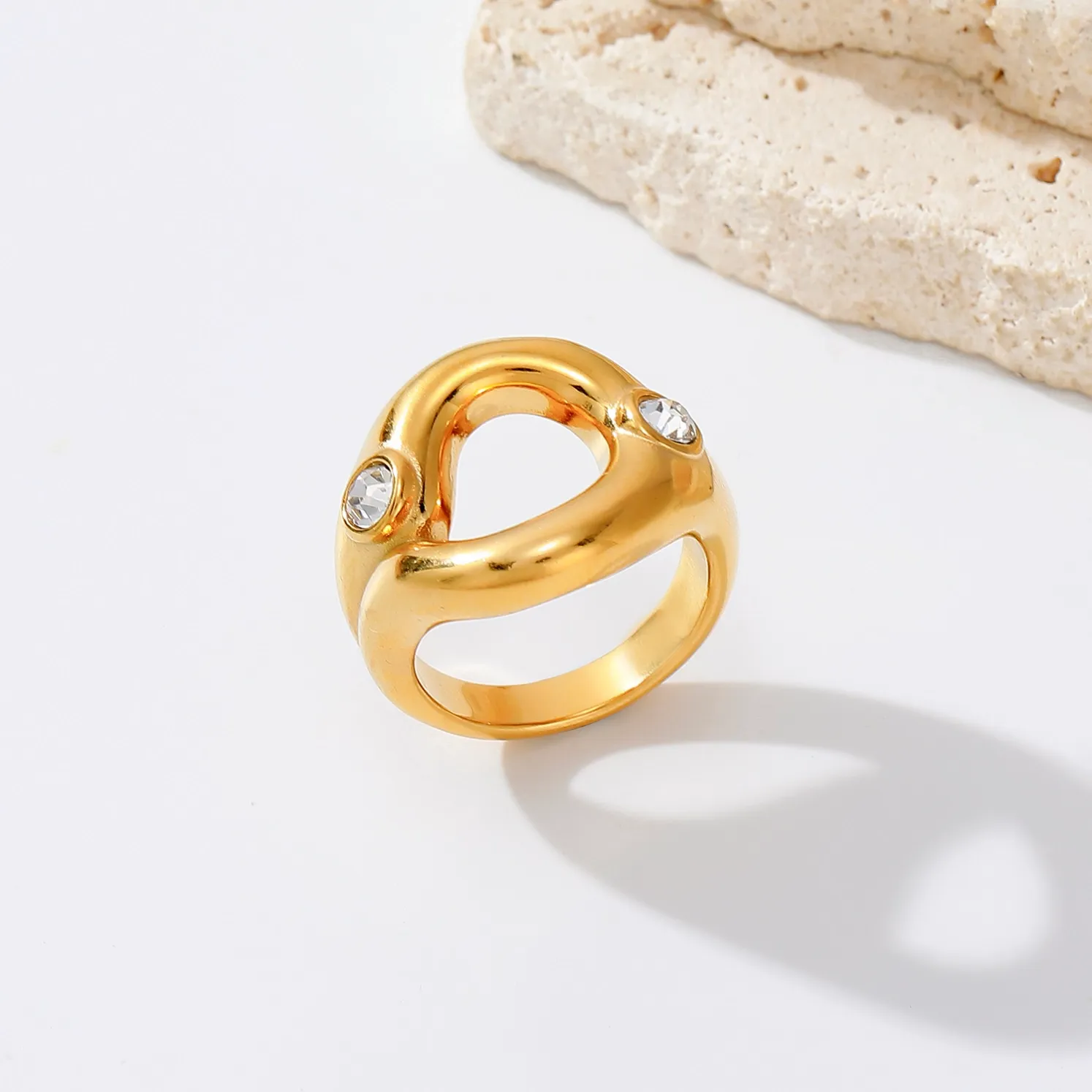
Geometric designs sell on clean modernity and style with the least effort; organic designs sell on uniqueness and emotional warmth — a healthy collection carries both in a deliberate ratio instead of drifting into one or the other.
Walk any jewelry fair and you'll see the same split everywhere: on one wall, hexagons, bars and perfect circles; on the other, hammered discs, free-form pendants and wave silhouettes. Geometric vs organic jewelry is one of the most fundamental forks in jewelry design, and the choice shapes everything downstream — your tooling, your finishes, your photography and, most importantly, who buys from you. This guide defines both styles, compares them side by side, and gives you a framework for deciding how much of each belongs in your line.
What Makes a Design Geometric?
Geometric jewelry is built from precise, mathematically clean shapes: circles, triangles, hexagons, bars, chevrons and arcs. Lines are straight or perfectly curved, symmetry is common, and surfaces are usually high-polish or uniformly brushed. Think of a minimalist bar necklace, a hexagon stud, or a ring band with a sharp square profile.
The style's appeal is order. Geometric pieces read as modern, architectural and intentional, which makes them the default language of minimalist jewelry. They also photograph cleanly — edges catch light in predictable ways — and they stack and layer with almost anything, because simple shapes don't argue with each other.
Geometric design is the common language of modern jewelry: it matches minimalist wardrobes, office dress codes and capsule collections with almost zero styling friction.
What Makes a Design Organic?
Organic jewelry borrows its forms from nature: free-flowing curves, irregular edges, hammered textures that catch light unevenly, leaf and wave silhouettes, and settings that follow the natural shape of a stone instead of forcing it into a standard cut. Asymmetry is not a flaw in this style — it's the point.
The appeal is emotion and uniqueness. An organic pendant feels hand-touched even when it's mass-produced, and no two hammered pieces catch light identically. Organic designs speak to customers who want jewelry to feel personal and expressive rather than sleek and neutral: boho wardrobes, artisanal aesthetics, and anyone tired of seeing the same minimalist bar on every wrist.
Organic design sells uniqueness — the irregularity a customer notices first is exactly what makes the piece feel like theirs.
Side-by-Side Comparison
Aspect | Geometric designs | Organic designs |
|---|---|---|
Core shapes | Circles, bars, hexagons, chevrons | Waves, leaves, free-form, hammered |
Surface | High polish or uniform matte | Textured, uneven, light-catching |
Symmetry | Common, often exact | Rare; asymmetry embraced |
Styling effort | Very low — layers with everything | Moderate — makes its own statement |
Photography | Clean, predictable highlights | Textured, atmospheric shots |
Perceived character | Modern, minimal, architectural | Warm, artistic, natural |
Production route | Stamping, laser cutting, CNC | Casting, hand-finishing, texturing |
Trend behavior | Follows minimalist cycles | Follows boho and nature cycles |
Neither style "trends" in isolation — the two move in counterpoint, which is exactly why a store stocked with only one of them loses customers whenever the pendulum swings.
Who Buys Which — Reading Customer Signals
Style tribes matter more than demographics here. Geometric buyers signal with capsule wardrobes, desk-to-dinner lifestyles, stacking habits and quiet-luxury language; they often buy several pieces from the same collection because the shapes coordinate automatically. Organic buyers signal with vintage clothing, natural fabrics, nature-oriented interests and a preference for pieces that feel one-of-a-kind; they buy fewer pieces but form deeper attachments to each one.
Watch your returns and reviews for confirmation. Geometric buyers complain when shapes arrive bent or scratched, because precision is the promise. Organic buyers forgive texture irregularities but complain when a piece feels lighter or smaller than the photography suggested, because authenticity is the promise. Same metal, different contract with the customer.
Sell to style tribes, not demographics — the signals customers already wear tell you which design language your next drop should speak.
Production Considerations in Stainless Steel
The material interacts with each design style in practical ways. Geometric designs play to stainless steel's strengths: laser cutting produces razor-clean edges, stamping turns out identical units at speed, and high-polish finishing on flat surfaces is fast and consistent. If your line is heavily geometric, steel lets you scale it with tight unit-to-unit consistency — and the alloy's tarnish resistance (covered in our jewelry materials guide) means those crisp edges stay bright through years of wear.
Organic designs demand more finishing labor. Hammered textures, irregular curves and stone settings each add manual steps, and casting complexity rises with every free-form surface. PVD plating handles both styles well — the coating deposits evenly even over texture, so a hammered PVD 18K gold plated pendant keeps its organic character under the finish. Honest expectations still apply: PVD 18K gold plating holds its color through years of daily wear, but on high points where the piece rubs against skin and clothing, the tone gradually softens over long use. The coating science is explained in our PVD jewelry guide.
Steel rewards geometric precision at scale and absorbs organic texture with extra finishing labor — budget production time accordingly.
How They Sit Together in a Collection
The two styles serve different commercial roles. Geometric pieces are the backbone: they layer, they suit nearly everyone, they reorder reliably, and they form coherent collections that photograph as a family. Organic pieces are the margin and the story: they justify higher perceived craftsmanship, they anchor campaigns, and they give a brand a face beyond "clean shapes."
A practical structure many buyers land on is a geometric core for everyday wear and stacking, plus an organic capsule for seasonal drops and statement stories. The mix also hedges trend risk — when minimalism fatigue sets in, your organic line catches the shift, and when maximalism recedes, the geometric core catches the return.
Geometric builds reliability; organic builds identity — and your assortment ratio silently teaches customers what your brand is.
How to Choose: A Decision Framework
Question | If yes, lean geometric | If yes, lean organic |
|---|---|---|
Is your customer minimalist and office-driven? | Yes | — |
Is your customer boho, nature-led, expressive? | — | Yes |
Do you need fast, consistent reorders? | Yes | — |
Is your brand story craftsmanship and uniqueness? | — | Yes |
Is your photography setup studio-clean? | Yes | — |
Do you work with natural stones? | — | Yes |
Is this a first order from a new supplier? | Yes — easier QC | Sample heavily first |
Choose geometric when you're building reliability and organic when you're building identity — then commit the ratio deliberately instead of letting it happen by accident.
Frequently Asked Questions
Concise answers you can reuse on category pages, in buyer conversations and in customer service.
What is the difference between geometric and organic jewelry?
Geometric jewelry uses precise, regular shapes — circles, bars, hexagons — with clean lines and usually symmetrical forms. Organic jewelry takes its shapes from nature: free-flowing curves, irregular edges and textured surfaces where no two pieces catch light identically. Neither is objectively better; geometric reads modern and neutral, while organic reads warm and expressive. Most successful collections blend the two deliberately.
Which jewelry style is more timeless?
Clean geometric shapes have remarkable staying power — circles, bars and simple bands have cycled through fashion for decades and always return, which makes them safe core-stock choices. Organic styles rise and fall more dramatically with nature-led and boho movements. The safest hedge is a geometric backbone with a small organic capsule that you refresh as the aesthetic tide shifts.
Does stainless steel suit organic designs as well as geometric ones?
Yes, though each style stresses the material differently. Geometric designs exploit steel's clean cutting and polishing, producing razor-sharp edges at scale. Organic designs rely on casting and texturing, which take more finishing labor but hold up durably in steel. PVD plating deposits evenly over textured surfaces, so hammered and wave forms keep their character even in PVD 18K gold plated finishes.
Can geometric and organic pieces be worn together?
They can, and the contrast is one of the easiest advanced styling moves. A hammered organic pendant beside a sleek geometric chain creates a texture-versus-polish tension that looks intentional rather than mismatched. The practical rule is one dominant style per focal zone — a single organic statement piece anchored by geometric supporting layers — so the contrast reads as curated instead of crowded.
Which style should a new jewelry brand start with?
Start with a geometric core: it reorders predictably, styles with everything, photographs cleanly and minimizes quality-control surprises on a first production run. Add a small organic capsule — two or three statement pieces — to give the brand personality and test how your audience responds to texture and asymmetry. Then expand in whichever direction your sales data actually points.
Wholesale Stainless Steel Jewelry from IVANDA
Looking for a reliable stainless steel jewelry supplier? IVANDA supplies 316L pieces with PVD 18K gold plating - waterproof, skin-friendly and made for everyday wear. MOQ 60 pcs per style, in stock and ready to ship, with OEM/ODM services for custom designs. Message us on WhatsApp or email sales01@ivanda-fa.com for the latest catalog and wholesale prices.