News
Hypoallergenic Stainless Steel Stud Earrings for Women
Hypoallergenic stainless steel stud earrings for women: 316L steel, nickel-release tested to EN 1811, and how to choose studs for sensitive ears. MOQ 60 pcs.
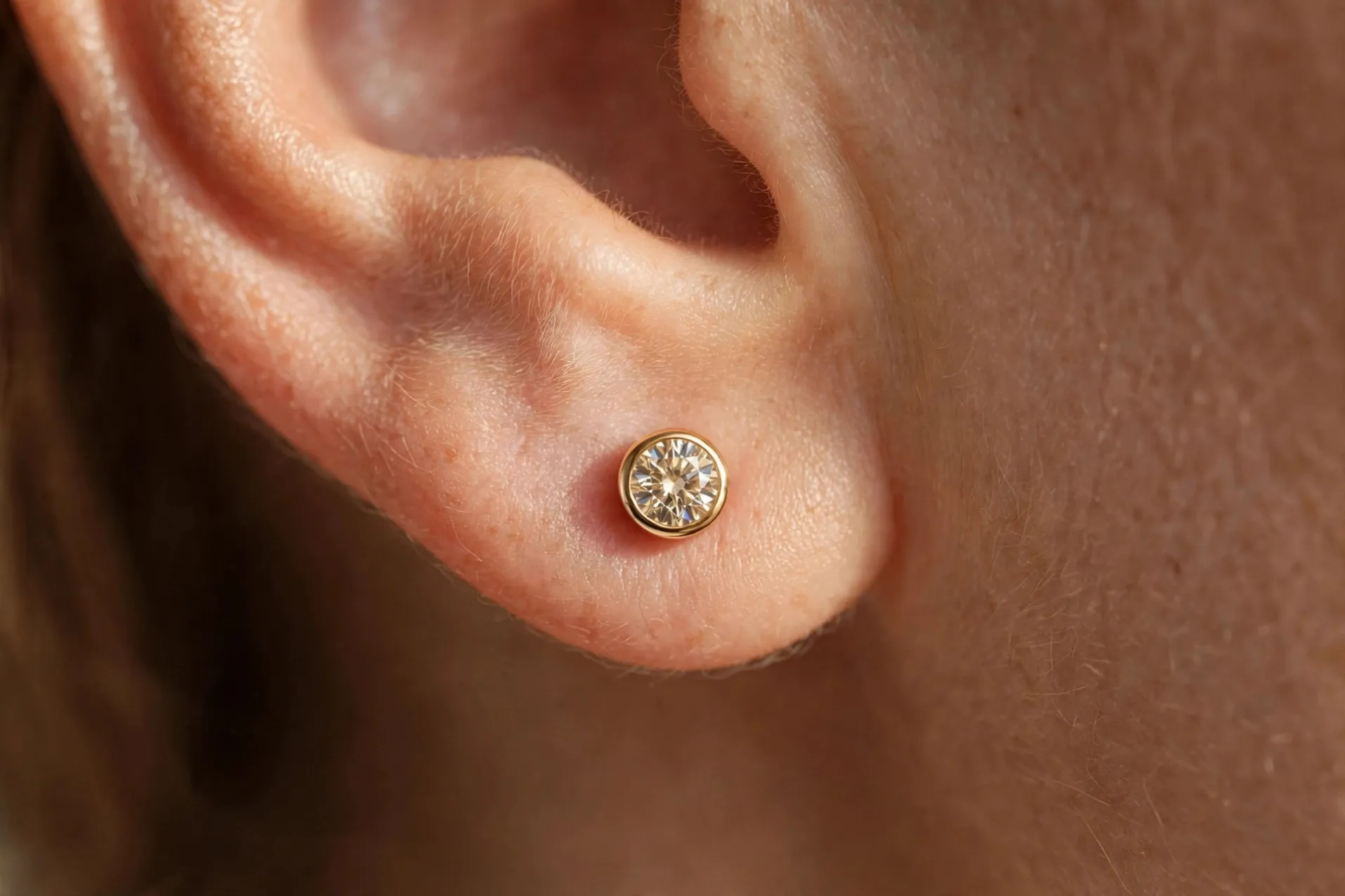
Hypoallergenic Stainless Steel Stud Earrings for Women
Earrings are the jewelry most likely to cause a reaction — and studs are the piece most women wear every day. A stud sits inside the piercing for hours at a time, so the metal matters. If your ears itch, swell or go red after wearing earrings, the problem is usually the metal, not you. This guide explains what "hypoallergenic" means for stud earrings, why 316L stainless steel is the usual answer, and how to choose studs that stay comfortable all day.
Why ears react to earrings
An ear piercing is a small wound that never fully closes, and the post of a stud sits inside it for as long as the earring is worn — in constant, direct contact with the metal, which is why earrings cause more reactions than any other jewelry.
The usual cause is nickel, the most common metal allergen, present in many jewelry alloys. When enough nickel is released onto the skin, sensitive wearers develop contact dermatitis: itching, redness and swelling around the piercing. The reaction can appear after years of wearing the same earrings without trouble, because sensitivity builds over time.
So the right question about an earring is never "does it contain nickel?" — many good metals contain nickel. The right question is "how much nickel does it release onto the skin?" That is what testing measures.
What "hypoallergenic" should mean — and what to check
"Hypoallergenic" is not a regulated term in jewelry — any seller can print it on a listing. What makes the claim real is a test report.
The standard that matters in Europe is EN 1811, which measures nickel release from items in prolonged contact with the skin. Under REACH, the limit for earring posts is 0.2 micrograms of nickel per square centimetre per week, the strictest limit in the regulation. A stud that passes releases very little nickel, even though the steel itself contains nickel.
So when you buy studs, ask for the EN 1811 test report. A supplier who only says "nickel free" is one to be careful with: 316L stainless steel contains roughly 10–14% nickel, so "nickel free" is not an honest description of the metal. The honest claim is a tested release level.
Why 316L stainless steel suits stud earrings
316L is the grade used in watches, medical instruments and body jewelry, and it is the standard choice for studs for four reasons.
First, it is stable. 316L resists corrosion from sweat, water and skin oils, so the post does not roughen or pit with wear.
Second, it is strong. A 316L post holds its shape, keeps the butterfly back secure, and does not bend the way soft metals do.
Third, it is tarnish-free. The steel keeps its colour through showers, workouts and daily wear, and the 18K gold PVD or silver-colour PVD finish on top is a hard, bonded layer that resists scratching and colour change.
Fourth, it is nickel-release tested. Our 316L studs are tested to EN 1811, so the nickel release is measured and within the EU limit for pierced skin.
Choosing studs for sensitive ears
Five details make the difference.
Post length and thickness. A standard post is about 0.8 mm thick. Too short, and the back presses the lobe; too long, and the stud wobbles. Look for a post with a little room behind the lobe.
Post finish. The post should be smooth and polished, with no rough edge where it meets the stud head — a rough post is the most common cause of irritation in an otherwise good earring.
Back type. Butterfly backs are easy to use and hold well. Screw backs are more secure for sleeping in studs, but slower to put on. Flat backs sit flush against the lobe and are the most comfortable for side sleepers.
Shape and size. For a new or sensitive piercing, a small ball, cubic zirconia or flat disc stud is the calmest choice: nothing to catch on clothing or hair, and a smooth surface against the skin. Larger statement studs are fine once the piercing is settled.
How to wear and care for studs
Good habits keep studs comfortable and the finish bright. Put earrings in after perfume, hairspray and lotion, and take them out before a chlorinated pool. Wipe the post and the stud with a soft, dry cloth after wearing.
If a piercing becomes sore, take the stud out, let it settle, and try again with a clean, smooth post. Do not force a stud through a sore piercing. If redness keeps coming back with every metal you try, a clinician can test for nickel allergy.
To clean the jewelry, mild soap, lukewarm water and a soft cloth are enough. Avoid silver dip, toothpaste and abrasive cloths, which strip plating and roughen the surface.
Stud styles that sell for sensitive ears
Three styles cover most of what a boutique needs. Cubic zirconia studs in 316L with 18K gold PVD are the everyday classic — a small, bright stone that suits every customer. Plain ball studs in silver-colour PVD are the quiet option for work. Small hoop studs and huggies give the look of a hoop with the security of a stud, and they suit the layered-ear look that is popular now.
Carry all three in both gold and silver tones, so a customer with sensitive ears can find a style she likes without compromising on comfort. Keep the product page honest: state the steel grade, the PVD finish, the post thickness and the EN 1811 test.
Wholesale: hypoallergenic stud earrings for boutiques and brands
Sensitive-skin earrings are a repeat-purchase category: once a customer finds studs that do not irritate her ears, she comes back for more. At IVANDA, hypoallergenic stud earrings are available in 316L steel with 18K gold PVD and silver-colour PVD finishes, across earrings in ball, cubic zirconia and huggie styles, all nickel-release tested to EN 1811. MOQ is 60 pieces per style, OEM/ODM and private label are available, and we recommend ordering a sample first. For the current range, contact sales at sales01@ivanda-fa.com.
FAQ
Are stainless steel stud earrings hypoallergenic?
316L studs nickel-release tested to EN 1811 are hypoallergenic for most wearers. The test measures nickel released onto the skin — for earring posts the EU limit is 0.2 µg/cm²/week.
Why do my ears react to some earrings but not others?
Usually the difference is nickel release, or a rough post. Smooth, polished 316L posts with a tested low release are the calmest option for most wearers.
Can I wear stainless steel studs every day?
Yes. 316L steel resists sweat and water, and the PVD finish keeps its colour through daily wear.
Can I sleep in stainless steel stud earrings?
Small, smooth studs with flat backs are the most comfortable for sleeping. Avoid large or textured studs overnight.
Are your stud earrings nickel free?
No jewelry made from 316L stainless steel is nickel free — the steel contains nickel. Our studs are nickel-release tested to EN 1811. If you have a known severe nickel allergy, test one pair first or ask a clinician.