"Jewelry Collection Planning Calendar for Brands"
"A year-round jewelry collection planning calendar for brands: when to design, sample, order and launch for spring, summer, holiday and resort seasons - built backwards from retail buying windows."
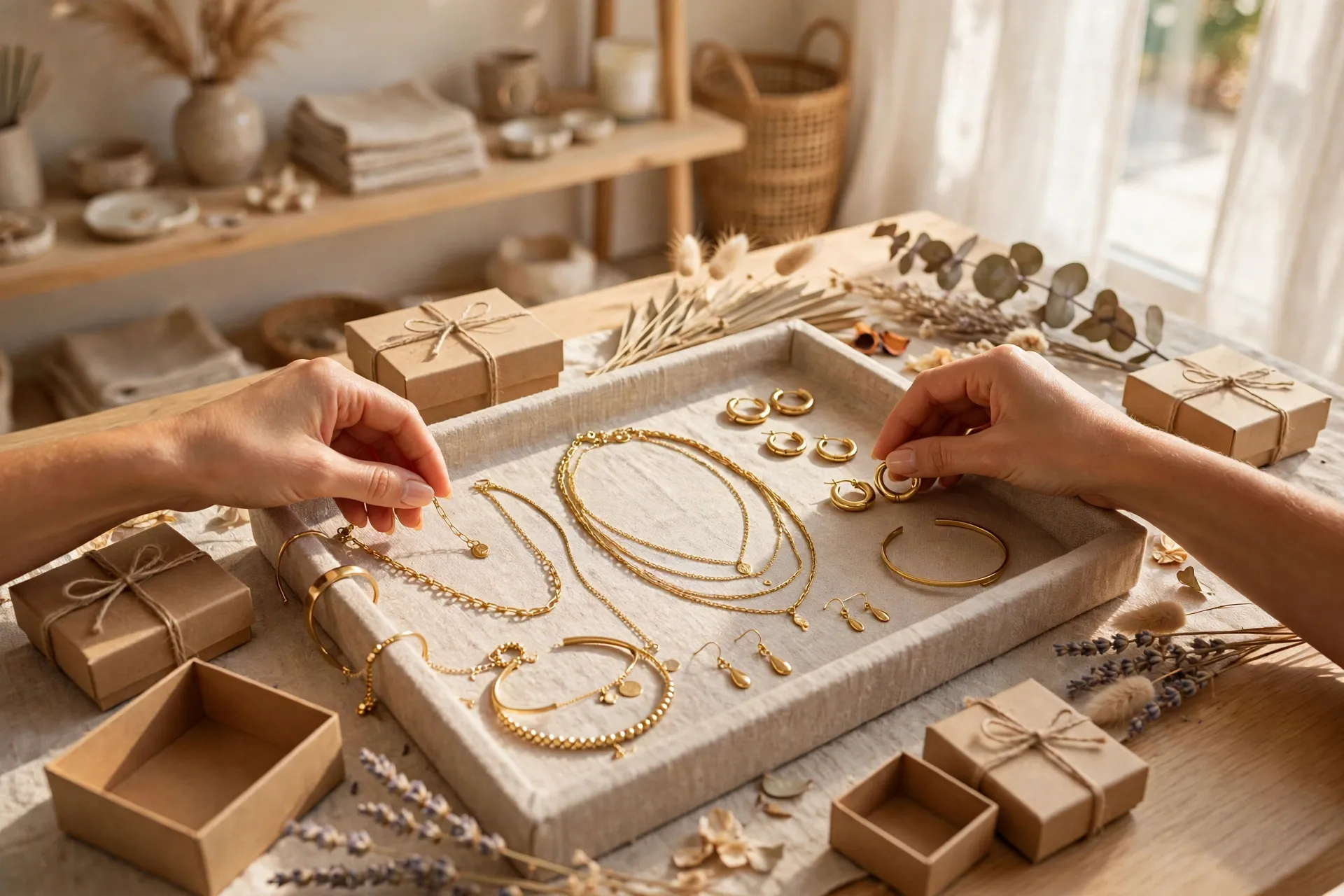
Ask a jewelry brand owner when they start designing the holiday collection and the confident ones give a date in early spring. Retail runs on a clock that ticks months before shoppers see it: boutiques buy holiday inventory in summer, stock it in early autumn, and reorder only until their shelves are set. A brand that plans by the retail calendar gets its pieces on shelves at buying time; a brand that plans by feeling launches into a market that already placed its orders. This guide lays out the year from a brand's side - what to decide in each quarter, built backwards from when buyers actually write purchase orders.
The Backward Principle: Start From the Shelf Date
Every planning decision rolls back from one date: when the pieces need to be on a retailer's shelf. Work backwards from there and the pipeline falls out naturally - production needs shipping time, sampling needs production, design needs sampling, and buyer conversations need a finished lookbook. For an order built on in-stock base designs, the full chain runs roughly ten to twelve weeks from artwork to shelf; custom tooling stretches it further. The lead-times guide breaks the chain into its stages.
The calendar below shows the whole year from a stainless steel jewelry brand's side, with each season's design, production and selling windows:
Season on shelf | Buyer orders | Brand designs & samples | Brand produces |
|---|---|---|---|
Spring refresh (Mar-May) | Oct-Jan | Jun-Aug | Sep-Nov |
Summer & travel (Jun-Aug) | Jan-Mar | Sep-Nov | Dec-Feb |
Holiday (Nov-Dec) | Jun-Aug | Feb-Apr | May-Jul |
Resort & gifting (year-round) | Rolling | Rolling | Rolling |
Two structures emerge. Holiday is the heavyweight: its buying window opens mid-summer, which makes early spring the holiday design season. Summer and travel assortments sit in the middle of the year, and spring refresh buying happens while the holiday stock is still selling. Resort waterproof pieces - our resort retail angle - sell year-round and reorder continuously, which makes them the steady spine of a planning calendar rather than a season.
Core categories anchor every season in between. Rings, as the highest-repeat everyday category, belong in some form in every collection window - the wholesale rings range shows the silhouettes that restock across seasons - and their sell-through data becomes the baseline against which each seasonal experiment is judged. A collection calendar works best when seasonal launches orbit a stable everyday core rather than replacing it wholesale four times a year.
Q1: Design the Back Half of the Year
The first quarter is design season for summer and early autumn assortments, and pre-production for the holiday buying window. Three jobs dominate:
- Lock the summer line: styles, finishes and price bands finalized by early February so samples run in March
- Finalize holiday designs and open sample rounds, because holiday buying starts in June and a lookbook must exist by May
- Review last year's sell-through data - the reorders that repeated tell you which categories earn a bigger place in the next collection
Brands that skip the data review design every collection from scratch; brands that study reorders design with a head start. The reorder record is the cheapest product research a brand owns, and the FAQ answers your buyers ask most often - materials, plating behavior, care - are worth reading alongside it before the new designs are locked.
Q2: Holiday Production and the Buying-Window Push
The second quarter is the year's busiest production window. Holiday stock must be produced and shipped in May through July, because boutiques place holiday orders from June and expect stockists' deliveries before their own autumn deadlines. This is also when marketplaces and trade shows concentrate holiday buying decisions.
Practically: holiday production orders should be placed no later than early May for in-stock-based programs, and the wholesale buying guide audience - the boutiques and shops themselves - are finalizing their assortments right then. A brand selling wholesale to them needs the line sheet live, photography done, and stock arriving as orders land. Late holiday stock doesn't sell at a discount; it misses the season entirely.
Q3: Spring Line Development and Holiday Sales Support
The third quarter splits in two. Early Q3 supports holiday stockists - fast fulfillment on reorders is what turns a first holiday order into a second-year relationship. Mid-to-late Q3 opens spring design: buyers place spring refresh orders from October, so artwork and sampling must run through September and October.
Resort categories deserve a deliberate look here too: sun-belt and coastal shops restock waterproof pieces continuously, and a brand that treats them as a rolling program - not a season - keeps a revenue floor under the calendar all year. The same logic applies to engraved branding programs: artwork approved once keeps serving every collection that follows, so the engraving setup decisions made this quarter keep paying across next year's calendar.
Q4: Spring Production and the Data Harvest
The fourth quarter produces the spring line for early-year delivery, supports the holiday sell-through as it happens, and harvests the data that seeds next year's plan: which categories reordered, which price bands moved, which finishes customers chose. The trend picture for the coming year firms up through this quarter, and the brands who combine their own sell-through with broader trend signals enter January with next year's plan already half-written.
Q4 also closes the golden sample files for everything produced that year - the approval records that make next year's reorders fast instead of a fresh sampling cycle. Brands that treat Q4 as both a production quarter and a planning quarter enter the new year with momentum rather than a blank page.
The Steady Threads That Run All Year
Around the seasonal spikes, four threads run continuously. Quality checks happen on every shipment regardless of season - the inspection checklist is a standing process, not a holiday one. Supplier communication follows the rhythm that compounds all twelve months. Collection planning feeds on reorder data every week. And branding programs - engraved marks, cards, packaging - evolve collection by collection rather than season by season, which is why the custom engraving program belongs on the annual calendar, not any single quarter's plan.
Brands that keep the steady threads steady find that the seasonal spikes stop feeling like spikes - production windows are booked, line sheets exist early, and each buying season meets a brand that was already ready for it.
Frequently Asked Questions
When should I start designing my holiday jewelry collection?
Design by early spring, sample by late spring, and have production underway by May - because retail buyers place holiday orders from June through August and expect deliveries before autumn. A holiday collection that reaches the market in October has already missed the buying window; the pieces that sell in November were ordered in summer.
How far in advance do boutiques order jewelry?
Independent boutiques typically order seasonal assortments one to two quarters ahead - holiday stock in summer, spring refresh in autumn - while resort and everyday-wear categories reorder year-round as they sell through. Wholesale marketplaces run closer to just-in-time, but their holiday browsing still peaks in summer. Plan production to the earliest window you sell through, not the latest.
How many collections should a jewelry brand release per year?
Two to four major releases is the working range for a small brand: holiday and spring as the anchors, with summer and a mid-year refresh as the stretch goals. A tight two-collection calendar executed on time beats four collections that each slip - and rolling categories like waterproof everyday pieces carry revenue between the anchors without demanding their own launch cycles.
What data should feed next year's collection plan?
Your own reorder and sell-through records first - which styles restocked, which price bands moved, which finishes customers chose - then broader trend signals for the coming year. Combine both at Q4 planning and the next calendar writes itself: winning categories get more space, slow ones get cut or redesigned, and the sampling records from the year make the winning styles faster to reorder.
Wholesale Stainless Steel Jewelry from IVANDA
Looking for a reliable stainless steel jewelry supplier? IVANDA supplies 316L pieces with PVD 18K gold plating - waterproof, skin-friendly and made for everyday wear. MOQ 60 pcs per style, in stock and ready to ship, with OEM/ODM services for custom designs. Message us on WhatsApp or email sales01@ivanda-fa.com for the latest catalog and wholesale prices.