Oct 19, 2026
Necklace Chain Length Guide: 35-60cm Explained
Necklace chain length guide: where 35-60cm necklaces sit on the body, which necklines they suit, layering spacing and how to measure your ideal fit.
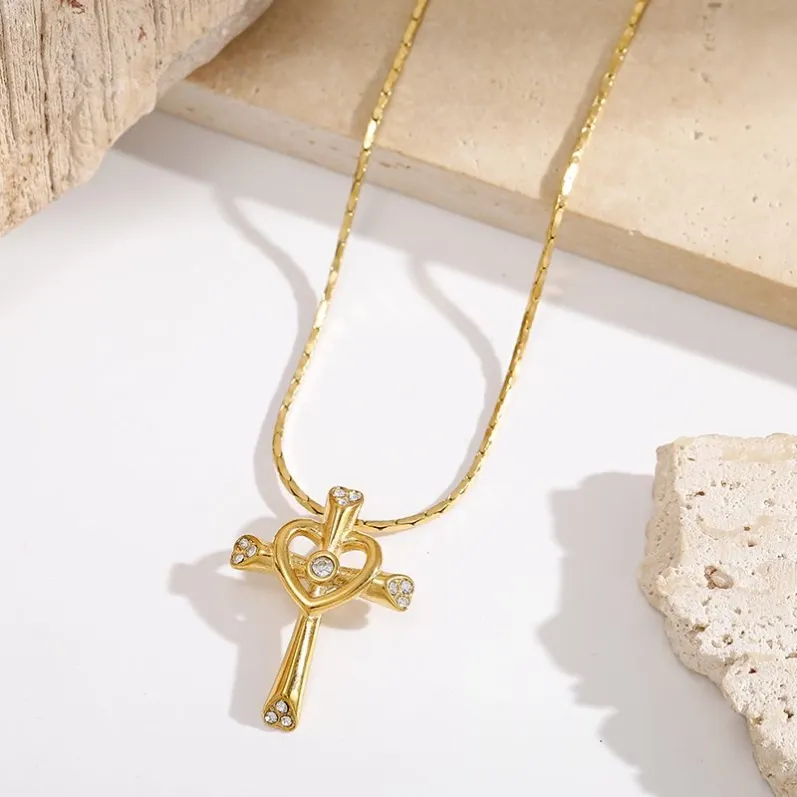
The right chain length comes down to two predictable factors — where the chain falls on your body and which neckline you pair it with — so once you learn the five standard lengths, choosing stops being guesswork.
Chain length is the most overlooked detail in jewelry buying. The same pendant can look perfectly placed at 45 cm and disappear into fabric at 60 cm, and a chain that flatters a V-neck can clash with a high collar. This necklace chain length guide walks through the five standard lengths, how necklines and body proportions shift the picture, a five-minute string test for your ideal fit, and a layering formula that keeps stacks from tangling.
The Five Standard Necklace Lengths
Almost every necklace sold today falls into one of five length categories, each with a traditional name.
Length | Name | Where it sits on the body | Best necklines | Layering role |
|---|---|---|---|---|
35 cm | Choker | Snug around the base of the neck | Off-shoulder, boat neck, strapless | Top layer |
40 cm | Collar | Just above the collarbone | Crew neck, scoop, halter | Upper layer |
45 cm | Princess | At or just below the collarbone | Almost any neckline | Anchor layer |
50 cm | Matinee | Between collarbone and bust | High necklines, turtlenecks, office wear | Mid layer |
60 cm | Opera | At the bust or just below | Deep V, high neck; can be worn doubled | Long statement layer |
The 45 cm princess length is the universal default: it lands at the collarbone on most adults, suits nearly every neckline and frames pendants of almost any size.
A closer look at each length:
- 35 cm choker. Wraps the base of the neck and pulls every eye upward. It needs an open neckline — strapless, off-shoulder or boat — to look intentional, and it simply vanishes over a turtleneck.
- 40 cm collar. The shortest length that clears the throat with room to move. It sits just above the collarbone — the natural home for small pendants, initials and lockets.
- 45 cm princess. Falls right at the collarbone, the most balanced point on the body. If you buy only one stainless steel chain, this is the length to buy.
- 50 cm matinee. Drops into the open panel between collarbone and bust. It shines with high necklines — a buttoned shirt, a mock neck — where shorter chains bunch against fabric.
- 60 cm opera. Long enough to anchor an outfit on its own, or to wrap twice for a doubled 35 cm look. Deep V-necks and long pendant drops are its natural habitat.
How Necklines Change the Look
A necklace looks best when it sits in open space — the chain should meet fabric, never compete with it.
Match the necklace line to the neckline line. A V-neck pairs naturally with a pendant that echoes the V, worn at 45–50 cm so the point hangs inside the opening. Scoop necks cradle collar and princess chains right at their edge. Crew necks sit close to the collarbone, so a 40–45 cm chain rests just below the fabric without hiding. High necklines — buttoned shirts, mock necks, turtlenecks — push the action downward: choose 50 or 60 cm so the chain lies over fabric instead of hiding beneath it.
The inverse matters too: a pendant swallowed by a crew neck at 45 cm will clear the fabric at 50 cm, and a chain that catches on a button placket is usually fixed by one length step.
Body Proportions: The Same Length Sits Differently on Everyone
Standard lengths are calibrated to an average frame — a longer neck, broader shoulders or a fuller chest moves every chain to a different landing spot.
A 45 cm princess chain rests at the collarbone on an average build, but on a broader neck or shoulders it rides up toward collar territory, while on a shorter-necked frame it may drop toward matinee ground. Neither is wrong — it just explains why a length that looked perfect on a friend may not sit the same way on you.
Two quick adjustments help: shorter necks gain vertical space from chains of 45 cm and longer, while tight chokers compress them further; longer necks are balanced by collars and chokers, while very long 60 cm chains add length you may not want. When in doubt, measure.
Measure Your Ideal Length with a String
A piece of string and a ruler will map your personal length in under five minutes.
- Cut a length of string, yarn or thin ribbon a little longer than 70 cm.
- Drape it around your neck and hold the ends where you would want the chain to sit — start at the collarbone, then try a few centimeters above and below.
- Pinch or tape the ends together, slip the loop off over your head, and lay it flat against a ruler.
- Write down the measurement and repeat for every point you want to map.
Do this in front of a mirror while wearing the necklines you actually live in. Remember that a pendant adds visual length — a 45 cm chain with a 3 cm drop reads closer to 48 cm — and that stiff, chunky links sit slightly shorter than their measured length.
The Layering Formula: 2–3 cm Between Chains
For stacked necklaces that never twist into one knot, space each chain 2–3 cm apart and give every layer its own pendant weight.
Start with an anchor at 40 or 45 cm, add a second chain 2–3 cm longer, and optionally a third at the same step again. Gaps under 1 cm let chains pile up and tangle; gaps over roughly 4 cm can look disconnected unless the longest chain is a deliberate statement.
Vary texture as well as length, because two similar chains still find ways to knot — pair a fine cable chain with a heavier curb or box style. Keep the boldest pendant on the shortest chain so it stays visible; a heavy charm on the longest chain swings into everything below it. Three chains is the sweet spot — beyond that, the stack reads as clutter rather than styling.
Pendant Size vs Chain Weight
Match the scales: a substantial pendant needs a chain with enough substance to carry it, and a dainty pendant disappears on anything too chunky.
Stainless steel is denser than most fashion-jewelry metals, and that weight shows. A slim 1 mm cable chain carries a small charm effortlessly, while a heavy medallion or bar pendant wants a 1.5–2 mm chain or a curb link that holds its shape instead of sagging into a long V. As a working rule, chain weight should be roughly proportional to the pendant — if the chain reads as an afterthought, step up one size.
Mind the clasp too: anything at 50 cm or longer carries more leverage as you move, so a sturdy lobster clasp earns its keep. And if your pick is a PVD 18K gold plated piece worn daily, remember that PVD can slowly wear after years of abrasion — choose the pendant placement with that in mind.
Frequently Asked Questions
What is the most popular necklace length?
The 45 cm princess length is the most popular worldwide. It sits right at the collarbone on most adults, works with nearly every neckline from crew to V-neck, and frames pendants naturally. Most ready-to-wear chains default to 45 cm for exactly these reasons.
How do I measure a necklace correctly?
Lay the chain flat with the clasp closed and measure from end to end, including the clasp. To find your ideal fit, use the string method: drape string where you want the chain to sit, pinch it, then measure the loop flat against a ruler.
What length should necklaces be for layering?
Start with an anchor chain at 40 or 45 cm and add each extra chain 2–3 cm longer than the one above it. Vary the chain styles so they do not twist together, and keep the boldest pendant on the shortest layer so it stays visible.
Where does a 60 cm necklace fall?
On an average adult, a 60 cm opera chain sits at the bust or just below. It suits deep V-necks and high necklines, and it can be wrapped twice around the neck to create a doubled 35 cm choker look with a single chain.
Does chain length look the same on everyone?
No. Standard lengths assume an average frame, so a longer neck, broader shoulders or a fuller chest shifts where each length lands — sometimes by a full category. Test your lengths with a piece of string in front of a mirror before ordering.
Wholesale Stainless Steel Jewelry from IVANDA
Looking for a reliable stainless steel jewelry supplier? IVANDA supplies 316L pieces with PVD 18K gold plating - waterproof, skin-friendly and made for everyday wear. MOQ 60 pcs per style, in stock and ready to ship, with OEM/ODM services for custom designs. Message us on WhatsApp or email sales01@ivanda-fa.com for the latest catalog and wholesale prices.