Oct 26, 2026
Stackable Rings vs Single Statement Rings: How to Choose
Stackable rings vs single rings compared: flexibility, comfort, care and buying logic, plus how to decide which approach fits your wardrobe and routine.
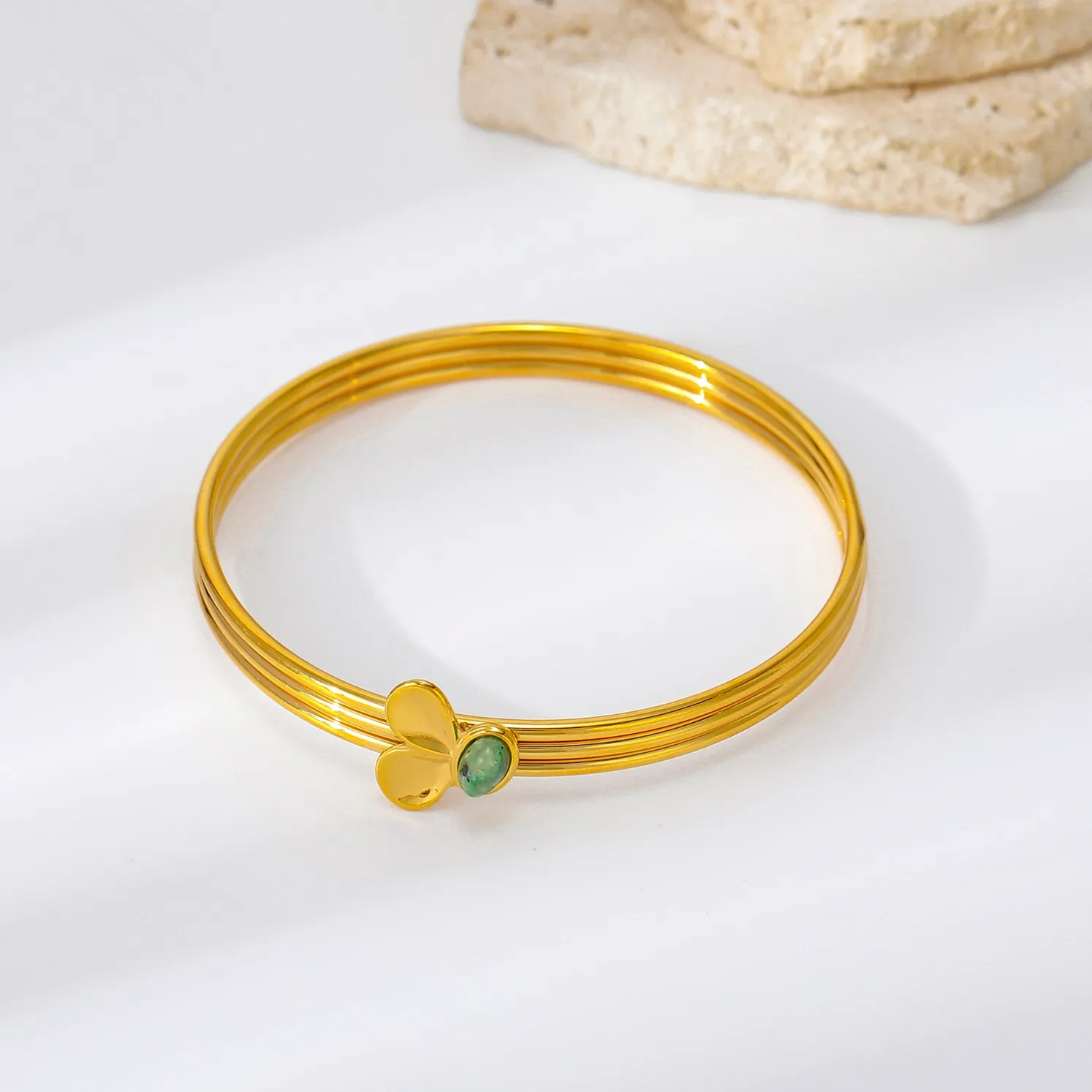
Choosing between stackable rings and a single statement ring is not really a style debate — it is a decision about how you want to own jewelry: build a look gradually from thin bands, or commit to one piece that carries everything by itself. Both approaches work, and most people eventually live in both. The useful question is which one your next purchase should serve, and this guide gives you the criteria.
What Actually Separates the Two
The difference is the system, not the metal: stackable rings are designed to be combined, while a standalone ring is designed to carry a look alone.
Stackable rings are thin bands, usually between 1 and 3 mm wide, with low profiles and quiet surfaces — plain, twisted, beaded, or set with small stones. They are sold individually or in sets and are meant to be layered two, three or more at a time on a single finger. No individual band is the point; the combination is.
Standalone rings are the opposite in nearly every dimension: wider bands, sculptural shapes, solitaire settings, signet forms. The piece is designed to be read on its own, and it usually is.
Neither approach is the more "serious" jewelry option — a three-band stack can look more considered than a heavy signet, and vice versa. What differs is the experience of wearing them: one gives you decisions to make each morning, the other gives you none.
Side-by-Side: Stackable vs Single
Factor | Stackable rings | Standalone ring |
|---|---|---|
Way of buying | Collected gradually, piece by piece | One purchase, complete look |
Style flexibility | Rearrange daily; new looks from old pieces | Fixed by the design |
On the hand | Thin bands stay out of the way | Wider bands are felt, and seen |
Care load | More surfaces and contact points to keep bright | One piece to inspect and clean |
Statement | Subtle and layered | Immediate and singular |
Best for | People who like variety | People who like decisions made once |
Read the table as a personality test as much as a product comparison: the right column is not "better," it is simply a different relationship with your jewelry box.
Choose Stackables When...
Stackable rings reward people who like changing their look without buying new jewelry — the same three bands can read quiet on Monday and layered by Friday.
- You like variety. Rotating combinations gives you a dozen looks from a handful of pieces, and no two days have to match.
- You prefer spreading purchases over time. Each band is a small decision; the collection grows as budget and occasions allow, instead of in one leap.
- Your hands are busy. Thin, low-profile bands catch less on keyboards, gym equipment and coat pockets than wide bands do.
- You already layer everything else. If layered necklaces and stacked bracelets are your default, stacked rings keep the language consistent — our ring stacking guide shows exactly how the combinations are built, including which band goes where.
Choose a Standalone When...
A single ring wins when the goal is clarity: one strong piece reads instantly, asks nothing of the rest of the outfit, and never needs arranging.
- You want jewelry to disappear into your routine. Put it on in the morning, forget it until night, done.
- One piece carries the meaning. A signet, an engraved band, a milestone gift — the design's whole job is to stand alone.
- You dislike fuss. No arranging, no deciding at the mirror, no straightening the stack after washing your hands.
- Your wardrobe is structured. Tailored, minimal clothing pairs naturally with one decisive ring; our guide to matching jewelry with your outfit covers how jewelry scale should follow clothing scale.
The Honest Wear-and-Tear Trade-Off
Stacking looks effortless, but it has a real cost: bands rub against each other all day, and metal-on-metal contact is the fastest way to soften any finished surface.
This matters most for plated pieces. PVD 18K gold plated stainless steel holds its color exceptionally well through water, sweat and ordinary daily wear — but no plating is immortal. Constant friction at contact points gradually dulls the finish, and a stack multiplies those contact points several times over. Realistically, expect years of good color rather than decades of first-day brightness, and expect the middle bands of a stack to soften first, because they touch on both sides.
Two habits stretch that lifespan. First, rotate which bands sit next to each other instead of locking one arrangement in place, so no pair of surfaces grinds together forever. Second, give the stack a night off a few evenings a week. The 316L stainless steel underneath keeps its structure either way — the steel outlasts the conversation about its finish.
You Do Not Actually Have to Choose
The strongest jewelry collections mix both modes: a couple of standalone anchors for signature moments, and a small stackable kit for everyday flexibility.
Think of it as a capsule wardrobe for your hands — a few core pieces that do the heavy lifting, plus modular accents for variety. Our guide to building a jewelry capsule wardrobe applies the same logic across necklaces, bracelets and rings: fewer, better-chosen pieces, each one earning its place. A workable starting formula is one standalone ring you love, plus two or three thin bands in the same metal family. The standalone covers formal days and quiet outfits; the bands cover everything you want to change.
Frequently Asked Questions
The practical questions people ask before building their first stack — or choosing their one ring.
How many rings can you stack on one finger?
Two to four is the comfortable range for most hands. Beyond that, the stack starts catching on things, pressing against neighboring fingers and needing constant straightening. Width matters as much as count: four 1.5 mm bands wear slimmer than three 3 mm ones. Start with two, live with the combination for a week, then add.
Can you mix metals when stacking?
Yes, deliberately. Mixed-metal stacks look intentional when one tone clearly dominates — for example, two steel bands around one PVD 18K gold plated piece — and accidental when three tones split evenly. If you are unsure, keep one metal family per stack and introduce the second tone as a single accent band before committing further.
Do stackable rings work on every finger?
They work on every finger, but they read differently. Index and middle fingers carry larger stacks comfortably, the ring finger suits two or three slim bands, and the little finger needs narrow widths or the stack overwhelms it. Thumb stacks are a style of their own and favor slightly wider, flatter bands than finger stacks do.
Are stackable rings comfortable for everyday work?
Generally yes — thin, low-profile bands are among the most comfortable rings for desk work, typing and gloves, because nothing protrudes. The exception is stacks with raised stones, which can press into neighboring fingers when the hand grips something. For all-day comfort, favor smooth, flat or slightly domed bands over anything with texture at the edges.
Can you wear a standalone ring and a stack together?
Absolutely, and it is the most common real-world setup: a meaningful standalone on one hand, a stack on the other, or a stack with one wider band anchoring it. The only rule worth keeping is balance — if one hand is loud, let the other be quiet, so the overall look stays deliberate rather than crowded.
Wholesale Stainless Steel Jewelry from IVANDA
Looking for a reliable stainless steel jewelry supplier? IVANDA supplies 316L pieces with PVD 18K gold plating - waterproof, skin-friendly and made for everyday wear. MOQ 60 pcs per style, in stock and ready to ship, with OEM/ODM services for custom designs. Message us on WhatsApp or email sales01@ivanda-fa.com for the latest catalog and wholesale prices.