Oct 19, 2026
Stainless Steel Anklets: Complete Buying Guide
How to choose a stainless steel anklet: styles, sizing, waterproof advantages and PVD 18K gold plated options explained for buyers and retailers.
An anklet lives a harder life than a bracelet — it flexes with every step, rubs against shoes, and meets sand, seawater and sunscreen long before your hands do — which makes 316L stainless steel the most sensible material you can put on an ankle.
Anklets have moved from a seasonal novelty to a year-round category. They sell as summer souvenirs, as gifts, and as part of the wider stack-and-layer trend. But the ankle is one of the most demanding places a piece of jewelry can live, and buyers who choose the wrong material find out quickly. This guide covers why material choice matters more for anklets than for almost any other jewelry type, which styles sell, how sizing works, and what to look for when buying or stocking stainless steel anklets.
Why Anklets Take More Abuse Than Bracelets
A bracelet on the wrist leads a comparatively sheltered life. An anklet does not.
- Constant flexing. Every step bends and relaxes the links thousands of times a day. Weak solder joints and brittle base metals fail fastest at the ankle.
- Shoe friction. Sneaker collars, sandal straps and boot tops rub directly against the piece with every stride — a grinding action that strips thin coatings far faster than ordinary wear would.
- Water and sweat. The anklet sits at the lowest point of the body, where rain, puddles, seawater and pool water arrive first, and where sweat collects under socks and shoes.
- Sand and grit. On any beach or dusty path, sand works into chain links and acts as a grinding paste exactly where the jewelry moves most.
Now layer the usual material choices on top of that environment. Silver darkens quickly in the warm, sweaty, humid air around an ankle. Thinly plated fashion jewelry can lose its coating in a single beach season. Zinc alloys can discolor wherever sweat sits. The ankle is a stress test for jewelry materials, and most of them fail it — 316L stainless steel is the exception, shrugging off water, sweat and abrasion without tarnishing or staining.
Anklet Styles Compared
Four styles dominate the category, each with a different personality and a different durability profile:
Style | Look | Durability | Best for |
|---|---|---|---|
Chain (cable, curb, figaro) | Clean, minimal, understated | Highest — simple links flex without weak points | Everyday wear; first-time buyers; layering |
Charm | Playful, personal, eye-catching | Moderate — charms add solder joints and snag points | Gifts; statement pieces; seasonal drops |
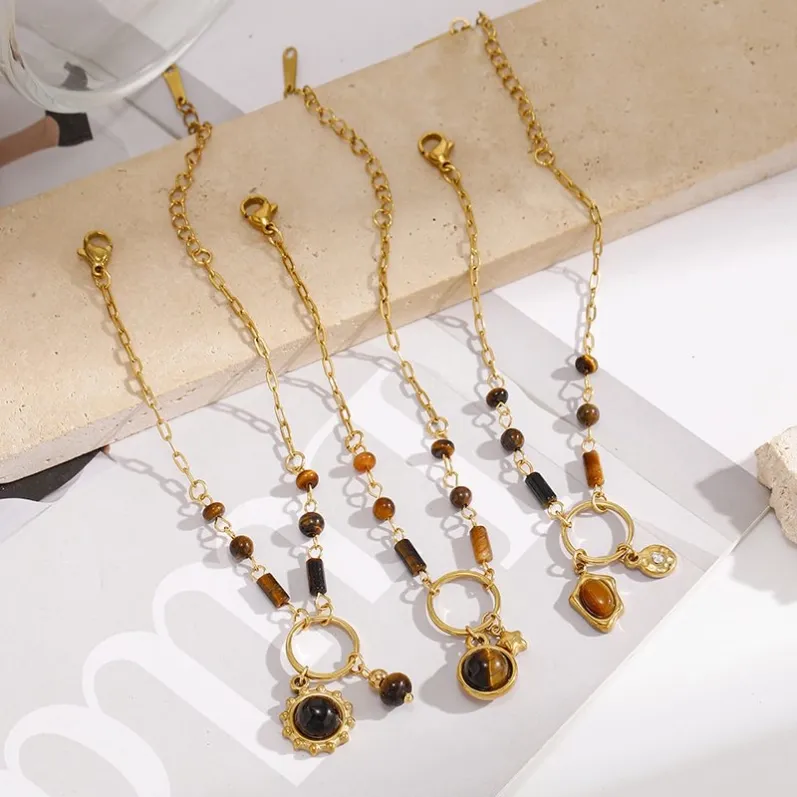
Beaded | Textured, bohemian, colorful | Moderate — beads are tough but stringing wears first | Beach and festival looks; natural-stone lines |
Cuff | Bold, sculptural, modern | Structurally strong but can bend out of shape; fixed sizing | Fashion-forward buyers; single statement piece |
Chain anklets are the safest inventory decision — they suit the most buyers, survive the most abuse and stack cleanly with everything else — while charm and beaded designs drive the impulse and gift side of the category.
For retailers, the practical reading of this table is that chain and charm styles cover most of the market between them. Chain anklets in 1-3 mm widths form the everyday core; charm anklets in PVD 18K gold plated finishes perform strongly in the gifting window. Cuffs sit at the fashion end, and beaded strands pull their weight in bohemian and beach assortments.
How to Size an Anklet
Anklet sizing is simple but unforgiving: too tight looks restrictive and presses into the skin, while too loose slides down onto the foot or catches in shoe straps.
The standard method:
- Measure the ankle with a soft tape measure wrapped snugly around the widest point, just above the ankle bone, and note the circumference in centimeters.
- Add 1-2 cm of ease so the anklet drapes instead of gripping. Standard finished lengths run from about 22 cm to 27 cm, and the 22-25 cm range covers most buyers.
- Account for charm drop. Every hanging charm adds its own length to the visible drop — a 2 cm charm on a 23 cm anklet hangs noticeably lower than the numbers suggest.
Ankle circumference | Recommended anklet length |
|---|---|
20-21 cm | 22 cm |
22-23 cm | 24 cm |
24-25 cm | 26 cm |
26 cm and up | 27-28 cm |
Stainless steel adds one more advantage here: because the material is hard and economical per piece, many designs ship with a 2-3 cm extender chain, effectively turning one anklet into two sizes. When in doubt, size up and add an extender — a slightly loose anklet drapes elegantly, while a tight one gets returned.
The Waterproof Advantage for Beach and Summer Wear
Anklets peak in exactly the conditions that destroy most jewelry: beaches, pools, humid summers and salt air. This is where 316L stainless steel separates itself from the field.
A stainless steel anklet can be worn into the sea, the pool and the shower without a second thought. Water alone does nothing to it — the chromium oxide layer protecting the alloy is indifferent to fresh water, chlorine and salt alike. Sweat, which accelerates tarnish on silver, leaves no visible mark. Sand, the abrasive that strips coatings from softer pieces, mostly bounces off steel's harder surface.
The comparison at the shoreline is stark. A silver anklet worn through a beach holiday comes home needing a polishing session. A thinly plated piece may show bare metal where straps rubbed. The stainless steel piece comes home needing only a rinse — the only thing that accumulates is salt and sunscreen residue on the surface, and that washes off.
For anyone whose anklet season involves water — swimmers, beach staff, travelers — the waterproof nature of the material is not a bonus feature; it is the reason to choose it. An anklet you never have to take off before swimming is the single biggest upgrade the material makes.
PVD 18K Gold Plated Stainless Steel Anklets
Gold-tone anklets are the strongest color direction in the category — and also where cheap jewelry fails hardest, because the ankle is the most abrasive spot you can put a coating.
PVD 18K gold plated stainless steel is the version that holds up. The coating is applied in a vacuum chamber and bonds at the atomic level, producing a layer far harder and denser than conventional electroplating. Over a 316L substrate, the result is a gold-tone anklet that keeps its color through seawater, sunscreen, sandal friction and daily showers.
What to check before buying or stocking:
- Coating consistency. Color should be uniform across links, clasps and charms — mismatched tones betray mixed production batches.
- Clasp quality. Lobster clasps hold up better than spring rings on anklets, where the piece is constantly moving and pulling.
- Link thickness. Around 1 mm minimum for daily wear; finer chains belong on the wrist, not the ankle.
One honest note: even PVD plating is not invincible. Years of sand abrasion and shoe rubbing will eventually soften the finish on any coated piece. Rinsing sand off after the beach and drying the piece pushes that timeline out for years. A gold-tone anklet that survives the beach is only realistic on PVD 18K gold plated stainless steel — thinly plated soft metals rarely last a season at the ankle.
Layering Anklets with Bracelets and Stacks
Two layering trends drive anklet sales.
Matched sets. The same chain design finished as a bracelet and an anklet sells as a set — a natural gift purchase and an easy upsell for retailers, since it is one design rendered at two lengths. PVD 18K gold plated sets are especially popular for this, because the matching tone makes the pairing obvious.
Ankle stacks. Layered anklets mix textures the way wrist stacks do: a fine cable chain at 22 cm worn over a beaded strand at 24 cm, or a plain chain paired with a single-charm piece above it. The rule that works visually is contrast — different widths, different textures, one common finish.
Care survives stacking too. Pieces worn together rub each other, so the quick rinse-and-dry habit after beach days matters doubly. Anklets are a layering category now, and matched anklet-and-bracelet sets capture both the gift buyer and the stacker in one product line.
Frequently Asked Questions
What size stainless steel anklet should I buy?
Measure your ankle with a soft tape at its widest point, then add 1-2 cm for a comfortable drape. Most buyers land between 22 cm and 25 cm. When choosing between two sizes, take the longer one — anklets are meant to hang slightly, and an extender chain makes a longer piece adjustable anyway.
Can I wear a stainless steel anklet in the ocean?
Yes. 316L stainless steel is unaffected by salt water, chlorine and fresh water alike. The only maintenance needed is a quick rinse in clean water after swimming to wash off salt and sunscreen residue, then a towel dry. The same piece can move from the sea to the shower without a thought.
Do anklets stretch out or break?
Chain anklets keep their length because metal links do not stretch; the clasp is the only true wear point, and lobster clasps handle the constant movement best. Beaded anklets on elastic cord can relax over time. Silver and plated pieces weaken through tarnish and coating loss first — steel fails last.
Are stainless steel anklets good for the beach?
They are the best material choice for the beach. Steel shrugs off the seawater, sweat and sand abrasion that darken silver and strip thin coatings. Rinse the piece after sandy days so grit does not sit in the links, and the same anklet stays bright through years of summers.
Wholesale Stainless Steel Jewelry from IVANDA
Looking for a reliable stainless steel jewelry supplier? IVANDA supplies 316L pieces with PVD 18K gold plating - waterproof, skin-friendly and made for everyday wear. MOQ 60 pcs per style, in stock and ready to ship, with OEM/ODM services for custom designs. Message us on WhatsApp or email sales01@ivanda-fa.com for the latest catalog and wholesale prices.