Oct 19, 2026
Can You Swim in the Ocean with Stainless Steel Jewelry?
Yes — stainless steel jewelry handles ocean water well thanks to its chromium oxide layer. Learn the rinse-after rule, sand warnings and post-beach care.
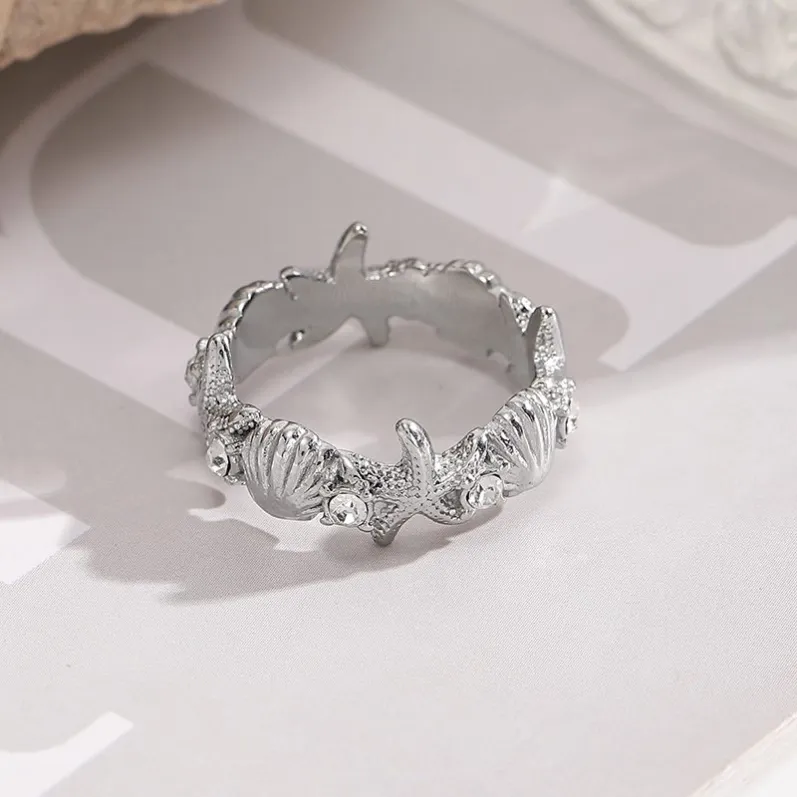
Yes — solid 316L stainless steel jewelry handles ocean water better than almost any other common jewelry metal, as long as you rinse it in fresh water afterward and treat sand, not salt, as the real hazard.
If you have ever stood at the water's edge wondering whether to slip your ring off, you are not alone. Salt water is genuinely hostile to many jewelry metals: it corrodes cheap alloys, discolors silver and creeps under weak plating. Stainless steel is the exception, and there is real materials science behind that. This guide explains what seawater actually does to 316L steel, how other jewelry metals compare, what to expect from PVD 18K gold plated pieces, and the simple care routine that keeps beach jewelry looking new.
How Stainless Steel Survives Salt Water: The Science in a Minute
316L's chromium oxide layer is self-repairing — scratch it underwater and it re-forms within moments in oxygenated water, which is exactly why marine hardware is made from this family of alloys.
Stainless steel stays stainless because of chromium. 316L contains roughly 16–18% chromium, and chromium reacts with oxygen in the air and water to form an invisible, microscopically thin chromium oxide film over the surface. That film blocks water, oxygen and chlorides from reaching the iron underneath. If the surface gets scratched, the film re-passivates almost immediately as long as oxygen is present — it is not a coating that can peel, but a chemical layer that constantly renews itself.
316L also carries about 2–3% molybdenum, and this is the ingredient that earns it the label marine grade. Molybdenum strengthens the passive film against chloride attack — the specific mechanism by which salt water pits ordinary steel. 304 steel, the common kitchen-grade alloy, can develop pinhole pitting under long salt exposure; 316L resists it dramatically better. A swim in the ocean is a trivial event for this alloy, and the same reason it is used for boat fittings and dive equipment applies to your jewelry.
How Other Jewelry Materials Handle a Day in the Sea
Not every metal in a jewelry box deserves a beach day. Here is how the common ones compare in ocean conditions.
Material | Behavior in salt water | After a beach day | Verdict for ocean swimming |
|---|---|---|---|
316L stainless steel | Passive film resists chlorides; molybdenum limits pitting | Looks the same if rinsed afterward | Excellent — made for this |
925 sterling silver | Reacts with sulfur and chlorides; surface discolors | Tarnish spots, dull patches; salt in crevices | Poor — leave it ashore |
Gold plated brass | Salt creeps through pores in thin plating; brass underneath corrodes | Dull spots, possible flaking or peeling | Poor — high risk of permanent damage |
Zinc alloy | Corrodes quickly in chlorides; base metal pits | Blistered or blackened surface, plating lifting | Do not wear it in the sea |
Stainless steel is the only one of the four that fights salt water chemically instead of merely enduring it — everything else on this list is losing a battle the moment it gets wet.
Silver deserves a fair note: it does not rust, but seawater accelerates the formation of silver chloride and silver sulfide, the dull grey-black films collectors spend hours polishing away. Brass- and zinc-based pieces fare far worse, because the corrosion attacks the base metal itself, and once cheap plating lifts there is no restoring it.
What About PVD 18K Gold Plated Stainless Steel in Salt Water?
PVD 18K gold plated stainless steel is a different animal from gold plated brass. The coating is applied in a vacuum chamber as a dense, well-bonded layer, and unlike traditional electroplating it is not prone to peeling or blistering when it gets wet. In a swim, the steel underneath does the corrosion fighting while the coating's job is simply color.
Salt water itself does not dissolve a PVD coating. The honest caveat is abrasion: the layer is thin, and sharp particles dragged across it can scratch through, exposing the steel beneath. That means the ocean rules for plated pieces are about what touches them, not what soaks them. Rinse after swimming, never rub a sandy piece, and understand that any plating can show gradual wear after years of daily abrasion — no finish is immune forever.
The One Rule That Matters: Rinse With Fresh Water Afterward
Salt left to dry on jewelry keeps working on it for days — evaporating seawater leaves crystals that absorb moisture and hold chlorides against the surface long after you have left the beach.
This is the single habit that separates jewelry that stays new from jewelry that slowly degrades. A 30-second rinse under lukewarm fresh water dissolves and washes away that residue before it can settle into chain links and clasp crevices. For solid 316L the rinse is cheap insurance rather than a strict necessity, but crevices are where moisture lingers, and clasps and spring mechanisms are the parts of any piece you least want to replace. Make the rinse automatic — the same way you would shake sand off a towel.
A Five-Minute Post-Beach Care Routine
Do these five things in order and nothing at the beach can ruin a piece.
- Rinse the piece under lukewarm running fresh water as soon as practical after swimming.
- Wash with mild soap and fingertips or a soft cloth if sunscreen, sand or sweat has built up — sunscreen film dulls metal faster than the sea does.
- Dry with a soft towel, then let the piece air-dry fully before storing, especially anything with a clasp.
- Inspect chains, links and clasps for trapped grit while the piece is dry.
- Store the piece dry and separate from other jewelry so nothing abrades anything else overnight.
That is the entire routine. It takes less time than applying sunscreen and adds years to the life of every piece you own.
Sand, Not Salt, Is the Real Enemy
Quartz sand ranks about 7 on the Mohs hardness scale — harder than the roughly 5.5–6.3 of stainless steel. Dry sand dragged across a polished finish behaves exactly like sandpaper, and on a PVD 18K gold plated piece those scratches can cut through the coating. Sand also works its way into clasps and chain links, where it grinds away at moving parts every time the piece flexes.
Two habits cover it. First, take rings and bracelets off before beach sports, sandcastle building or any hands-in-the-sand activity. Second, if a piece does get sandy, rinse it before you wipe it — rubbing dry grit across the surface is the one mistake that turns a rinseable problem into a permanent scratch.
Frequently Asked Questions
Can you wear stainless steel jewelry in the ocean every day?
Yes. 316L belongs to the same family of marine-grade alloys used for boat fittings and dive gear, so daily swims are well within what it handles. The habit that matters is rinsing in fresh water afterward so salt residue does not sit on the surface and in crevices for days. Do that, and daily ocean swimming rarely leaves a mark.
Does salt water rust 316L stainless steel jewelry?
Ordinary rust is rare. 316L forms a self-repairing chromium oxide layer, and its molybdenum content markedly improves resistance to chloride attack. The realistic failure mode is pitting corrosion from salt residue left sitting on the piece for long periods, especially in crevices — which is exactly what the post-swim rinse prevents.
Will ocean water turn my skin green?
Skin discoloration happens when a metal corrodes and transfers compounds onto the skin. Because 316L resists corrosion in salt water, the metal stays intact and there is typically nothing to transfer. Green marks are far more common with zinc alloy and low-grade plated pieces, whose base metals corrode quickly in seawater.
Can I wear PVD 18K gold plated jewelry in the sea?
Yes, with care. Salt water does not dissolve a PVD coating, which is a dense layer bonded to the steel in a vacuum chamber. The realistic danger is sand, whose sharp particles can scratch through a thin coating. Rinse after swimming, never rub a sandy piece, and expect gradual wear only after years of abrasion.
I forgot to rinse my jewelry after swimming — what now?
Rinse as soon as you remember under lukewarm fresh water, then wash with mild soap and a soft cloth, paying attention to chain links and clasp crevices. Dry the piece fully before storing. One night of salt residue rarely harms 316L stainless steel; the goal is simply not letting it sit for weeks.
Wholesale Stainless Steel Jewelry from IVANDA
Looking for a reliable stainless steel jewelry supplier? IVANDA supplies 316L pieces with PVD 18K gold plating - waterproof, skin-friendly and made for everyday wear. MOQ 60 pcs per style, in stock and ready to ship, with OEM/ODM services for custom designs. Message us on WhatsApp or email sales01@ivanda-fa.com for the latest catalog and wholesale prices.