Oct 19, 2026
Can You Wear Stainless Steel Jewelry While Cooking?
Can you wear stainless steel jewelry while cooking? Kitchen hygiene rules, when to remove rings, and how stainless steel handles heat, grease and acids.
Yes — stainless steel is one of the few jewelry materials that genuinely belongs in a kitchen, but hygiene rules and a handful of specific moments mean even it should sometimes come off.
If you wear a ring or bracelet every day, you have probably wondered whether it belongs in the kitchen. Professional kitchens treat this as a food-safety question first, and home cooks can borrow the same logic. The good news: material choice matters more than anything else here. Stainless steel handles heat, grease, acid and constant handwashing better than almost any other jewelry metal. This guide covers the hygiene rules, how stainless steel compares with other materials under kitchen conditions, when to take jewelry off anyway, and how to clean it afterward.
Why Kitchens Treat Hand Jewelry as a Hygiene Issue
The main argument against wearing jewelry while cooking has nothing to do with the jewelry getting damaged. It is about what collects between the metal and your skin.
A ring band creates a warm, enclosed, slightly moist space. Knead dough, mix meatballs or scoop rice with a ring on, and food particles work their way underneath. That trapped material feeds bacteria, and anything stuck under the band can end up in the next thing you touch. Gloves make the problem worse in a subtle way: rings press against the glove material from the inside, stretching it thin, and they stop the glove from sealing snugly around your fingers. A glove that tears on a ring prong defeats the entire point of wearing it.
This is why commercial kitchens regulate hand jewelry directly. In the United States, the FDA Food Code — the model regulation that most local health departments follow — permits food workers to wear only a plain ring, such as a smooth wedding band, while preparing food. Rings with stones, engraving grooves or raised settings, along with bracelets and watches, are off-limits in that setting.
The core principle is simple: the concern is not the jewelry itself but what gets trapped between the jewelry and your skin — so anything with crevices is the real problem, not the metal.
How Stainless Steel Handles Kitchen Conditions
Kitchen conditions are brutal by jewelry standards: heat near the stove, grease in the air, acid from lemon juice, vinegar and tomato, and hands that get washed a dozen times a day. Here is how the common jewelry materials hold up.
Condition | 316L Stainless Steel | Sterling Silver | Gold-Plated Brass | Leather or Fabric Band |
|---|---|---|---|---|
Stove and oven heat | Unaffected — the alloy melts around 1,400 °C, far above any cooking temperature | Heat does not melt it, but it speeds tarnishing | Repeated heat exposure can dull or discolor the plating | Dries out, stiffens and can scorch |
Grease and cooking oils | Sits on the surface and wipes away; no lasting effect | Picks up a greasy film and loses shine quickly | The film dulls plated surfaces and is harder to remove | Absorbs grease and kitchen odors permanently |
Acids (lemon, vinegar, tomato) | Highly resistant; the molybdenum in 316L improves resistance to organic acids | Tarnishes and can pit with repeated exposure | Acid creeps into micro-scratches in the plating and attacks the base metal underneath | Stains and degrades |
Frequent handwashing | Handles it easily — this is its home environment | Water accelerates tarnish | Water works into scratches and lifts plating edges | Soaks through, loses shape and holds odors |
Stainless steel is the only common jewelry metal that treats heat, grease, acid and constant washing as ordinary conditions instead of threats.
One caveat applies to every metal: metal conducts heat. Grab a cast-iron handle straight from the oven while wearing a ring, and the ring heats up fast against your skin. The material will not be damaged, but your finger can be.
When to Take It Off Anyway
Even with stainless steel, there are four moments where removing jewelry is the better call.
- Kneading dough. Sticky dough forces its way under the band faster than almost any other food. Once it is in there, you are washing dough out of crevices instead of making bread.
- Putting on gloves. Rings stretch and tear gloves from the inside and prevent a snug fit. If a task requires gloves — raw poultry, marinades, a long dishwashing session — rings should come off first.
- Deep frying. Hot oil spatters, and a metal band that catches a drop of 180 °C oil conducts it straight to your skin — or traps hot oil against the finger as you move.
- Detailed raw-meat handling. If you are being strict about cross-contamination, a bare hand without a band is the easiest hand to wash properly.
The pattern is easy to remember: take jewelry off whenever something sticky can get under the band or when heat can reach the metal.
Cleaning Your Jewelry After Cooking
Cooking leaves an invisible film of grease on every surface in the kitchen, and your jewelry is no exception. Degreasing it takes about a minute.
Wash the piece in warm water with a drop of dish soap — the same soap that cuts grease on your pans works on the ring. Use a soft toothbrush to clean along the inner band and around any settings, then rinse and dry with a soft cloth. For PVD 18K gold plated pieces, stick to this same mild routine: warm soapy water and a soft brush. Avoid abrasive scrub pads, oven degreasers and chlorine-based sprays, which are hard on any plated surface.
A plain stainless steel band can even go in the dishwasher alongside your cutlery — though hand washing keeps the surface finish nicer for longer.
Warm soapy water is genuinely all stainless steel needs after a cooking session — no specialty cleaners required.
Why Cooks Gravitate to Plain Bands
Ask people who cook daily what they wear on their hands and the same answer comes up again and again: a plain band. The reasons are practical, not aesthetic.
A smooth band with no stones has no prongs to loosen, no settings for dough to hide in and no engraving grooves to clean around. It slides under a glove without tearing it, and it meets the plain-ring standard that commercial kitchens apply. Stainless steel makes this shape especially sensible because the metal is hard enough to resist the knocks of pots and pans, and its chromium oxide surface layer re-forms instantly if scratched, keeping the surface sealed and easy to wipe clean.
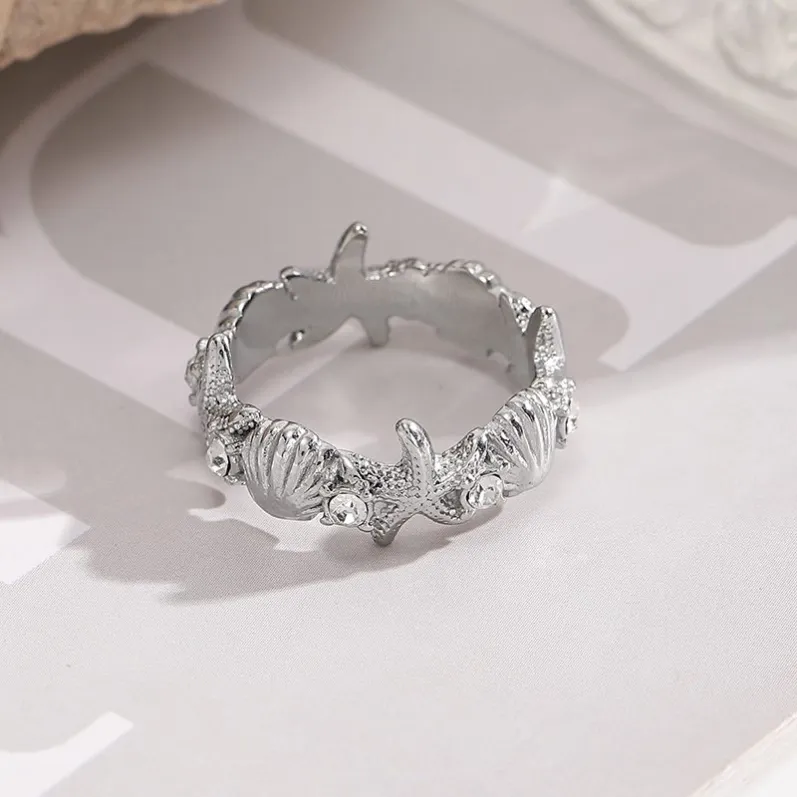
Stone-set rings are not banned from the kitchen, but a bezel or channel setting protects stones far better than raised prongs do, and it gives food far fewer places to hide.
For a kitchen-friendly ring, smooth beats decorated: fewer crevices means fewer hygiene worries and less cleaning.
Frequently Asked Questions
Is it unhygienic to wear a ring while cooking?
It can be. The space under a ring band stays warm and moist, and food particles collect there during mixing or kneading. That is why commercial kitchens restrict hand jewelry to a plain band. At home, remove rings before handling food by hand, and wash the ring along with your hands after touching raw meat.
Will stainless steel jewelry rust in the kitchen?
Practically never. The chromium in 316L stainless steel forms a thin passive oxide layer that protects the alloy against water, steam and salt, and that layer re-forms on its own if scratched. Pitting is only realistic after long contact with harsh salt or chlorine concentrates — neither of which normal cooking produces.
Can oven or stove heat damage my ring?
Cooking temperatures are far below the point where stainless steel changes — the alloy melts around 1,400 °C. The realistic hazard is conduction: a metal band touching a hot pan handle transfers heat to your skin within seconds. PVD 18K gold plating also stands up to normal kitchen heat without issue.
What is the best ring style if I cook every day?
A plain 316L stainless steel band. It has no stones or grooves to trap food, it tolerates heat, grease and acid, it survives constant handwashing, and it cleans up with ordinary dish soap. A smooth bezel-set design is the next best option if you want some decoration without the crevices.
How do I remove garlic or onion smell from a ring?
Wash it in warm water with dish soap, and if the smell lingers, make a paste of baking soda and water, rub it gently over the metal with your fingers or a soft cloth, then rinse and dry. Stainless steel releases surface films easily because nothing absorbs into the metal itself.
Wholesale Stainless Steel Jewelry from IVANDA
Looking for a reliable stainless steel jewelry supplier? IVANDA supplies 316L pieces with PVD 18K gold plating - waterproof, skin-friendly and made for everyday wear. MOQ 60 pcs per style, in stock and ready to ship, with OEM/ODM services for custom designs. Message us on WhatsApp or email sales01@ivanda-fa.com for the latest catalog and wholesale prices.
{"@context":"https://schema.org","@type":"FAQPage","mainEntity":[{"@type":"Question","name":"Is it unhygienic to wear a ring while cooking?","acceptedAnswer":{"@type":"Answer","text":"It can be. The space under a ring band stays warm and moist, and food particles collect there during mixing or kneading. That is why commercial kitchens restrict hand jewelry to a plain band. At home, remove rings before handling food by hand and wash the ring after touching raw meat."}},{"@type":"Question","name":"Will stainless steel jewelry rust in the kitchen?","acceptedAnswer":{"@type":"Answer","text":"Practically never. The chromium in 316L stainless steel forms a passive oxide layer that protects the alloy against water, steam and salt, and the layer re-forms if scratched. Pitting is only realistic after long contact with harsh salt or chlorine concentrates."}},{"@type":"Question","name":"Can oven or stove heat damage my ring?","acceptedAnswer":{"@type":"Answer","text":"Cooking temperatures are far below the point where stainless steel changes — the alloy melts around 1,400 °C. The realistic hazard is conduction from a hot pan handle. PVD 18K gold plating stands up to normal kitchen heat without issue."}},{"@type":"Question","name":"What is the best ring style if I cook every day?","acceptedAnswer":{"@type":"Answer","text":"A plain 316L stainless steel band. It has no stones or grooves to trap food, tolerates heat, grease and acid, survives constant handwashing, and cleans up with ordinary dish soap. A smooth bezel-set design is the next best option."}},{"@type":"Question","name":"How do I remove garlic or onion smell from a ring?","acceptedAnswer":{"@type":"Answer","text":"Wash it in warm water with dish soap. If the smell lingers, rub the metal gently with a paste of baking soda and water, then rinse and dry. Stainless steel releases surface films easily because nothing absorbs into the metal itself."}}]}