Oct 19, 2026
Can You Wear Stainless Steel Jewelry with Sunscreen?
Yes - stainless steel handles sunscreen well. How sunscreen affects different jewelry metals, which ones suffer, and a simple wipe-and-rinse routine.
Yes — sunscreen and stainless steel jewelry are a safe pairing: the cream cannot corrode 316L steel, and the only thing you ever need to manage is the invisible film it leaves on the surface, which a quick wipe and rinse removes.
Summer raises the same question every year: rings, bracelets and necklaces meet sunscreen every morning, and nobody wants to choose between sun protection and their jewelry. The answer depends almost entirely on the metal. For 316L stainless steel, sunscreen is a non-event. For silver and plated fashion jewelry, it is a genuine accelerator of tarnish and wear. Here is what actually happens where the cream meets the metal, material by material, plus the two-minute routine that keeps every piece bright all season.
What Sunscreen Actually Does to Metal
Sunscreen looks like one product, but it is a blend of very different ingredients: oils and silicones that carry it, emulsifiers that hold the blend together, UV filters — organic compounds or mineral particles such as zinc oxide and titanium dioxide — and fragrances.
None of those ingredients corrode stainless steel. The chromium oxide layer on 316L is stable against them at body temperature, which is why a steel ring worn through a whole summer of sunscreen applications shows no staining, no spotting and no color change.
What sunscreen does do is sit on the surface. Cream gets worked into the places fingers press it — under bezels, into chain links, around clasps and engraving — and once the water in the formula evaporates, it leaves a waxy, water-repellent film. That film then traps sweat, dust and dead skin against the metal. The result is a piece that looks grey and tired even though the metal underneath is perfectly intact.
So the honest framing is this: for stable metals, sunscreen is a cleaning problem, not a corrosion problem — the cream cannot dissolve stainless steel, gold, platinum or titanium, it can only sit on them.
Which Materials Actually Suffer
Not every metal shrugs sunscreen off, and the damage patterns are worth knowing before a beach holiday.
925 sterling silver is the clear loser. Silver tarnishes through reactions with sulfur compounds, and the warm, sealed, sweaty environment a sunscreen film creates speeds that reaction up. Worse, the waxy layer seals moisture against the surface, so silver can darken in patches underneath the film — patches that are hard to polish out until the film itself is removed.
Thin-plated brass and other soft base metals suffer twice. First, the rubbing motion of applying sunscreen is itself abrasive, and every pass over a plated surface thins the coating a little. Second, once the plating wears through, the reactive brass underneath oxidizes quickly in the humid, cream-covered environment. A plated bracelet worn through one beach season can arrive at autumn with bare metal showing at the high points.
Porous organic materials — pearls, untreated stones, wood and leather elements — absorb the oils in sunscreen, which dulls and can permanently discolor them. This is where the classic advice to remove jewelry before applying sunscreen came from: it was written for these materials.
Notice what is missing from this list: stainless steel, solid gold, platinum and titanium. These stable metals do not react with sunscreen ingredients at all. The materials that suffer from sunscreen are the reactive and coated ones — silver, plated base metals and porous organics — while stable metals like 316L stainless steel come through a summer untouched.
Jewelry Materials vs Sunscreen Tolerance
Material | Sunscreen tolerance | What happens | What to do |
|---|---|---|---|
316L stainless steel | Excellent | No reaction; film may dull the surface over days | Rinse with soapy water when dull |
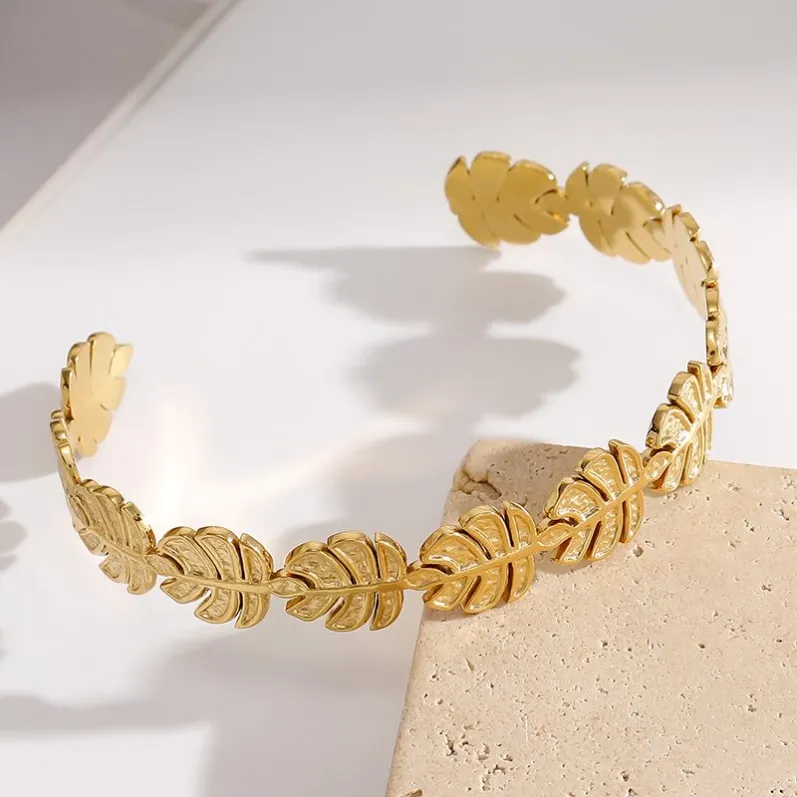
PVD 18K gold plated stainless steel | Excellent | No reaction; hard coating resists the rubbing of application | Wipe and rinse as needed |
Solid gold | Excellent | No corrosion; film builds in crevices | Mild soap and water |
Platinum | Excellent | No corrosion; film builds | Mild soap and water |
Titanium | Excellent | No reaction; oxide surface highly stable | Rinse occasionally |
925 sterling silver | Poor | Tarnish accelerates under the sealed film | Remove before applying; polish often |
Thin-plated brass | Poor | Coating wears faster; base metal oxidizes once exposed | Remove before applying |
If your summer routine involves daily sunscreen, the material list narrows to the stable metals — and 316L stainless steel is the only one on that list at a mass-market price level.
For retailers, this table doubles as a summer merchandising guide: it explains why stainless steel pieces sell through beach season while silver needs a care talk at the counter.
The Wipe-and-Rinse Routine
For anyone who wears stainless steel through summer, a two-minute routine a couple of times a week is all the maintenance the sunscreen season demands.
- Wipe after heavy exposure. At the end of a beach or pool day, go over the piece with a soft cloth. This removes most of the film before it dries hard into crevices.
- Rinse with lukewarm water and mild soap. Massage the piece between soapy fingers, or let chains soak for a few minutes. Soap breaks down the waxy, water-repellent film that plain water cannot move.
- Brush the crevices. A soft toothbrush works soap through chain links, around bezels and into engraving, where the film concentrates.
- Rinse and dry fully. Finish with clean water, then towel dry. Drying matters — water spots are leftover minerals, not metal damage, but they dull the shine just the same.
- Apply sunscreen before jewelry, not after. Let the cream absorb for a minute before putting pieces back on. Less cream on the jewelry means less film to clean later — the same "last on, first off" habit that protects rings from hand cream.
That is the entire routine: no special products, no ultrasonic machine, no polishing paste. Stainless steel does not need any of them to stay bright. Two minutes of soap and water a week is the whole price of wearing jewelry through sunscreen season.
Why Buildup Dulls Shine — and How to Restore It
Polished metal reflects light in one clean direction, and that mirror effect is what we read as shine. A film of sunscreen, sebum and dust is a scattered, uneven layer, so light bounces off it in every direction and the eye reads the surface as grey, hazy or simply old. The metal has not changed — only the light path has.
This is why a "ruined" piece so often is not ruined at all. Before assuming damage, wash the piece properly: lukewarm water, a drop of dish soap, a few minutes' soak, a soft brush through the links, a thorough dry. On stainless steel and PVD 18K gold plated pieces, that restores the original finish essentially every time, because the film was the only thing in the way.
Genuine damage is a different category: deep scratches in soft metals, worn-through plating, or dark tarnish that has sat sealed under film for months. A steel piece that has truly been gouged keeps its shape but shows the mark — and honesty about that matters. What steel does not do is rust patches, green skin marks or spreading discoloration. If you see those, the piece was never 316L to begin with.
Dull almost always means dirty, not damaged — and dirt rinses off steel in a minute.
Frequently Asked Questions
Can sunscreen ruin stainless steel jewelry?
No. The ingredients in sunscreen cannot corrode 316L stainless steel — the surface oxide layer is stable against oils, UV filters and mineral particles alike. The only effect is a waxy film that builds up over days, which dulls the shine until you wash it off with soap and water.
Should I take my jewelry off before applying sunscreen?
With stainless steel, solid gold, platinum or titanium, there is no need. With silver, plated pieces, pearls or porous stones, yes — sunscreen accelerates tarnish on silver, wears thin coatings down faster and absorbs into organic materials. The habit of sunscreen first, jewelry second solves every case at once.
Why does my jewelry look dull after a beach day?
Salt, sand dust, sweat and sunscreen leave a combined film on the surface, and that film scatters light instead of reflecting it. The metal underneath is fine. A soak in lukewarm soapy water, a soft brush through the links and a towel dry usually restore full shine.
Does sunscreen tarnish silver?
It accelerates tarnish, yes. Sunscreen forms a film that traps moisture and sweat against the silver, and that sealed, humid environment speeds up the reactions that darken it. Silver worn through a sunscreen-heavy summer needs noticeably more polishing than silver worn on its own.
How do I get sunscreen off my jewelry?
Wash it in lukewarm water with a drop of mild dish soap, let it soak a few minutes, then work a soft toothbrush through chain links, clasps and around bezels where the waxy film collects. Rinse, towel dry, and the shine should come straight back. For stubborn film, repeat rather than scrub harder.
Wholesale Stainless Steel Jewelry from IVANDA
Looking for a reliable stainless steel jewelry supplier? IVANDA supplies 316L pieces with PVD 18K gold plating - waterproof, skin-friendly and made for everyday wear. MOQ 60 pcs per style, in stock and ready to ship, with OEM/ODM services for custom designs. Message us on WhatsApp or email sales01@ivanda-fa.com for the latest catalog and wholesale prices.
{"@context":"https://schema.org","@type":"FAQPage","mainEntity":[{"@type":"Question","name":"Can sunscreen ruin stainless steel jewelry?","acceptedAnswer":{"@type":"Answer","text":"No. Sunscreen ingredients cannot corrode 316L stainless steel. The only effect is a waxy film that builds up over days and dulls the shine until you wash it off with soap and water."}},{"@type":"Question","name":"Should I take my jewelry off before applying sunscreen?","acceptedAnswer":{"@type":"Answer","text":"Not for stainless steel, gold, platinum or titanium. For silver, plated pieces, pearls and porous stones, yes — sunscreen speeds tarnish and coating wear. Apply sunscreen first, jewelry second."}},{"@type":"Question","name":"Why does my jewelry look dull after a beach day?","acceptedAnswer":{"@type":"Answer","text":"Salt, sand dust, sweat and sunscreen leave a combined film that scatters light instead of reflecting it. A soak in lukewarm soapy water, a soft brush and a towel dry usually restore the shine."}},{"@type":"Question","name":"Does sunscreen tarnish silver?","acceptedAnswer":{"@type":"Answer","text":"It accelerates tarnish, yes. The film traps moisture and sweat against the silver, and that sealed, humid environment speeds up the reactions that darken it."}},{"@type":"Question","name":"How do I get sunscreen off my jewelry?","acceptedAnswer":{"@type":"Answer","text":"Wash in lukewarm water with mild dish soap, soak a few minutes, brush links and bezels with a soft toothbrush, then rinse and towel dry. Repeat for stubborn film rather than scrubbing harder."}}]}