Oct 24, 2026
Stainless Steel vs Resin Jewelry: Modern Materials
Stainless steel vs resin jewelry compared: durability, water resistance, weight, color options and which material suits your collection. Honest guide.
Stainless steel and resin are two of the most popular non-traditional jewelry materials, and they win on opposite strengths: steel leads on durability and longevity, resin leads on color and sculptural freedom. Understanding what each material actually is — and how each behaves in daily life — makes the "which one should I choose" decision genuinely simple.
This comparison covers construction, durability, water exposure, weight, styling range and the honest weaknesses of both materials, so you can match the choice to how you actually wear jewelry.
What Resin Jewelry Actually Is
Resin jewelry starts as a liquid — usually epoxy or acrylic resin — that is poured into molds and cured into a hard, glass-like solid. Pigments, dried flowers, glitter or small objects can be suspended inside before curing, which is why resin pieces often look like miniature sculptures.
The material's biggest appeal is creative freedom: any color, any opacity, almost any shape, and extremely light — which allows oversized earrings that would be exhausting in metal. The trade-offs appear over time: resin can scratch, chips at the edges when knocked, and lighter or clearer pieces can gradually yellow with UV exposure. Prolonged contact with perfume, alcohol or acetone can also dull the surface.
Resin's superpower is color and shape; its weakness is surface wear over years of daily use.
What Stainless Steel Jewelry Actually Is
Stainless steel jewelry is made from steel alloys — most commonly grade 316L — cut, cast and polished into finished pieces. Unlike coated fashion jewelry, the material is the same all the way through: scratch the surface and you still see steel, not a base metal underneath.
For gold-tone designs, reputable suppliers use PVD 18K gold plated finishes, where the color layer is bonded to the steel in a vacuum chamber — far more wear-resistant than conventional electroplating. No coating is permanent, though: after several years of heavy daily wear, high-friction spots such as ring edges and clasp areas can gradually soften in tone.
Setting that honest limitation aside, the material's everyday performance is among the strongest in fashion jewelry: it resists rust, holds its polish, shrugs off showers and sweat, and does not bend out of shape the way soft metals do. Our guide to PVD coating science (/posts/pvd-coating-jewelry-science-explained) explains how the bonding process works.
Steel gives you through-the-core durability and a finish that survives daily water — at the cost of less color variety than resin.
Durability Compared Day to Day
The clearest way to compare these materials is by how each handles real situations rather than lab descriptions:
Situation | Stainless steel (316L) | Resin |
|---|---|---|
Daily knocks and bumps | Scratches can be polished out; piece keeps its shape | Chips and dents at edges; hard to repair |
Shower, gym, sweat | Unaffected; rinse and dry as usual | Water itself is fine, but the surface may cloud over time |
Perfume, sunscreen, alcohol | No effect on plain steel | Can dull, cloud or pit the surface |
Dropping on hard floors | Survives; at worst a scuff on a polished edge | Can crack or shatter if it lands on an edge |
Years of wear | Steel core unchanged; PVD tone slowly softens at friction points | Scratches accumulate; light tones may yellow |
Repair options | Can be re-polished | Usually replaced, not repaired |
If your jewelry leads a rough life — gym, beach, travel, kids — steel is the low-maintenance choice; resin asks for gentler handling.
Water, Sweat and Sunscreen Exposure
Plain 316L steel treats water as a non-event. Showers, swimming, sweat and sea spray do not damage the steel itself, which is why it dominates the "waterproof jewelry" category. A quick rinse in fresh water after pool or sea days keeps it bright, since dried chlorine or salt residue can leave spots.
Resin is waterproof in the sense that water will not dissolve it, but its surface is more chemically sensitive: chlorine, sunscreen and alcohol-based products can slowly cloud or dull the gloss, especially on clear and pastel colors.
The same habits apply with one extra note for steel: sunscreen and lotions leave an invisible film on any jewelry, including PVD 18K gold plated pieces, so a brief rinse after heavy-sun days is the single most useful habit. Our post on stainless steel jewelry with sunscreen (/posts/stainless-steel-jewelry-with-sunscreen) walks through the routine.
Plain steel treats water as a non-event; resin tolerates splashes but not a steady diet of chlorine, salt and lotion film.
Weight, Comfort and Feel
Resin weighs so little that oversized statement earrings stay comfortable from morning to night — something solid metal cannot match at large sizes. If big, bold shapes are your style, resin's lightness is a genuine advantage, not a compromise.
Steel is noticeably heavier, and for necklaces, bracelets and rings that weight reads as quality — a steel chain drapes rather than floats, a steel cuff sits firmly on the wrist. The practical answer is to match material to body area: resin where lightness matters (large earrings), steel where presence matters (chains, cuffs, rings).
Resin disappears on the ear; steel feels like quality on the wrist — choose based on the body area and the size of the piece.
Color, Style and Design Freedom
Here resin wins outright on range. It can be translucent, opaque, marbled, layered or embedded with flowers and gold leaf, and it can be tinted to match any seasonal palette. For trend-driven collections, resin makes bold color affordable.
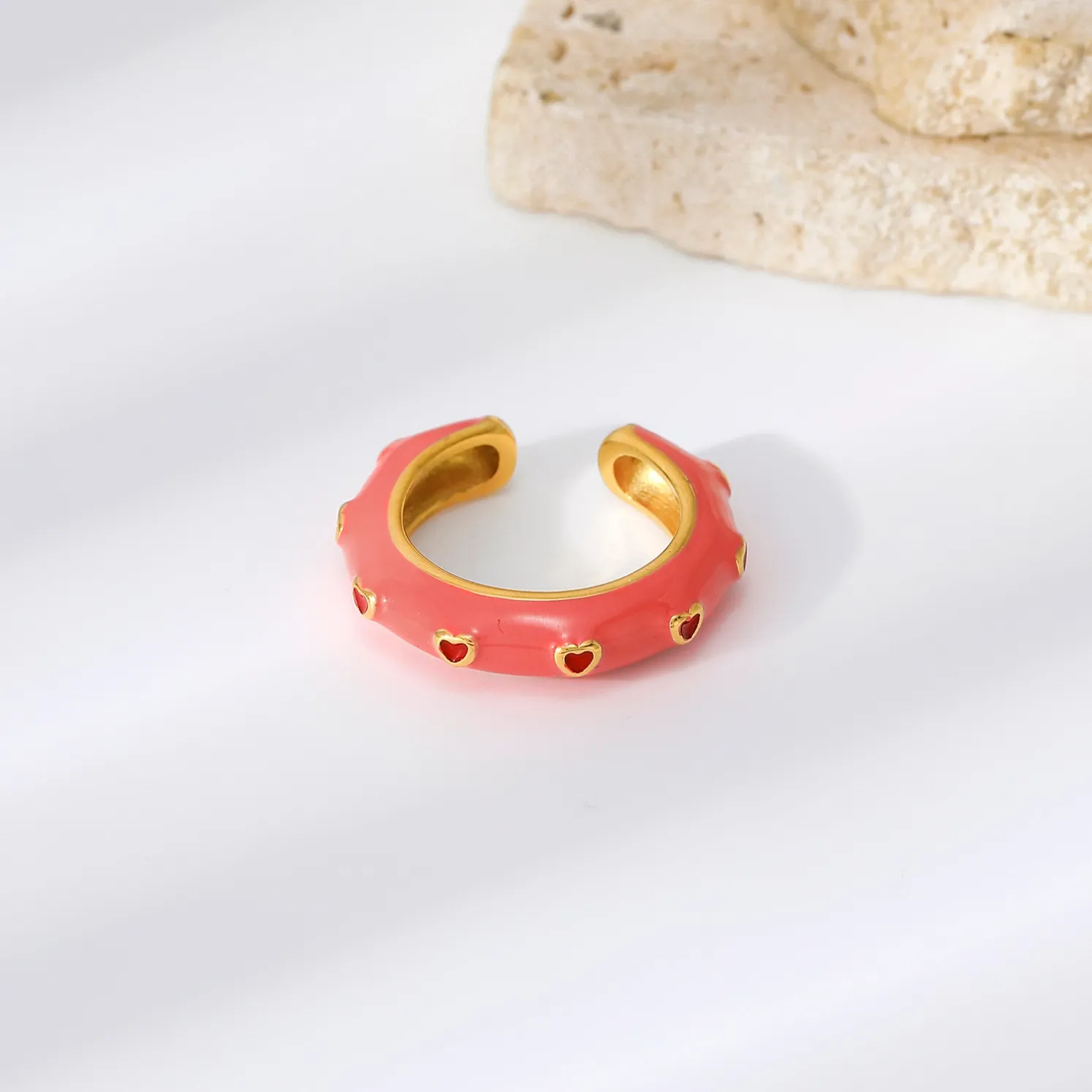
Steel's palette is metallic by nature: silver-tone steel, black finishes, and PVD 18K gold plated surfaces for warm gold tones. What steel adds instead is precision — crisp edges, engraving, and structural shapes resin cannot achieve at small scales. The most interesting modern designs often combine the two, using steel frames with resin inlays for color.
Choose resin when color is the product; choose steel when longevity is the product — the strongest collections often use both.
Which Material Should You Choose?
You want... | Better choice |
|---|---|
Everyday pieces you never remove | Stainless steel |
Oversized, feather-light earrings | Resin |
Jewelry that survives gym and beach | Stainless steel |
Bold seasonal colors on a budget | Resin |
Engraved or personalized pieces | Stainless steel |
Lightweight summer statement jewelry | Resin |
For a core collection worn every day, stainless steel earns its place; resin shines as the colorful, expressive second line.
Frequently Asked Questions
Short, honest answers to the questions buyers ask most about these two materials.
Does resin jewelry break easily?
Resin is rigid rather than brittle, but it is not impact-proof. Thin edges, narrow ring shanks and pointed shapes are the most vulnerable, and a hard fall onto tile or stone can crack or chip a piece. Everyday wear is usually fine; the risk comes from drops and from tossing pieces loosely into a bag. Store resin separately and it lasts far longer.
Can stainless steel jewelry get wet?
Yes. Grade 316L is the same family of steel used in marine and kitchen applications, and water does not rust it under normal conditions. Shower, rain and sweat are all fine. The only habit worth keeping is a quick rinse in fresh water after sea or pool days, followed by drying, so salt or chlorine residue does not leave dull spots on the polish.
Does resin jewelry turn yellow over time?
Lighter and clearer resin can gradually shift toward yellow with long-term UV exposure, while darker and opaque pigmented colors resist visible change much better. The process takes a long time rather than weeks, but it is real. Storing pieces away from direct sunlight and skipping beach-hours wear for clear resin pieces will noticeably slow any discoloration.
Is stainless steel heavier than resin?
Yes, noticeably so. Steel has a substantial, weighty feel that many people read as quality in chains, rings and cuffs, while resin is so light that even oversized earrings stay comfortable all day. Neither is better universally: if you dislike feeling jewelry on your body, resin wins; if you want pieces with presence, steel delivers exactly that.
Which material is better for everyday wear?
For true everyday wear — sleeping, showering, gym, swimming — stainless steel is the clear choice because it needs almost no special care. Resin rewards gentler treatment and suits statement or occasional pieces. A practical combination many people land on: steel as the permanent base layer, resin as the rotating color accent on top.
Wholesale Stainless Steel Jewelry from IVANDA
Looking for a reliable stainless steel jewelry supplier? IVANDA supplies 316L pieces with PVD 18K gold plating - waterproof, skin-friendly and made for everyday wear. MOQ 60 pcs per style, in stock and ready to ship, with OEM/ODM services for custom designs. Message us on WhatsApp or email sales01@ivanda-fa.com for the latest catalog and wholesale prices.