Oct 26, 2026
The Complete Guide to Stainless Steel Charm Necklaces
Everything about stainless steel charm necklaces: charm styles, chain types, layering rules, water care and how to build a collection that lasts for years.
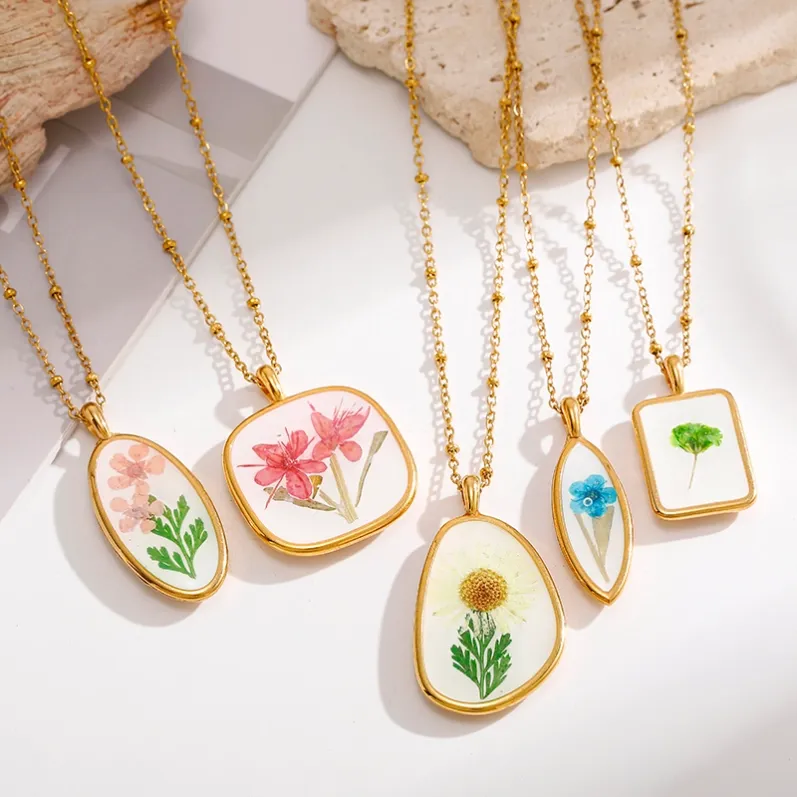
A charm necklace is the most personal piece in any jewelry collection — and stainless steel finally makes building one practical, because charms that survive water, sweat and friction can be worn every day instead of saved for occasions.
Charm necklaces have moved from heirloom lockets to the center of modern jewelry — collected, layered, gifted and used to mark life events. The material decides whether a collection stays beautiful or fades within a season. This guide covers what counts as a charm necklace, why stainless steel changed the game, how to choose charms, chains and lengths, how to layer without tangles, and what to consider when selling.
What Counts as a Charm Necklace?
A charm necklace is any chain carrying one or more small decorative pendants with personal or stylistic meaning. Unlike a single statement pendant, it is usually a collection: pieces added over time, each marking a place, a person or a phase of life.
Format | What it looks like | Best for |
|---|---|---|
Single-charm | One meaningful charm on a fine chain | Minimalists and first charms |
Spaced charms | Several small charms fixed along the chain | Balanced everyday wear |
Clustered charms | Multiple charms grouped at the front | A collected, storytelling look |
Build-your-own | Base chain plus removable charms | Gifting and collecting over time |
A charm necklace is defined by accumulation rather than by any single pendant — it is a piece designed to grow with the wearer.
Why Stainless Steel Changed the Charm Game
Traditional charm jewelry always had a durability problem. Charms are small, detailed and handled constantly — spun between fingers, snagged on scarves, splashed at the sink — so softer metals collect scratches on exactly those raised details, and plated alloys wear through at the highest points first.
Material | Water and sweat behavior | Everyday durability | Maintenance |
|---|---|---|---|
316L stainless steel | Unaffected by water and sweat | Resists scratches and bending | Rinse and dry occasionally |
Brass and zinc alloy | Discolors with moisture | Detail edges chip and bend | Frequent polishing, careful storage |
Sterling silver | Tarnishes, faster with sweat | Soft, dents and scratches easily | Regular polishing |
Steel also takes detail well — casting reproduces small shapes crisply and holds a polish that keeps tiny features readable. With PVD 18K gold plating, that detail carries a warm color through years of handling, and two-tone designs mix bare steel and PVD 18K gold plated elements in one piece.
Because charms are handled, snagged and worn against skin all day, material matters more for charms than for almost any other jewelry type — and 316L steel is built for exactly that treatment.
Choosing Charms: Styles and Meanings
The charm universe sorts into a few big families, and most collections mix them: symbols (hearts, stars, moons, keys, evil eyes), letters and initials (the most personal category, and a reliable first charm), nature and travel (waves, mountains, planes, shells) and tiny objects (books, instruments, coffee cups — hobbies worn literally).
Two composition rules keep a collection intentional: vary the scale, pairing one anchor charm with two or three smaller supporters instead of five equal pieces, and favor odd numbers — three or five charms at the front read as a deliberate group, while four can look accidentally symmetrical.
The best charm selections mix one anchor piece with smaller supporters — three to five charms of varying size read as intentional rather than cluttered.
Chains and Lengths: The Foundation
The chain carries the whole story, so choose it before the charms. Length decides where the collection sits relative to the neckline; link style decides how securely charms hang and move.
Length | Where it sits | Charm necklace use |
|---|---|---|
16 in / 40 cm | Base of the neck | One small charm; a clean layering base |
18 in / 45 cm | At the collarbone | The everyday default for most necklines |
20 in / 50 cm | Just below the collarbone | Room for three or four charms to move |
24 in / 60 cm | Mid-chest | Statement clusters and layering anchors |
Small, uniform links (cable, curb, paperclip) hold charms at even spacing, while very chunky links crowd a cluster. Check that jump rings are fully closed — ideally soldered — because an open ring is the classic way a charm disappears. Our necklace chain length guide maps lengths to necklines in detail.
Choose the chain before the charms — length determines where the story sits on the neckline, and link quality determines how securely it hangs there.
How to Layer Charm Necklaces Without Tangles
Layering multiplies the look but also the tangle risk, and three rules prevent most of it:
- Separate lengths by at least 4–5 cm. Two chains at similar lengths will braid themselves together within an hour.
- Vary the weights. Heavier chains and bigger charms belong on the lowest layer; fine chains float above without snagging.
- Limit charms on upper layers. One charm on the short chain, the full cluster on the long one — visual weight stays at the bottom, where it hangs cleanly.
Layering works when each layer has a different length and a different visual weight — sameness creates tangles, deliberate contrast creates depth.
Water, Sweat and Daily Wear
This is where stainless steel charm necklaces separate themselves from every other material: the chain and charms do not rust, tarnish or discolor in the shower, at the gym or in the rain, so the collection can be worn continuously — exactly how charm jewelry is meant to live. Our guide to what waterproof jewelry really is explains the material science behind it.
Charms add solder joints and crevices, so construction quality matters more than on plain chains: check that jump rings are fully closed, solder points smooth, and charms sitting flat before daily wear. On PVD 18K gold plated pieces, rinse after pool or ocean swims so chlorine and salt do not dry into the crevices — the habit covered in our guide to showering with stainless steel jewelry.
Charms add joints and crevices to a necklace, so construction quality matters as much as material — closed, smooth solder points are what make daily wear safe for the piece.
Building a Charm Collection to Sell
For small brands and resellers, charm necklaces work as a system rather than a product line: a reliable base chain in two or three lengths (the repeat purchase that carries everything), a core cast of charms that stays restocked rather than retired, seasonal drops that give collectors a reason to return, and starter sets that lower the entry decision. The logic is cumulative — every charm sold makes the next one more likely, because the customer is building a personal collection, not replacing an item, which is also why durability is a selling argument: a collection only grows on a base that lasts for years.
A charm program works as a system — dependable chains, a rotating cast of charms and styling that shows combinations — not as loose singles on a display card.
Frequently Asked Questions
What length is best for a charm necklace?
Eighteen inches (45 cm) at the collarbone is the everyday default, because charms sit visibly with most necklines. If you plan to collect several charms, twenty inches gives them room to move without crowding each other. For layering, combine sixteen and twenty inches so each layer reads separately instead of tangling.
Do stainless steel charm necklaces break easily?
Far less often than other materials. The steel chain resists bending and the charms resist chipping, so the realistic failure points are mechanical: jump rings and clasps. On quality pieces these are closed and soldered, letting the necklace survive daily wear, gym sessions and travel far better than alloy or silver versions.
Can I shower with a charm necklace on?
Yes, if it is 316L stainless steel or PVD 18K gold plated steel — water does not hurt either. The only guest is soap film, which settles into the crevices around charms and dulls details first. A quick rinse and pat-dry after showers, especially in hard-water areas, keeps every small feature crisp.
How many charms is too many?
The limit arrives when the chain stops moving freely or the wearer stops noticing individual charms. Most necklines balance best with three to five charms of mixed sizes, and larger statement pieces count double — one bold charm can anchor an entire necklace on its own.
Well-answered questions double as merchandising — the same answers that reassure buyers help sellers style and describe the piece.
Wholesale Stainless Steel Jewelry from IVANDA
Looking for a reliable stainless steel jewelry supplier? IVANDA supplies 316L pieces with PVD 18K gold plating - waterproof, skin-friendly and made for everyday wear. MOQ 60 pcs per style, in stock and ready to ship, with OEM/ODM services for custom designs. Message us on WhatsApp or email sales01@ivanda-fa.com for the latest catalog and wholesale prices.