Oct 30, 2026
How to Price Jewelry for Retail: Stainless Steel Guide
How to price jewelry for retail: markup formulas, margin math and positioning tips to sell stainless steel jewelry at a healthy profit.
Pricing is the decision that quietly decides whether a jewelry business survives its first year — and sellers who price well follow a formula, not a feeling. In this guide you'll learn how to price jewelry for retail step by step: what counts as your true cost, which markup multipliers make sense for stainless steel, how margin differs from markup, and how positioning lets two nearly identical chains sit at completely different prices — both successfully.
Start With the True Cost of Every Piece
A retail price built on the wrong cost base fails no matter how clever the multiplier is.
Before applying any formula, calculate what each piece actually costs you. Most new sellers use the supplier invoice and stop there, then wonder where the profit went. Your true cost per piece includes:
- The wholesale price you pay the supplier
- Inbound shipping and any customs duties
- Packaging: box, pouch, card and mailer
- Payment processing fees and marketplace commissions
- A small allowance for returns, exchanges and lost parcels
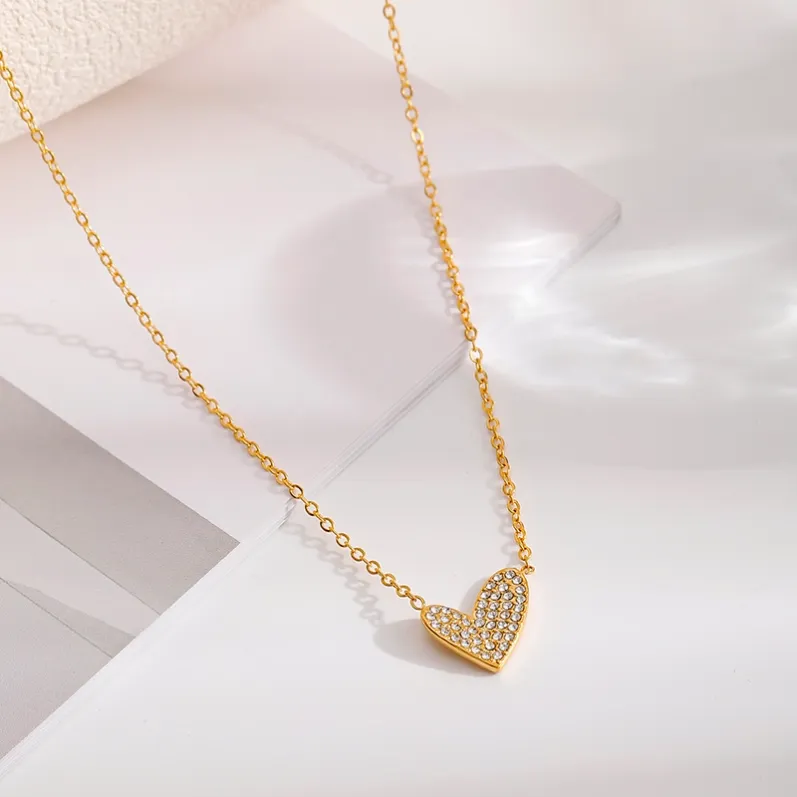
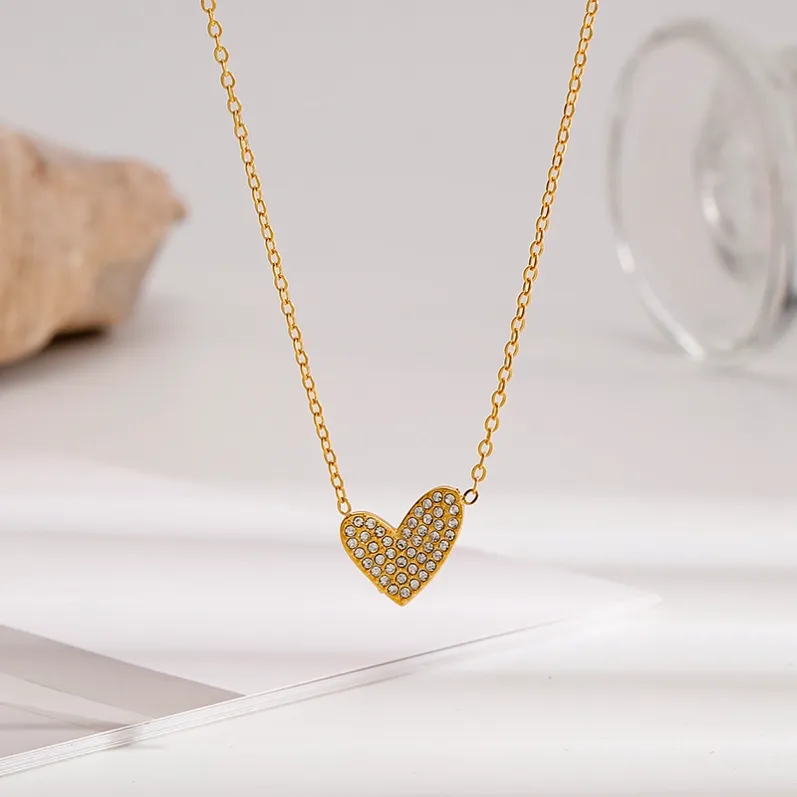
Write this number down for every SKU. If a PVD 18K gold plated chain costs more to produce than a plain steel chain — the coating process is slower and more demanding — its cost base, and therefore its price, should reflect that. Pricing every piece identically flattens the real differences inside your collection and quietly taxes your best products.
The Core Formula: Cost × Markup Multiplier
Treat keystone pricing (2×) as the floor for jewelry, not the target — most working stainless steel collections are priced in the 2.5×–4× range.
The classic formula for how to price jewelry for retail is refreshingly simple:
Retail price = true cost per piece × markup multiplier
Choosing the multiplier is the strategic part:
Multiplier | Approx. margin | When it fits |
|---|---|---|
2× (keystone) | 50% | Clearance items and volume-led sellers |
2.5× | 60% | Everyday stainless steel basics |
3× | ~67% | Branded collections with proper packaging |
4× | 75% | Designer positioning and gift-ready presentation |
A 2× multiplier leaves nothing for marketing, returns or the slow months, which is why experienced sellers treat it as a floor for nothing and a ceiling for clearance. Start at 3× for core collections, then adjust up or down based on positioning and on what your own customers demonstrate they will pay — their behavior over a full season is better research than any template.
Margin vs. Markup: Get the Words Right
Markup is calculated on cost; margin is calculated on price — confusing the two is the fastest way to underprice an entire collection.
These terms get used interchangeably, and the mix-up quietly destroys margins. Markup compares profit to cost. Margin compares profit to selling price. A piece marked up 100% — doubling your cost — produces a 50% margin at retail. Same economics, two descriptions, and only one of them matches how your bills arrive.
The practical rule: set prices with a markup multiplier, then evaluate performance in margin, because rent, ads and shipping all come out of the margin side of the equation. If you promise yourself a 50% margin, a 1.5× multiplier will not deliver it — you would need 2× just to get there. Writing both numbers on your pricing sheet prevents the most common spreadsheet mistake in jewelry retail before it ever costs you money.
Price on Positioning, Not Just on Cost
Two nearly identical chains can hold two very different prices when the brand around them earns the difference.
Cost-plus formulas set your minimum; positioning sets your ceiling. Buyers never experience your jewelry as a cost sheet — they experience the photography, the unboxing, the story on the product page and the confidence of your copy. A well-written description can justify a higher tier on its own; we cover that craft in our guide to writing jewelry product descriptions that sell.
Positioning also means being honest about quality. A PVD 18K gold plated finish costs more to produce than basic surface coatings and keeps its color through years of everyday wear — but it is not permanent. Friction, perfume and pool chlorine will gradually soften high-contact points like clasps and edges. Price quality honestly, describe it honestly, and customers reward you with repeat orders instead of complaints.
Psychological Pricing That Doesn't Feel Cheap
Charm endings lift conversion on everyday pieces; rounded endings lift perceived quality on gifts — match the ending to the collection.
Small formatting choices move behavior. Charm pricing — ending just below a round number — works well for entry-level pieces, where shoppers compare options quickly. Rounded prices work better for gift-positioned collections, where the buyer wants the item to feel considered rather than discounted.
Two guardrails worth keeping:
- Never format the entire store identically. A uniform ending makes even premium pieces read as discounted goods.
- Keep tier gaps deliberate. If your good-better-best prices sit too close together, shoppers default to the cheapest, and your average order quietly falls.
When to Adjust Your Prices
Review prices on a schedule and on triggers — never on emotion after one slow week.
Set a recurring review — quarterly is a sensible rhythm — and also re-price when specific triggers appear:
- Supplier costs, packaging materials or shipping rates change
- You upgrade packaging or add gift-ready presentation
- A collection sells steadily without ever being discounted
- Gift season approaches and bundles make sense — our guide to what jewelry to gift, by person and occasion doubles as a bundle-planning checklist
Adjust existing lines gradually rather than all at once, and anchor changes to visible improvements such as a better box, extended sizing or a new finish, so an increase feels earned rather than random.
Frequently Asked Questions
Quick answers to the pricing questions jewelry sellers ask most.
What markup should I use for stainless steel jewelry?
Start at 2.5×–3× on your true landed cost for core pieces, and reserve 2× for genuine clearance. Stainless steel is durable and low-maintenance, which supports everyday premium positioning, but your multiplier must still cover marketing, packaging, returns and slow inventory. If 3× leaves no room for even a small ad budget, the problem is usually an incomplete cost base rather than the multiplier itself.
Is keystone pricing enough for jewelry?
Keystone — doubling your cost — is the traditional floor, not a strategy. At 2×, a single returns wave, a failed campaign or one slow quarter can erase the entire margin. Use keystone only for clearance or entry-level hooks, and build your main collections at 2.5×–4× so the business has room to breathe and grow.
How do I calculate margin from a markup multiplier?
Use this formula: margin = 1 − (1 ÷ multiplier). A 2× markup means 1 − 0.5, which is a 50% margin; 2.5× gives 60%, and 3× gives about 67%. Check the figure on every pricing sheet, because forgotten costs — processing fees, gift boxes, shipping subsidies — always attack the margin, never the markup you calculated.
Should stainless steel be priced below other jewelry metals?
Not necessarily. Price against the value you deliver: stainless steel keeps its finish through daily wear, water and travel, which many fashion metals cannot claim. Position it as the smart, durable choice rather than the cheap alternative, and support that story with packaging, photography and honest material descriptions instead of racing to the bottom.
How often should I review my retail prices?
Review quarterly, plus immediately whenever supplier costs, shipping rates or packaging change. Annual-only reviews let small cost increases eat margins silently for months. Keep the review factual — cost base, competitor shelf, sell-through by tier — and move prices gradually across a collection so customers experience a deliberate structure rather than random jumps.
Wholesale Stainless Steel Jewelry from IVANDA
Looking for a reliable stainless steel jewelry supplier? IVANDA supplies 316L pieces with PVD 18K gold plating - waterproof, skin-friendly and made for everyday wear. MOQ 60 pcs per style, in stock and ready to ship, with OEM/ODM services for custom designs. Message us on WhatsApp or email sales01@ivanda-fa.com for the latest catalog and wholesale prices.