News
Hypoallergenic Stainless Steel Jewelry for Sensitive Skin
Hypoallergenic stainless steel jewelry for sensitive skin: 316L, EN 1811 nickel-release testing, and how to choose earrings, necklaces and rings.
Hypoallergenic Stainless Steel Jewelry for Sensitive Skin
For many women, the question is not whether jewellery is beautiful — it is whether she can wear it. Redness, itching and swelling around earrings, necklaces and rings are usually a reaction to nickel released from the metal — the most common reason a customer returns jewellery. Hypoallergenic stainless steel jewellery is made for her: 316L steel, a hard PVD finish, and nickel release measured to EN 1811.
What hypoallergenic actually means
Hypoallergenic is not a legal standard and no metal suits everyone: it means the piece is made to minimise the risk of a reaction — the right material, the right finish, the nickel release actually measured rather than assumed. What matters most is the metal touching the skin for hours: the earring post, the inside of a ring, the back of a pendant, the clasp of a bracelet — the reaction comes from what the metal releases, not how it looks.
Why 316L stainless steel suits sensitive skin
316L is the grade used in watches, surgical instruments and medical implants: hard, corrosion-resistant, and releasing very little nickel. Nickel release is what triggers the reaction, so a metal that holds its nickel in place is the starting point for hypoallergenic jewellery.
The finish matters just as much: an 18K gold, silver-colour or rose gold PVD layer is a hard, bonded coating that slows nickel release further. A thin dip plating wears through at the contact points — the earring post, the ring's inner band — exposing the base metal; PVD resists that wear, so it stays comfortable for longer.
Our 316L jewellery is nickel-release tested to EN 1811, the European standard for how much nickel a piece releases in prolonged skin contact — the EU limit is 0.5 micrograms per square centimetre per week for jewellery in prolonged contact, and 0.2 for ear posts. A test report states the material, the method and the result — ask for it before ordering. 316L contains nickel, so it is never described as free of nickel: the honest claim is tested and within the limit.
Earrings: where sensitive skin matters most
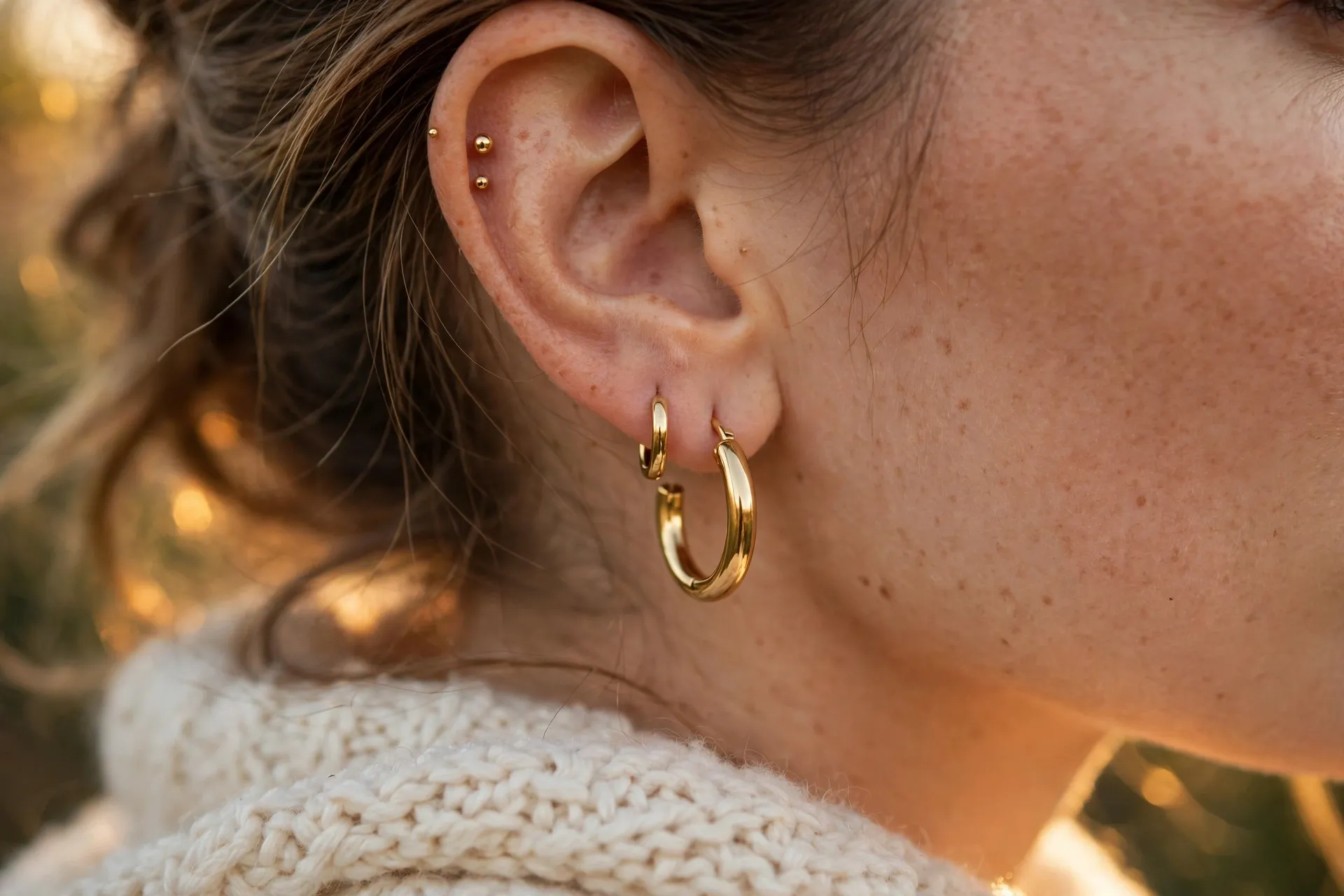
Earrings are the hardest test for sensitive skin: the post passes through the piercing and stays against raw skin for hours. Check it first — it should be 316L, smooth, and the same material as the earring itself, not a cheaper metal hidden behind a gold-coloured front.
Studs are the easiest place to start: a small contact area, a checkable post, a swappable back — our hypoallergenic stainless steel stud earrings for women (https://www.stainlesstrends.com/posts/hypoallergenic-stainless-steel-stud-earrings-for-women) covers post and back choices in detail. Hoops are next: the post still matters, but the hoop hangs from the piercing rather than pressing against the ear — see our chunky stainless steel hoop earrings for women (https://www.stainlesstrends.com/posts/chunky-stainless-steel-hoop-earrings-for-women) for clasp and comfort choices. Put earrings in after perfume and hairspray, and clean the posts before first wear.
Necklaces, bracelets and rings for sensitive skin
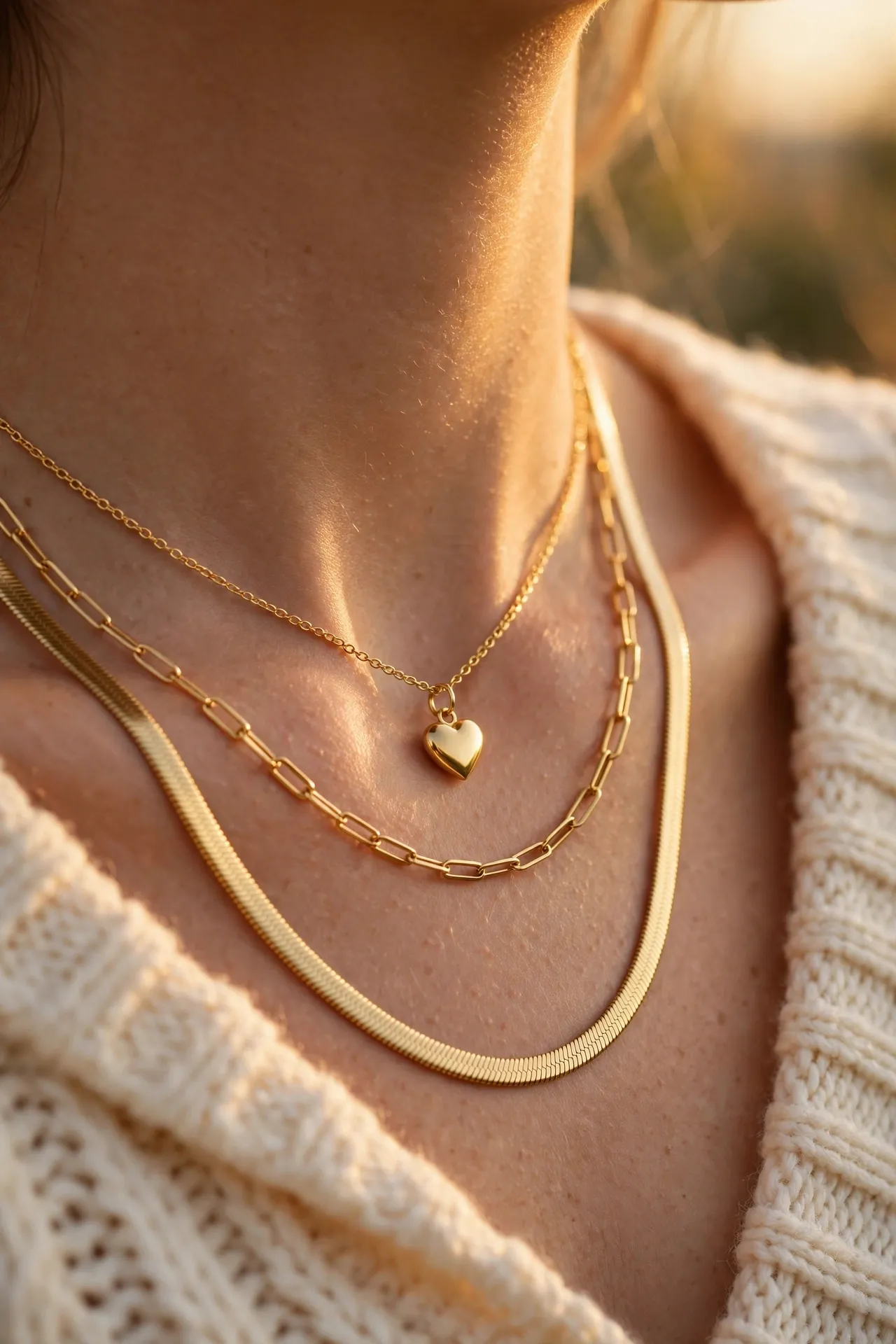
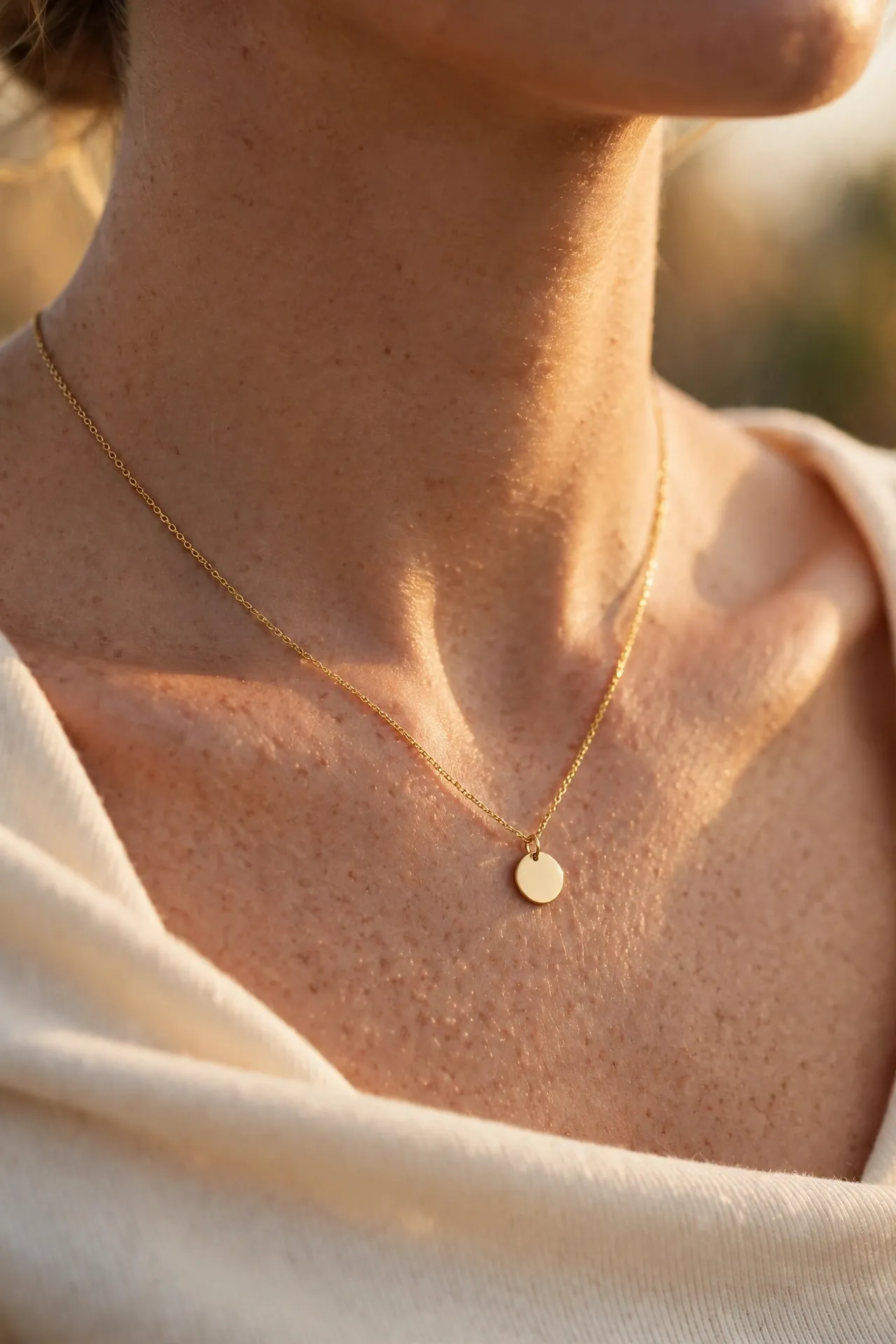
Necklaces touch a large area of skin, but more lightly than an earring post. Check the links resting on the neck and the clasp at the back: a 316L chain with 18K gold PVD is a good choice because the links are smooth and the finish hard, while a rough or flaking finish irritates skin. Our guide to stainless steel gold plated necklaces for women (https://www.stainlesstrends.com/posts/stainless-steel-gold-plated-necklaces-for-women) covers chain styles and finishes.
Bracelets and rings press against the skin all day and trap moisture underneath, so the inside surface matters most: a ring's inner band should be smooth and polished, a bracelet clasp should close cleanly without pinching. For ring styles and sizing, see our stainless steel rings for women (https://www.stainlesstrends.com/posts/stainless-steel-rings-for-women); for bracelet styles, our stainless steel bracelets for women (https://www.stainlesstrends.com/posts/stainless-steel-bracelets-for-women).
How to tell if jewellery is really hypoallergenic
Five checks before buying or stocking. The grade is named. "Stainless steel" is not enough — look for 316L on the product page or packaging; in-stock pieces are mostly 304, custom orders can be 304, 316 or 316L. The nickel release is tested. Ask for an EN 1811 test report stating material, method and result. The finish is PVD, not a thin dip. PVD is a hard, bonded layer; dip plating wears through at contact points, exposing the base metal. The post matches the front. On earrings, the post should be the same 316L as the earring, not a different alloy. The claim is honest. "Nickel release tested to EN 1811" is a real claim; a supplier promising a metal contains no nickel at all is careless or misinformed — 316L contains nickel.
Caring for hypoallergenic jewellery
Put jewellery on after lotion, perfume and hairspray, wipe each piece with a soft cloth after wearing, and clean with mild soap and lukewarm water when needed. Store pieces separately, and take them off before a chlorinated pool or the sea. A 316L piece with 18K gold PVD does not tarnish and keeps its colour through shower, sweat and daily wear. If a customer reacts, stop wearing the piece, let the skin settle, then check the grade and test report: a reaction to one piece usually means it was not the grade or finish it claimed to be.
Wholesale: hypoallergenic jewellery for boutiques and brands
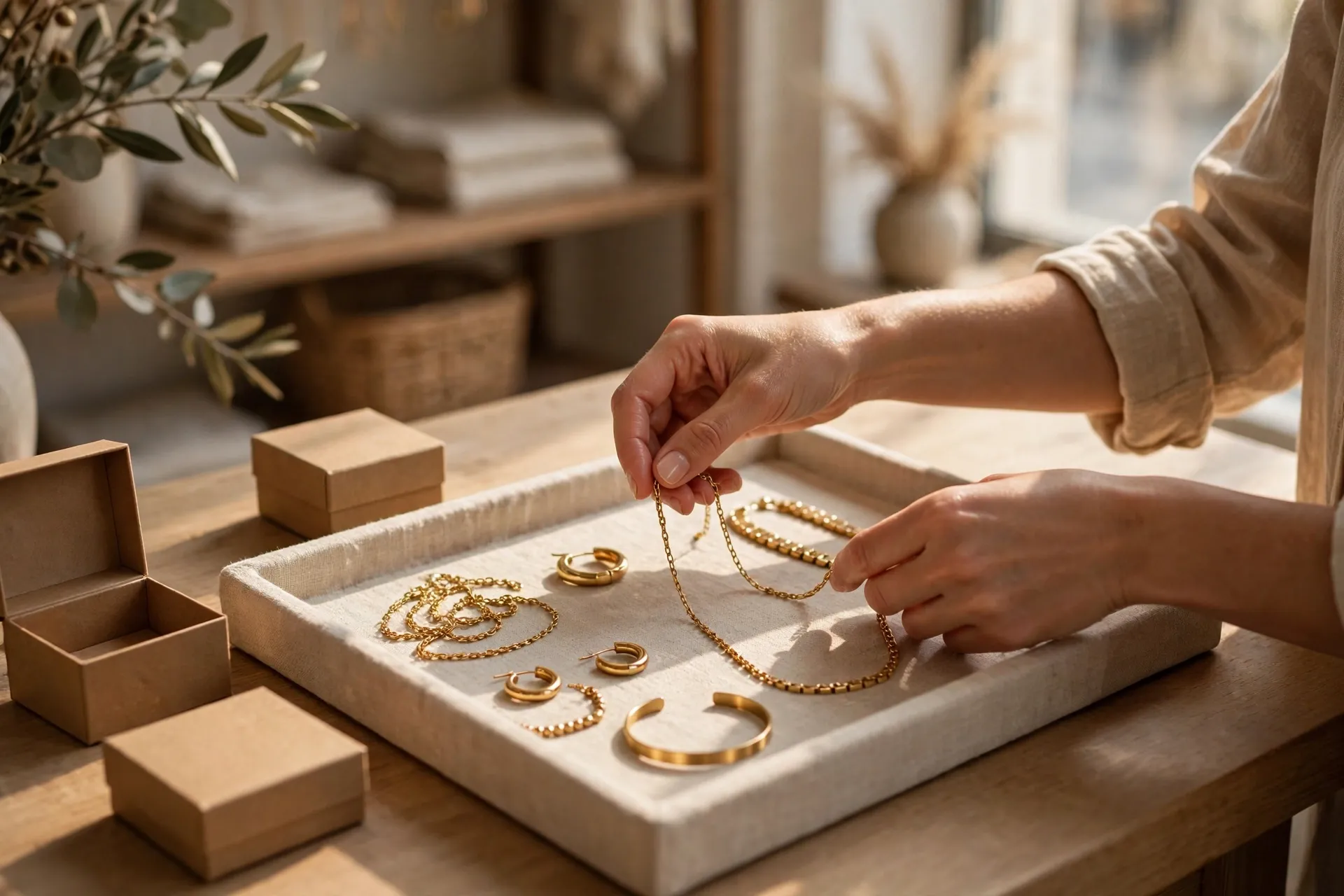
Sensitive-skin customers are loyal: once a woman finds jewellery she can wear comfortably, she returns for the next piece and tells her friends. For a boutique, a small hypoallergenic edit — studs, a fine chain, a plain band, a slim bracelet, all in 316L with 18K gold PVD — sells on trust, and gives staff a genuine answer when a customer asks "will this irritate my skin?"
At IVANDA, hypoallergenic stainless steel jewellery for women comes in 316L with 18K gold, silver-colour and rose gold PVD across earrings, necklaces, bracelets and rings, nickel-release tested to EN 1811, with test reports available on request. Browse the range on stainlesstrends.com (https://www.stainlesstrends.com/products). MOQ is 60 pieces per style, OEM/ODM and private label are available — we recommend ordering a sample first. Contact sales at sales01@ivanda-fa.com.
FAQ
What does hypoallergenic mean in jewellery?
It means the piece is made to minimise the risk of a reaction — the right material, the right finish, the nickel release actually measured. It is not a guarantee no one will ever react.
Is stainless steel jewellery good for sensitive skin?
316L is a good choice because it releases very little nickel, and a hard PVD finish slows release further. Look for the grade named as 316L and a nickel-release test to EN 1811.
Does 316L stainless steel contain nickel?
Yes. That is why it is never described as free of nickel — the honest claim is that its nickel release is tested to EN 1811 and within the EU limit.
Which earrings are best for sensitive ears?
Small studs in 316L with a matching 316L post. Check that the post is the same material as the earring front, not a different alloy.
Can I wear hypoallergenic stainless steel jewellery in the shower?
Yes — 316L with 18K gold PVD is waterproof for shower, sweat and daily wear; take it off before a chlorinated pool or the sea.