Oct 26, 2026
Why Stainless Steel Grade Matters for Everyday Jewelry
Stainless steel jewelry grades explained: 304 vs 316L vs 430, what each grade means for corrosion resistance, durability and everyday wear.
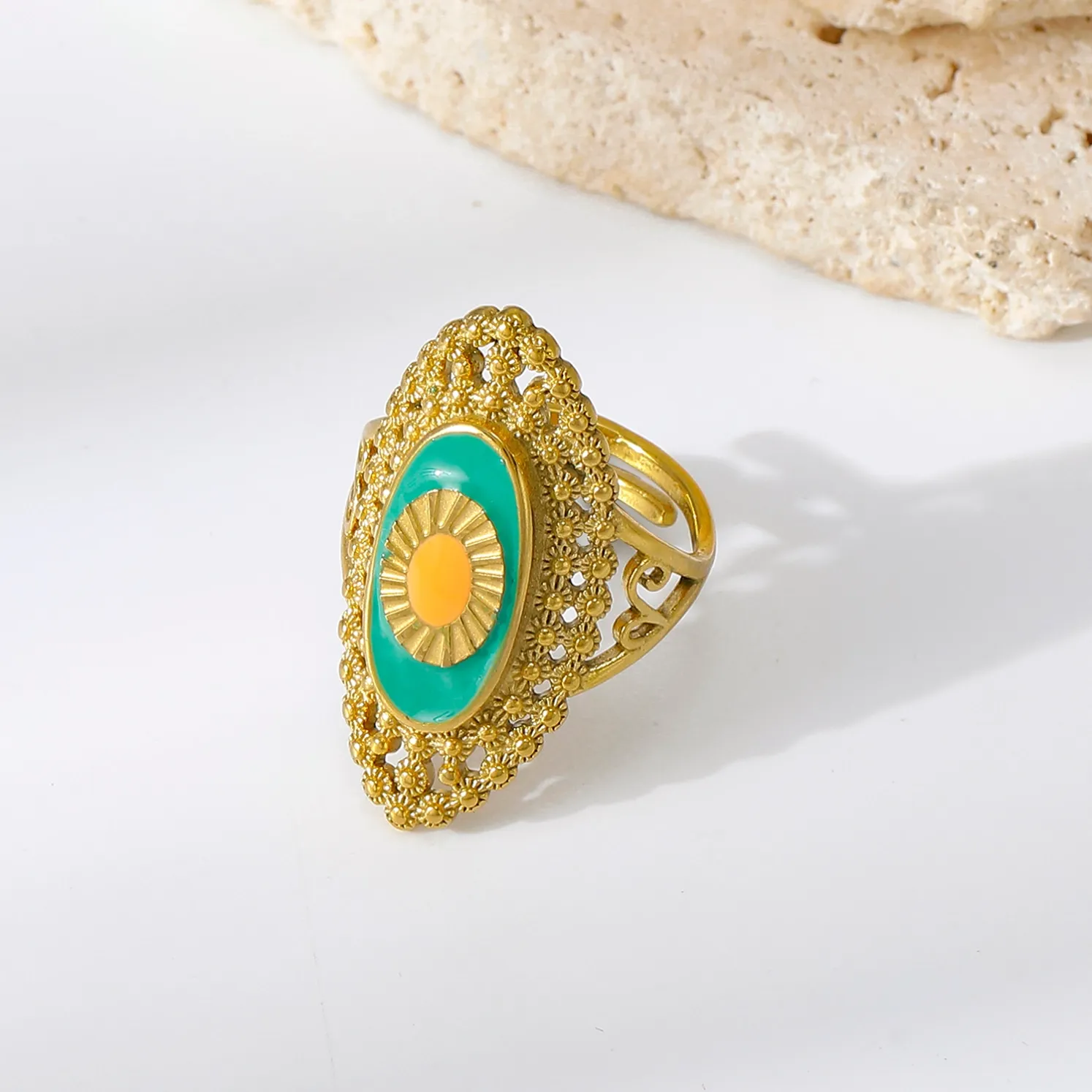
Two stainless steel chains can look identical on the day they arrive and behave completely differently after a season of daily wear — and the difference is almost always the grade of steel under the surface.
Grade is the recipe behind the metal: which elements go into the alloy, and in what proportions. This guide explains the stainless steel jewelry grades you'll meet in the trade, what each means for everyday wear, and how to check what you're actually buying.
What "Grade" Actually Means
A stainless steel grade is a standardized alloy recipe — the numbers describe the mix of chromium, carbon and other elements inside the metal.
All stainless steel contains at least 10.5% chromium, which forms a thin, self-repairing chromium oxide layer on the surface — that invisible layer is what makes the metal "stainless." Beyond that shared baseline, grades differ in corrosion resistance and hardness. Letter suffixes matter too: in 316L, the "L" stands for low carbon, which keeps welded joints from becoming the first point of corrosion.
The Grades You'll See in the Jewelry Trade
Most stainless steel jewelry on the market comes from three or four grades, and they are not interchangeable.
Grade | Character | Corrosion resistance | Typical use in jewelry |
|---|---|---|---|
304 | General-purpose, widely available | Good in dry and fresh-water conditions | Necklaces, earrings, findings, backings |
316L | Low carbon, with added molybdenum | Excellent, including sweat and salt water | Everyday pieces, rings, anklets, clasps |
430 | Ferritic and magnetic, no molybdenum | Moderate; weaker in humid conditions | Decorative and occasional-wear pieces |
201 | Budget austenitic substitute | Noticeably lower; prone to pitting | Low-cost fashion jewelry |
Grade 201 deserves a warning: it looks the same as 304 or 316L on arrival, but its weaker composition shows up later as pitting and rust stains in humid climates, making it the most common source of "stainless steel rusted" complaints.
Why 316L Is the Everyday Standard
316L adds molybdenum to the alloy, and that single element is what separates jewelry steel from kitchen steel.
Molybdenum strengthens the passive layer against chlorides — the compounds in sweat, pool water and sea water that attack ordinary grades. For jewelry that lives on the body, this matters more than any other property: an anklet sits in sweat all day, a ring meets hand cream and soap, a chain collects shower water. It also polishes to a bright finish and holds stamped detail cleanly, and its low carbon content keeps welded link joints from corroding first. Our explainer on what 316L means on jewelry stamps decodes the markings in detail.
How Grades Behave in Daily Conditions
The grade decides how a piece weathers the specific conditions of its wear site — and different jewelry types live in very different conditions.
Condition | 304 | 316L | 430 / 201 |
|---|---|---|---|
Daily shower water | Fine over months | Unaffected | Dulling within weeks |
Sweat over a full day | Generally fine | Unaffected | Surface spotting possible |
Sea water and pool chlorine | Risk of pitting over time | Holds up well | Visible corrosion likely |
Perfume and hand cream contact | Usually fine | Usually fine | Discoloration possible |
Read the table by wear site: a necklace meets mostly air and fabric, a ring meets soap and hand cream all day, and an anklet lives in the harshest micro-environment of all — which is why grade matters most the lower the piece sits on the body.
Plating Doesn't Change the Base Grade
A plated piece is only as good as both of its layers — the finish and the steel underneath it.
A PVD 18K gold plated finish applied over 316L pairs a warm gold tone with a base that resists water and sweat. The process itself is covered in our guide to the science of PVD coating for jewelry. But plating and grade solve different problems: the plating carries the color, while the grade decides whether the metal beneath will corrode and stain the finish from below — a weak base shows brown spotting at the edges as it wears. An honest limit applies to every plated piece: PVD is far more abrasion-resistant than classic electroplating, yet it is not permanent — years of daily friction can lighten high points such as the top of a ring band.
How to Check the Grade Before You Buy
Ask for the alloy composition in writing, and treat every other check as a clue rather than proof.
- Read the stamp. Reputable pieces are marked 316L, 304 or 430, usually on the clasp or inside a ring band.
- Use a magnet as a rough filter, not a verdict. 430 is strongly magnetic; 304 and 316L are mostly not, though bending and forming can make them weakly magnetic.
- Request the composition from the supplier. A serious manufacturer answers with an alloy sheet; a vague answer is its own signal.
- Weigh the piece. Unusually thin, light constructions often turn out to be 201 or a plated lower grade.
Choosing Grades for a Product Line
Stock by wear site: the harsher the daily conditions, the more the grade matters.
Rings, bracelets and anklets sit in the toughest environments — sweat, friction, constant washing — so 316L earns its place there first. Necklaces and earrings lead easier lives, which is why 304 remains an acceptable choice for those categories. For any piece positioned to survive daily water exposure, specify 316L and stamp it. Consistency matters too: mixing grades inside one collection produces uneven wear reports, and the weakest piece in the set ends up defining the collection's reputation.
Common Grade Myths
Most confusion around stainless steel jewelry grades traces back to a handful of persistent myths.
Myth | Reality |
|---|---|
"All stainless steel is the same" | Grades differ sharply in corrosion resistance and hardness |
"A magnet test proves the grade" | Magnet response sorts families of steel; it cannot identify a specific grade |
"Stainless steel never rusts" | Lower grades rust in humid or salty conditions — hence the 201 complaints |
"Plating fixes a weak base metal" | Corrosion under plating works through as spotting |
Frequently Asked Questions
Short answers you can reuse in buyer conversations and product copy.
Is 316L really better than 304 for jewelry?
For pieces worn against the body all day, yes. Both are austenitic steels with good general corrosion resistance, but 316L adds molybdenum, which specifically strengthens resistance to the chlorides found in sweat and salt water. For necklaces and earrings worn in milder conditions, 304 performs acceptably. For rings, anklets and bracelets, the difference shows up within months of daily wear.
What does the L in 316L stand for?
Low carbon. Keeping carbon content low prevents chromium carbides from forming along welded joints during manufacturing, which is where corrosion typically starts on a weakened alloy. In jewelry this matters most for chains, because their links are usually welded or soldered. A low-carbon grade keeps those joints nearly as corrosion-resistant as the rest of the piece.
Will 430 stainless steel jewelry rust?
It can. Grade 430 contains no molybdenum and has a different crystal structure, so its protective layer is weaker against moisture and salt. In dry conditions it may stay bright for a long time, but in humid climates or with regular water exposure, dulling and surface rust appear much faster than on 316L. Treat it as a decorative, occasional-wear material.
Which grade should I choose for everyday jewelry?
316L is the safe default for anything worn daily against the body: rings, bracelets, anklets and chains that meet water and sweat regularly. Reserve 304 for earrings and occasional-wear pieces where exposure stays mild. Avoid 201 and 430 for anything positioned as everyday jewelry, because their corrosion behavior in humid conditions generates the most after-sales complaints.
Wholesale Stainless Steel Jewelry from IVANDA
Looking for a reliable stainless steel jewelry supplier? IVANDA supplies 316L pieces with PVD 18K gold plating - waterproof, skin-friendly and made for everyday wear. MOQ 60 pcs per style, in stock and ready to ship, with OEM/ODM services for custom designs. Message us on WhatsApp or email sales01@ivanda-fa.com for the latest catalog and wholesale prices.