Oct 31, 2026
Stainless Steel Jewelry Weight: Heavy vs Light Pieces
How jewelry weight affects comfort — earlobe stretch, neck pressure, finger marks — and how thickness and width drive weight in stainless steel pieces.
In the jewelry weight heavy vs light question, neither side wins outright — weight decides comfort where jewelry rests on soft tissue, status where it shows in the hand, and the right answer changes depending on whether the piece is on your ears, your neck, your wrist or your fingers.
Weight is the most underrated comfort factor in jewelry shopping: invisible in photos, barely noticeable in the first ten minutes, and showing up hours later as a sore earlobe, a neck groove or a finger indentation. This guide covers where steel sits on the density scale, how weight affects each body part, and which pieces tolerate it.
What "Heavy" Means: Density and Perception
Every metal has a density, and density sets the floor for how much a given volume of jewelry weighs — but design multiplies on top of it. Approximate densities put stainless steel in the useful middle of the scale:
Material | Approximate density (g/cm³) | How it feels in jewelry |
|---|---|---|
Sterling silver | ~10.4 | Noticeably weighty in larger pieces |
Brass | ~8.5 | Similar to steel, slightly denser |
316L stainless steel | ~8.0 | Substantial but not punishing |
Titanium | ~4.5 | Feather-light for its size |
Perception matters as much as physics: a heavy piece signals quality in the hand, but the hand and the earlobe disagree — a cuff that feels premium on the wrist feels punishing on a piercing, so the same weight question has different answers by body part.
Stainless steel sits in the middle of the density scale — noticeably lighter than silver, slightly lighter than brass and far heavier than titanium — so a steel piece feels substantial without being punishing.
How Weight Affects Comfort: Ears, Neck and Fingers
Comfort problems appear where jewelry rests on soft tissue under gravity, and each body part has its own limit.
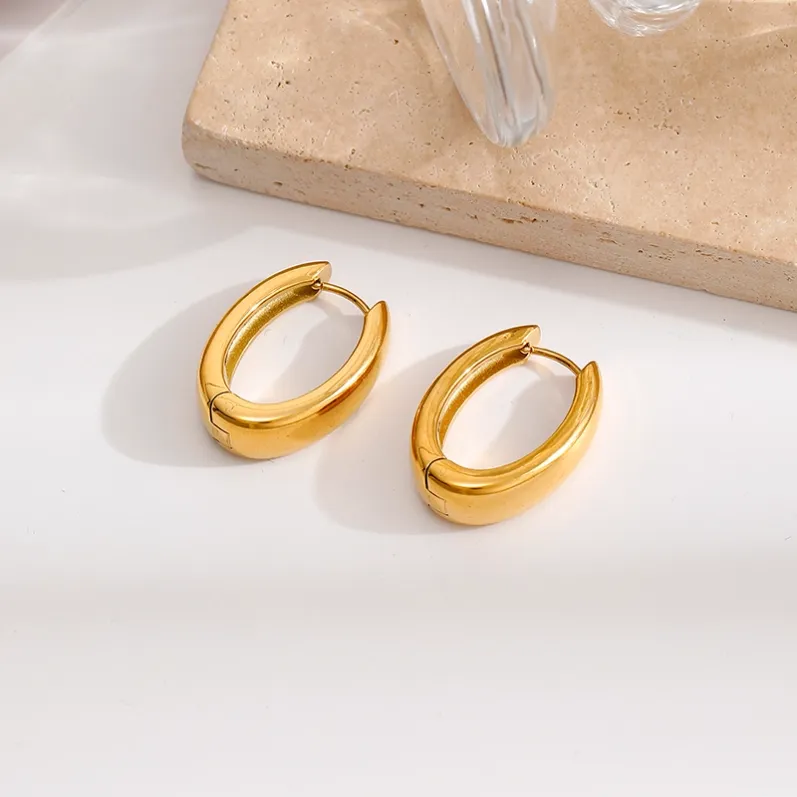
Earlobes are the most weight-sensitive spot for jewelry. Heavy studs and hoops pull on the piercing all day, causing soreness by evening and, over repeated wear, gradually stretching the piercing hole. A stretched lobe does not fully bounce back, so prevention is the whole game: all-day earrings should be as light as the design allows.
The neck takes weight as pressure rather than pull. A heavy pendant concentrates its mass on a small patch of skin, pressing a groove over hours. Counterintuitively, the chain often matters more than the pendant: a thin chain under a heavy charm digs harder than a wider chain distributing the same load.
Fingers register weight as pressure marks and rotation. A heavy ring leaves an indentation where its edges press, and the weight makes the ring spin and slide — during typing, gym work or manual tasks, it is constantly in the way.
Piece | The weight problem | What helps |
|---|---|---|
Studs and hoops | Lobe soreness, gradual piercing stretch | Lightweight hollow construction |
Pendant necklaces | Neck pressure, skin grooves | Lighter pendants, wider chain |
Rings | Finger indentations, rotation | Slimmer shanks, balanced designs |
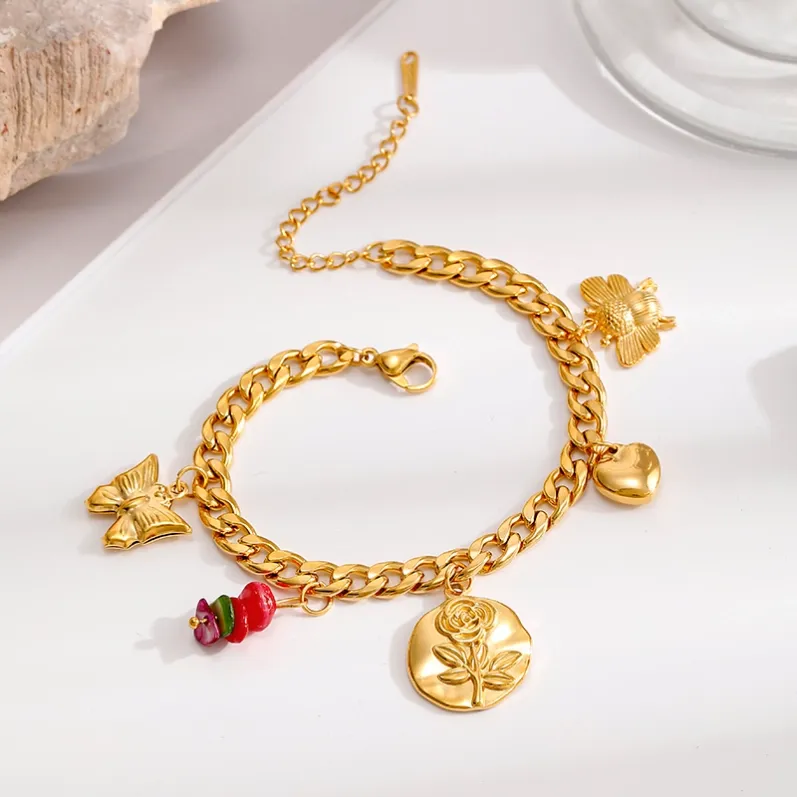
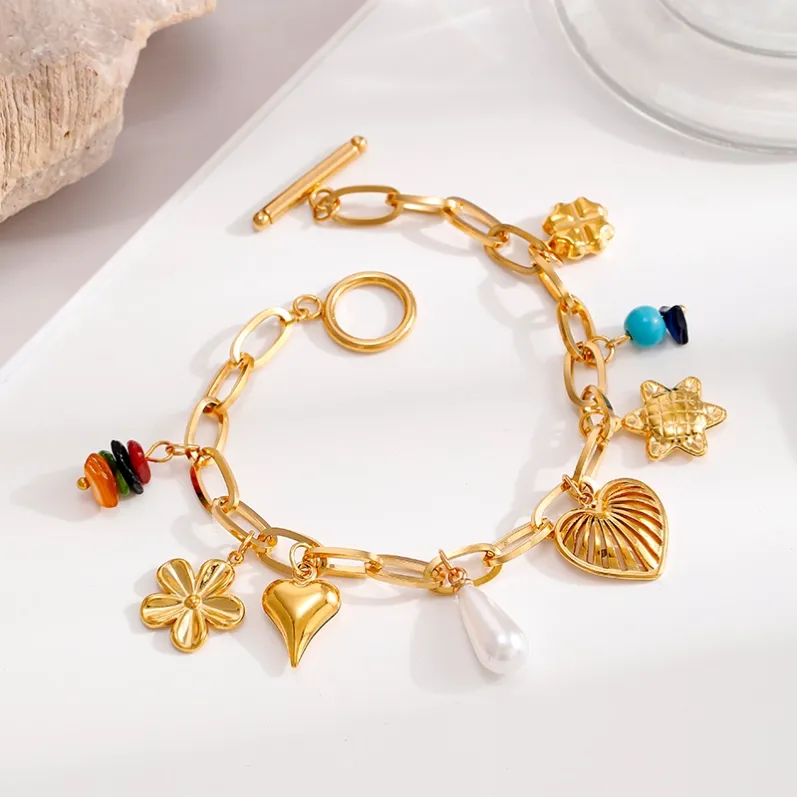
Bangles and cuffs | Least problematic — the wrist tolerates weight | Heft here even reads as quality |
Comfort problems show up exactly where jewelry rests on soft tissue — heavy earrings stretch lobes, heavy pendants press grooves into necks and heavy rings leave finger marks — and the fix is always less weight at the contact point.
Thickness, Width and Design: What Actually Drives Weight
Weight equals volume times density; since steel's density is fixed, volume is where designs differ. Doubling a band's width roughly doubles its weight, and doubling its thickness multiplies it further.
Design choice | Effect on weight |
|---|---|
Thicker plate or shank | Multiplies weight directly |
Wider band or larger links | Adds weight roughly in proportion |
Hollow hoops vs solid | Cuts most of the weight at the same visual size |
Chain gauge and link size | Slim chains weigh a fraction of chunky styles |
Judging a piece by material alone misleads: a slim steel chain can weigh less than a chunky brass one even though brass is slightly denser, because the design uses less metal. Flip the piece over — solid versus hollow construction tells you more about the weight at hour six than the metal stamp does.
Design controls weight more than material does — thickness and width multiply faster than densities differ, which is why two steel pieces of the same style can feel completely different on the body.
Heavy vs Light: Choosing by Piece Type
The practical answer is to spend your weight budget where the body tolerates it and save it where the body complains.
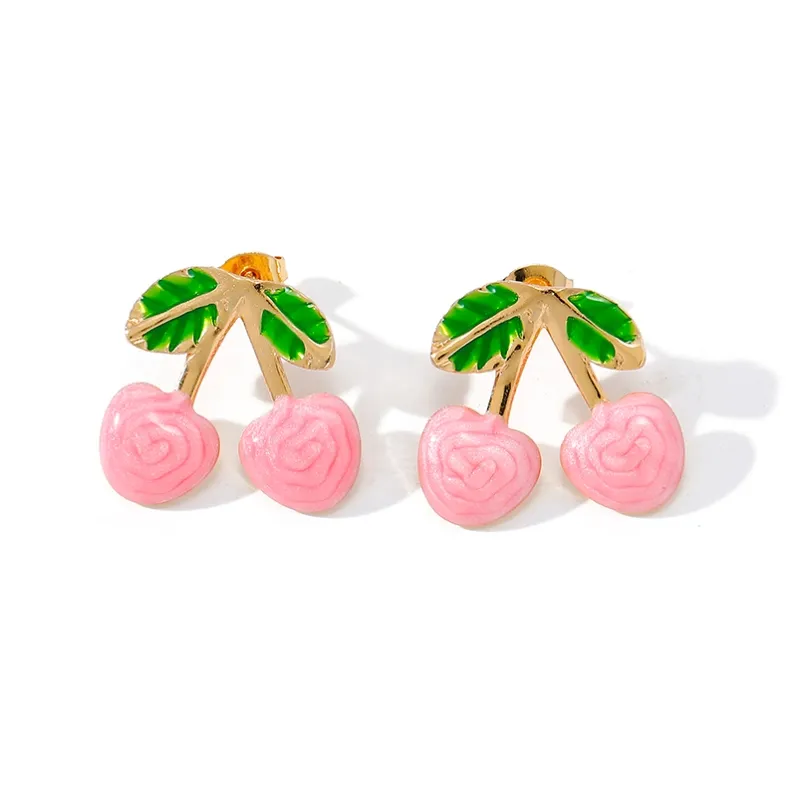
- Everyday earrings: go light, always. Small studs, slim hoops or hollow designs — the lobe's tolerance is low and the cost of exceeding it accumulates over years.
- Statement earrings: where heavy designs earn their place. Solid pieces are fine for an evening; just do not make them the daily pair.
- Necklaces: light to medium for daily wear, especially with a pendant. If you love a substantial charm, pair it with a wider chain that spreads the load.
- Bracelets and cuffs: the wrist handles weight well, and heft here genuinely reads as quality. Remember that stacking multiplies weight on one wrist — the wrist stacking guide covers balancing the pile so it stays comfortable.
- Rings: medium works for daily wear. Slim bands all day, heavier wide styles for occasions. If a ring leaves deep marks or you keep taking it off to type, that is your answer.
Whichever weights you choose, storage keeps pieces from scratching each other — see how to store jewelry so it stays like new, and the what jewelry doesn't tarnish material guide for metal comparisons.
Wrists tolerate weight and ears do not — so enjoy heavy cuffs and statement rings in short sessions, and keep earrings, daily chains and everyday rings light.
The Lightweight Trend: Why Modern Pieces Go Lighter
Jewelry design has moved lighter over the past years, for lifestyle reasons: people wear jewelry all day — to work, the gym, the pool — and all-day wear sets a hard ceiling on acceptable weight. Layering accelerates the trend: three stacked necklaces must each be lighter than the statement piece they replaced.
Steel is the right material for this shift, for a reason that sounds paradoxical: 316L is strong enough to be made thin. A slim chain or hollow-formed hoop stays durable because the alloy itself resists bending, scratching and corrosion — no bulk needed to survive daily life. The result: pieces that look substantial in the mirror, weigh little by evening, and stay on through workouts and travel.
Lightweight design is no longer a compromise — steel's strength lets makers cut thickness without cutting durability, which is why slim steel pieces feel light at hour six and still survive years of daily abuse.
Frequently Asked Questions
Direct answers to the weight questions buyers ask most before choosing between heavy and light pieces.
Does heavy jewelry mean better quality?
No. Weight reflects density and how much metal the design uses, not build quality. A hollow steel hoop can be better engineered than a solid brass blob. Heft does signal solid construction within the same design — so judge quality by finish, details and how it wears, with weight as one clue among several.
How heavy is too heavy for earrings?
There is no single number, because lobe sensitivity varies — but your body tells you clearly. Soreness by evening, redness at the piercing, or a hole that looks enlarged are the signals to go lighter. For all-day wear, choose the lightest construction available: hollow hoops, small studs, slim drops. Save solid statement earrings for short occasions.
Are stainless steel rings heavy?
Not as a rule. Steel is slightly less dense than brass and much lighter than silver, and ring weight depends mostly on the shank: a slim 2 mm band feels barely there, while a thick, wide signet-style ring has real heft. For a substantial look without the weight, choose wider but thinner bands — width gives presence, thinness saves grams.
Why do my rings leave marks on my fingers?
Light, temporary indentations from a well-fitted ring are normal — the band presses softly against skin all day, and skin remembers. But deep, persistent marks or redness point to a ring that is too tight, too heavy, or both. Try a slightly looser fit for daily pieces, thinner shanks, and give fingers a break during workouts when they swell.
Does weight affect how long jewelry lasts?
Not directly. Durability comes from material, thickness and construction, not mass — a heavy hollow pendant is not stronger than a light solid link. Heavier pieces tend to use thicker sections that resist bending better, so weight and durability often travel together. But the real factor is thickness and design; light pieces can last for years too.
Wholesale Stainless Steel Jewelry from IVANDA
Looking for a reliable stainless steel jewelry supplier? IVANDA supplies 316L pieces with PVD 18K gold plating - waterproof, skin-friendly and made for everyday wear. MOQ 60 pcs per style, in stock and ready to ship, with OEM/ODM services for custom designs. Message us on WhatsApp or email sales01@ivanda-fa.com for the latest catalog and wholesale prices.