Oct 19, 2026
Stainless Steel Necklace Types: The Complete Guide
Cable, curb, snake, box, rope, figaro and paperclip — every stainless steel necklace type explained, with durability, pendant pairing and length advice.
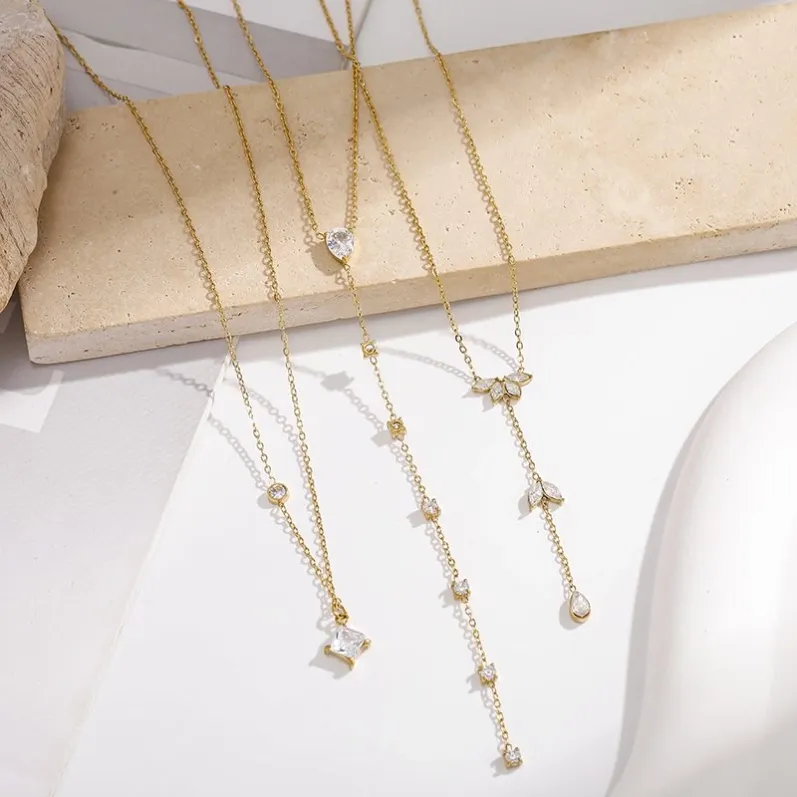
Every necklace is assembled from just three parts — a chain, an optional pendant and a clasp — and once you can name what each part does, any jewelry catalog turns into a short, confident shopping list.
"Stainless steel necklace" is an umbrella term covering hundreds of designs, from barely-there chains to chunky statement links. The good news is that nearly all of them are combinations of a handful of chain types, a few classic silhouettes and a small set of clasps. This guide walks through each layer, so you can look at any necklace and know exactly what you're buying — and how it will age.
First, the Anatomy: Chain + Pendant + Clasp
Every necklace divides into three components. The chain is the flexible run of links — or plates, or woven wire — that circles the neck. The pendant is the optional focal element that hangs from it: a single tag, a stone, a cluster of charms. The clasp is the mechanism that closes the loop behind your neck.
Each part fails differently. Chains break where links bend repeatedly, pendants fall where the bail or jump ring gives way, and necklaces are lost where a clasp opens by accident. Judge a necklace the way an engineer would: three parts, three separate jobs.
A necklace is a system, not a single piece — the chain, pendant and clasp each fail for their own reasons, so evaluate all three before you buy.
The 7 Chain Types You'll Actually Encounter
Chain type | Look | Durability | Snag risk | Best pendant pairing |
|---|---|---|---|---|
Cable | Even round or oval links; the classic chain | High | Low | Almost anything — the all-rounder |
Curb | Flattened, interlocked links that lie flat and smooth | High | Low | Medium and heavier pendants; strong worn alone |
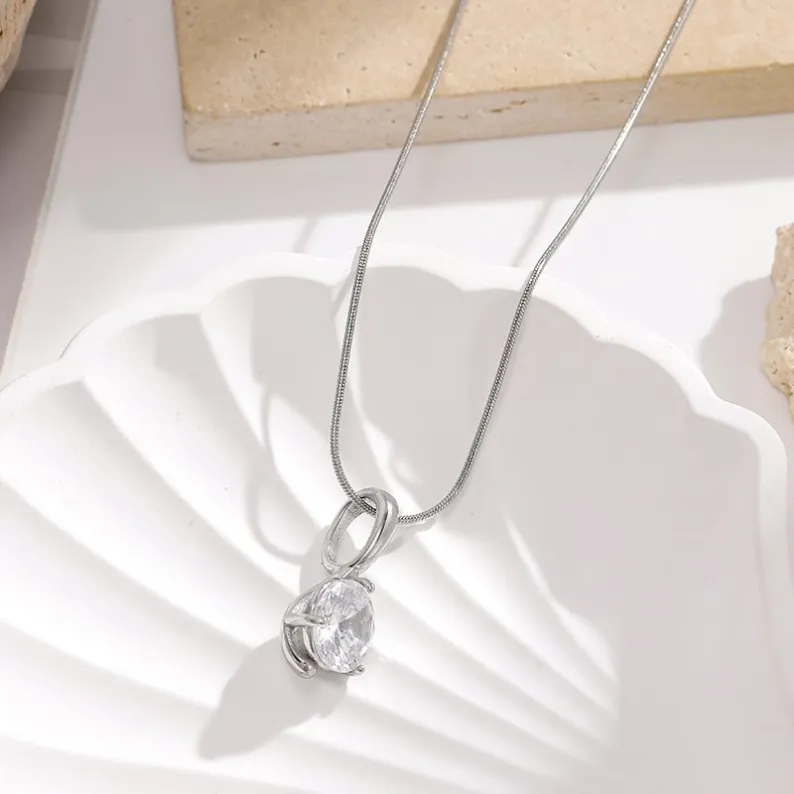
Snake | A smooth, tight "liquid" tube of wound plates | Medium — kinks if sharply bent | Very low | Slider bails only |
Box | Square links forming a clean, angular line | Medium-high | Low-medium | Small and mid-size pendants |
Rope | Twisted spiral links with rich texture | High | Medium — can kink under twisting | Bold pendants; excellent worn alone |
Figaro | A pattern of two or three short links, then one long | High | Low | Casual pendants; great solo |
Paperclip | Elongated flat links; modern and architectural | Medium — open links can flex | Medium | Lightweight pendants, or worn alone |
For pure daily-wear durability, cable and curb links are the workhorses; snake and paperclip chains trade some robustness for a sleeker, more contemporary line.
Two quick notes on that table. "Snag risk" describes how easily a chain catches on hair, scarves or knitwear — fine, open structures catch more often than compact ones. And durability assumes a quality base material: in 316L stainless steel, the industry's premium jewelry grade, every design on this list outlasts the same chain made from softer, plated alloys. If you've ever wondered what the stamp near your clasp means, our guide to 316L jewelry stamps explains it.
Necklace Styles: Choker, Princess, Lariat and More
Chain type describes the links; style describes where the necklace sits and how it's worn. The silhouettes you'll meet most often:
- Choker — sits high and snug against the neck; striking with open collars and scoop necklines
- Princess — the classic everyday length that rests just below the collarbone; the default for pendant necklaces
- Matinee and opera — noticeably longer styles that hang over the chest and were made for layering
- Lariat — a long, open-ended necklace that drops into a Y, with no fixed clasp position at the front
- Pendant necklace — defined by a single hanging focal piece rather than its length
- Charm necklace — a chain carrying several small collected charms instead of one centerpiece
Style is mostly a question of length, and length is worth getting right — a few centimeters decides whether a necklace disappears under a collar or finishes an outfit. Our necklace chain length guide maps every standard length and where each one falls.
Choose the silhouette first, because where a necklace sits changes the whole outfit — then pick the length that puts it exactly there.
Which Chains Survive Everyday Wear Best
Material matters first. Stainless steel shrugs off water, sweat and air that would corrode plated brass, which is why steel chains keep their looks with so little care — our guide to jewelry that doesn't tarnish covers the science behind that.
Link style matters just as much. Chains built from many small, compact links — cable, curb, figaro — spread pulling force across dozens of junctions and resist permanent damage. Designs built on long open links or fine internal structures need gentler handling: a snake chain creases if it kinks sharply, and a paperclip link can flex open under a sudden snag.
Habits complete the picture. Even the toughest chain suffers if it's slept in, yanked over a sweater head, or stored in a permanent tangle. Give it two minutes of care a week and it will repay you for years.
If a necklace will live on your neck around the clock, favor many small links over long dramatic ones — stress spread across more joints is what survives real life.
Matching the Chain to the Pendant
Weight is the test. A delicate cable chain carries a light charm beautifully but will slowly stretch, then snap, under a chunky steel tag. As a rule of thumb: light pendants — small charms and thin bars — work on cable, box and paperclip chains; medium pendants suit figaro and rope; heavy pendants want curb chain or a thicker-gauge cable.
Two fit details people miss. The bail — the loop on top of the pendant — must be wide enough for the chain to pass through and still move freely. And on snake chains, the pendant needs a slider bail designed to ride the flat surface rather than pinch it.
Match the chain to the pendant's weight, not the other way around — an undersized chain is the most common reason pendants part company with their necklaces.
Don't Overlook the Clasp
The clasp is the least glamorous part of a necklace and the most common point of failure. Spring rings are compact and unobtrusive but fiddly to close. Lobster clasps grip more firmly and open easily one-handed. Larger trigger and toggle designs are the simplest to see, hold and secure. Whatever the mechanism, check that the closing action feels crisp and that the small jump ring attaching it is fully closed — that tiny ring is the true weak point of most necklaces.
A necklace is only as secure as its weakest link — and in daily life that link is almost always the clasp, not the chain.
Frequently Asked Questions
What is the most durable stainless steel chain type?
Curb and cable chains lead for durability: their compact links resist bending and spread pulling force evenly across many joints. Figaro and rope chains sit close behind. Snake chains hold up well to steady wear but kink permanently if bent sharply, and paperclip links can flex open under a sudden snag.
Which chain type is best for pendants?
Cable chain is the most versatile pendant carrier — its simple oval links suit almost any bail. Curb and rope chains handle heavier pendants with confidence. Snake chains work only with slider bails designed to ride their flat surface, while paperclip chains carry lightweight pendants best.
Does snake chain kink easily?
It can. A snake chain is a series of concave plates wound around a core, which creates that smooth, liquid look — but a sharp bend, such as catching on a zipper or being stored in a knot, can crease it permanently. Store snake chains hanging or lying flat, never coiled tight.
What length should my necklace be?
For most wearers, the 45–50 cm range sits right at the collarbone — the most versatile spot for everyday pendants. Shorter choker lengths read more fashion-forward, while longer matinee and lariat styles are built for layering. Our necklace chain length guide maps every standard length and where it falls.
Can I wear a stainless steel necklace every day?
Yes — that's exactly where the material shines. Stainless steel handles water, sweat and constant friction far better than plated brass chains, so it keeps its finish with minimal care. A cable or curb chain in 316L, the industry's premium jewelry grade, can realistically stay on through showers, workouts and travel.
Wholesale Stainless Steel Jewelry from IVANDA
Looking for a reliable stainless steel jewelry supplier? IVANDA supplies 316L pieces with PVD 18K gold plating - waterproof, skin-friendly and made for everyday wear. MOQ 60 pcs per style, in stock and ready to ship, with OEM/ODM services for custom designs. Message us on WhatsApp or email sales01@ivanda-fa.com for the latest catalog and wholesale prices.