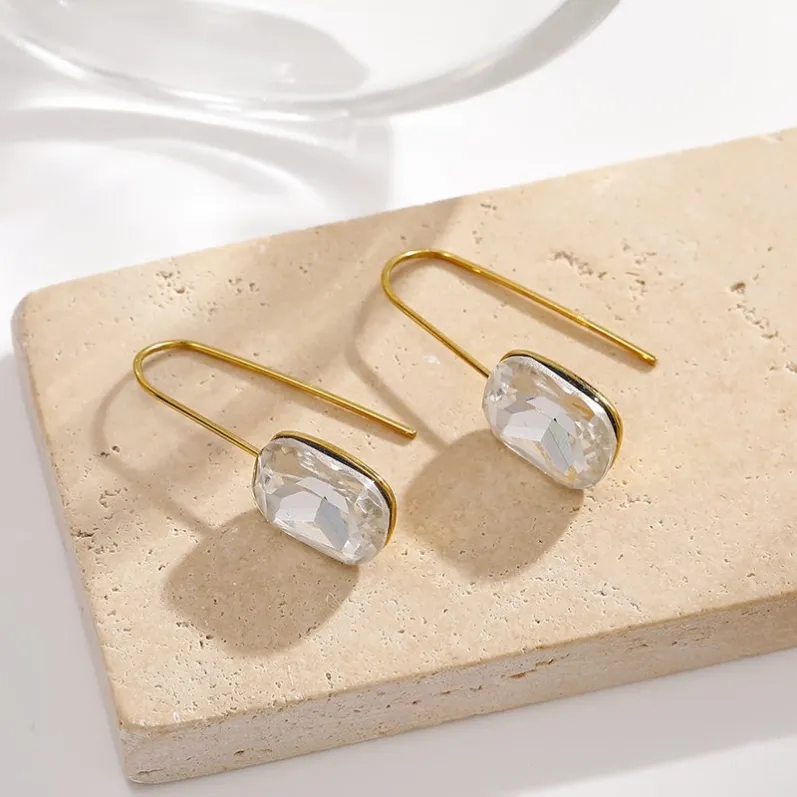
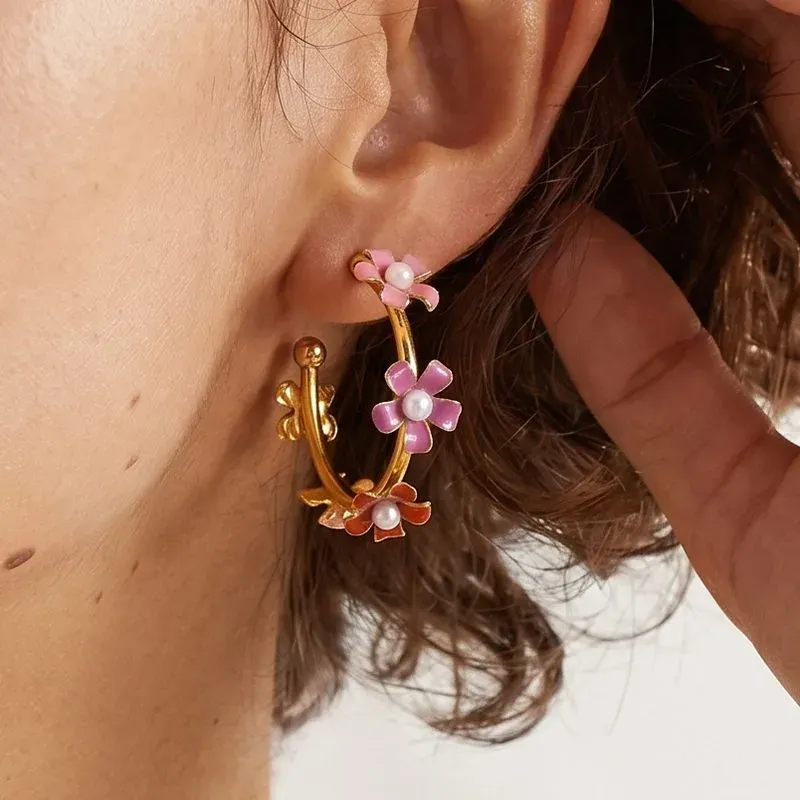
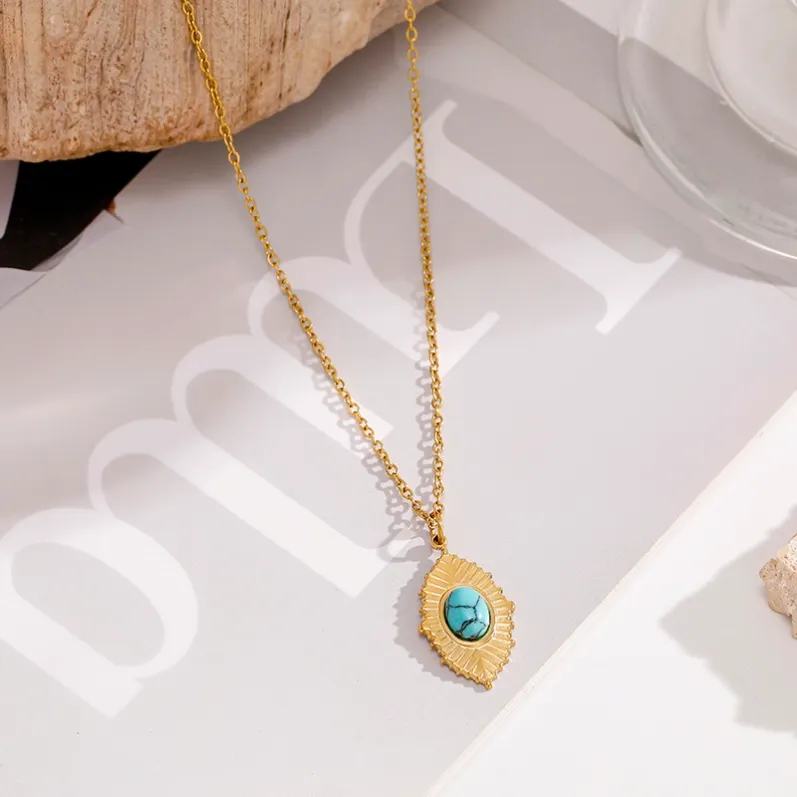
Stainless Steel vs Stone Jewelry: Natural or Made?
Stainless steel vs stone jewelry: how natural stones and manufactured metal differ in hardness, water, consistency and care — and why pairs work.
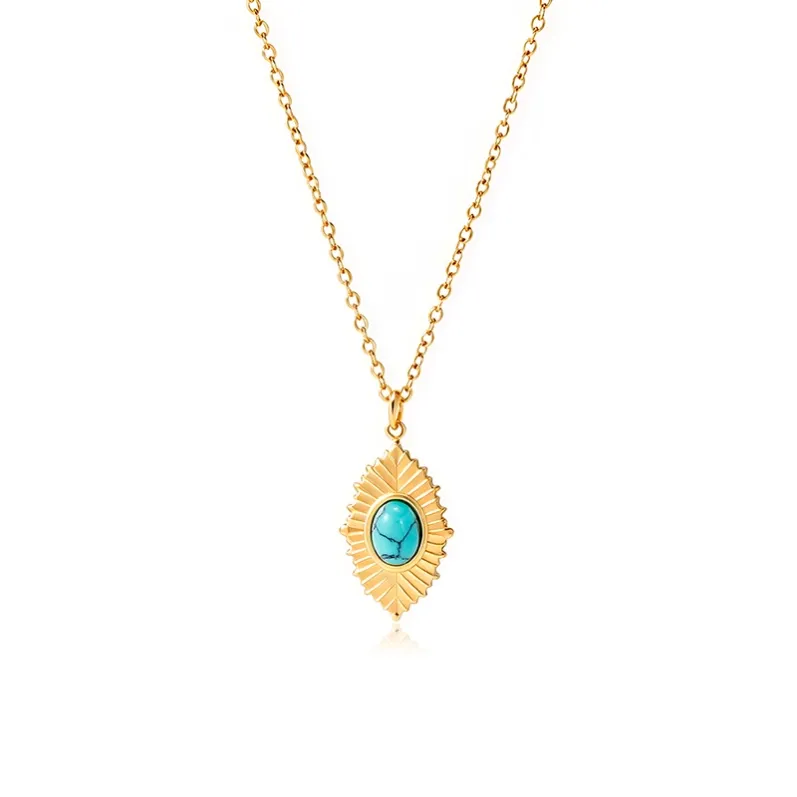
Stainless steel and natural stone come from opposite worlds — one is rolled in a mill to a precise, repeatable formula, the other is cut from whatever the earth happened to make over millions of years — and knowing what each does well explains both where they compete and why so many of the best everyday pieces combine the two.
Stone jewelry is humanity's oldest kind — shells, pebbles, carved gems predate every metal workshop. Stainless steel is one of the newest, an engineered alloy barely a century old in its modern forms. Put side by side, they make the natural-versus-manufactured question concrete: consistency against character, hardness against toughness, a material you select against a material you specify. Neither is simply better; each wins in places the other cannot follow, and the choice is really about how you want your jewelry to behave.
Two Origin Stories
A natural stone is an accident of geology that people learned to cut. Every turquoise, onyx, jasper or amethyst carries the conditions of its formation inside it — veins, clouds, color zoning, tiny fractures. That is the appeal: no two pieces are identical, and a stone-set piece is genuinely one of a kind. It is also the complication: the same variability means the cutter is working around flaws, not against a spec sheet, and two stones cut from the same rough can differ in durability.
A stainless steel component is the opposite — the opposite of an accident. The mill produces 316L to a controlled recipe, and every sheet and wire of it behaves the same: same corrosion resistance, same strength, same polish response. A design made in January matches the one made in December, which is exactly what a brand needs for pieces people expect to be replaceable and consistent.
| Natural stone | Stainless steel (316L) |
|---|---|---|
Origin | Formed by geology, cut by hand | Rolled to a precise alloy spec |
Piece-to-piece consistency | None — every stone is unique | High — every batch matches |
Hardness | Very high in quartz family; soft in others | Moderate, uniform |
Toughness (shock) | Variable — some stones crack on impact | High — bends and dents instead of cracking |
Water | Porous stones absorb it | Unaffected — waterproof by design |
Color range | Whatever nature produced | Silver, or PVD 18K gold plated |
Repair | Chipped stone rarely recoverable | Can be re-polished |
Stone gives you character you cannot specify; steel gives you consistency you cannot get from nature — and each explains the other's limitations.
Hardness Is Not Toughness
The most useful idea in this comparison is one the jewelry trade uses daily: hardness and toughness are different properties, and stones and metals sit at opposite ends of the trade. Hardness means resistance to scratching. Toughness means resistance to breaking. They are not related the way people assume.
Stones from the quartz family sit at 7 on the Mohs hardness scale — harder than any jewelry steel, which is why a stone can scratch a metal setting around it and why stone surfaces stay scratch-free for decades. But many of those same stones are brittle: a knock against a counter can crack or chip them along internal weaknesses, and there is no polishing that back. Steel is the reverse. 316L is softer than quartz, so it gathers fine scratches over years — but it is tough in the engineering sense, bending and denting under impacts that would shatter a stone. A steel bangle survives the drop that cracks a stone bracelet.
This is why the materials suit different personalities of wear. Stone rewards careful wear with surfaces that never scratch; steel rewards careless wear by absorbing it.
Stones win the scratch war and lose the drop war — steel takes the scratches and shrugs off the drop — and daily life delivers more drops than scratches.
How Each Behaves on the Body
On skin, the two materials behave differently in ways you notice within a week. Steel reaches skin temperature quickly and sits at a neutral weight-to-size ratio, so it disappears into daily wear — that near-invisibility is a real reason steel dominates pieces meant to be worn every day without ceremony. Stone behaves the opposite way: it stays cool longer against the skin, which is part of its sensory charm, and stone pieces tend to read as deliberate — a stone pendant is a decision, while a steel chain is a default.
Water is where the gap becomes practical. 316L is waterproof in the true sense — showers, pools, oceans, sweat, with the protective layer doing its silent work. Porous stones are the opposite: turquoise, opal, malachite and their relatives absorb water and oils, which darkens or discolors them over time, and soaps accelerate the change. Hard, non-porous stones like quartz tolerate water better, but the setting around them may not. Our material guide to jewelry that does not tarnish covers how the main materials rank for exactly this kind of daily exposure.
Steel is body-neutral and waterproof; stone is cool, present and happiest kept dry — a difference you feel within a week of rotating the two.
Frequently Asked Questions
Quick answers on stainless steel vs stone jewelry, from durability to water.
Which is more durable, stone or stainless steel?
They fail differently. Stainless steel is tougher — it bends or dents under impacts that would crack a brittle stone, and it cannot shatter. Hard stones like quartz are harder than steel, so they resist scratching better, but a hard knock can chip or split them along internal flaws with no way to polish that back. For rough daily wear, steel is the safer material; for scratch-free surfaces with gentle wear, stone wins.
Can natural stone jewelry get wet?
It depends on the stone. Non-porous, hard stones such as quartz tolerate water well. Porous stones — turquoise, opal, malachite, and most soft, vividly colored stones — absorb water and oils, which darkens or discolors them over time, and soaps speed the change up. The steel parts of a piece handle water without issue; it is the stone and its setting that prefer a wipe to a soak.
Why do stones scratch metal settings if stone is fragile?
Hardness and fragility are separate properties. Quartz-family stones rate 7 on the Mohs scale — harder than jewelry steel — so their surfaces can scratch the metal around them. But hardness says nothing about toughness: the same stone can crack or chip when dropped on a tile floor. The stone scratches the setting while remaining the piece more likely to break, which surprises people until the two properties are separated.
Are manufactured stones like cubic zirconia a downgrade from natural stones?
For everyday wear, they are often an upgrade in practicality. Cubic zirconia and lab-grown stones deliver the same visual idea without natural stones' internal flaws, porosity and fracture risk, and they pair naturally with steel settings because both are engineered to be consistent. What they lack is the geological uniqueness — no inclusion story, no one-of-a-kind variation. The honest framing is not better or worse, but a different point on the same trade-off.
How should I clean a piece with both stone and steel?
Clean the metal, wipe the stone. Wash the steel parts in warm water with mild soap and a soft brush, then use only a damp cloth on the stone itself — never soak porous stones, and keep the whole piece out of ultrasonic cleaners, which can exploit internal fractures. Dry everything with a soft cloth. The steel tolerates any routine; the stone rewards the gentler version of it.
Wholesale Stainless Steel Jewelry from IVANDA
Looking for a reliable stainless steel jewelry supplier? IVANDA supplies 316L pieces with PVD 18K gold plating - waterproof, skin-friendly and made for everyday wear. MOQ 60 pcs per style, in stock and ready to ship, with OEM/ODM services for custom designs. Message us on WhatsApp or email sales01@ivanda-fa.com for the latest catalog and wholesale prices.