Oct 20, 2026
Cast vs Stamped Jewelry: The Real Difference
Cast vs stamped jewelry explained: lost-wax casting vs sheet metal stamping compared on design freedom, consistency, weight, cost and quality checks.
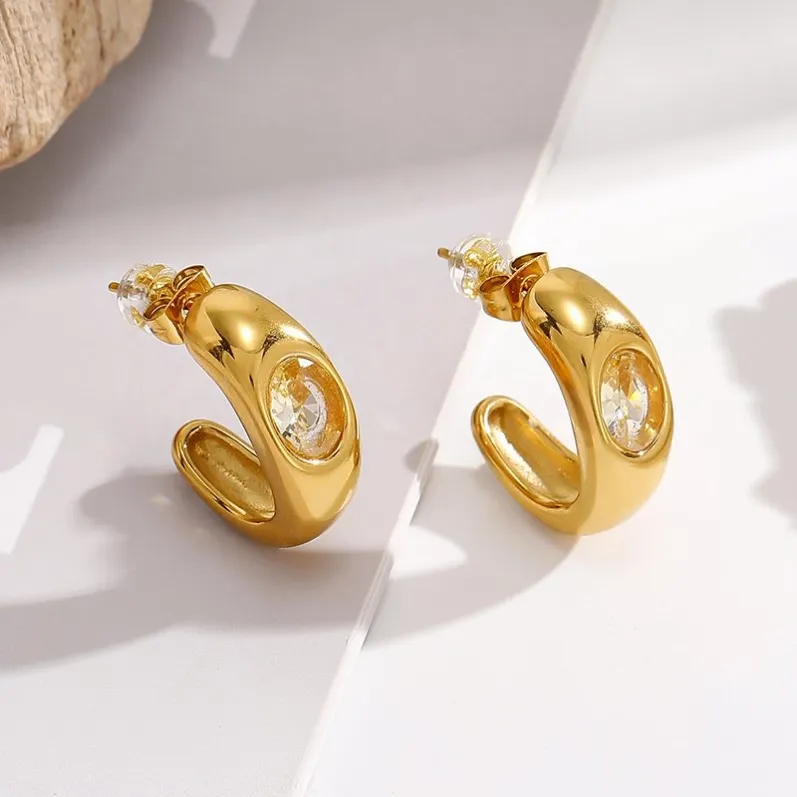
Cast and stamped jewelry are not better and worse versions of each other — they are two different manufacturing philosophies, and choosing between them is really choosing what kind of design you want to sell.
Buyers comparing catalogs will notice two seemingly similar pendants made in entirely different ways — priced and weighted differently because of it. Understanding the cast-versus-stamped split helps you read quotes, spot quality issues in samples, and match each design to the right process. This guide walks through both.
Two Philosophies: Adding Shape vs Pressing Shape
Lost-wax casting starts with a model and ends with metal poured into a mold — metal added into a negative space, so the piece takes nearly any three-dimensional form. Stamping starts with flat sheet cut and pressed between hardened dies — metal displaced, never added, limited to what a press can push out of a sheet.
That difference drives everything else. Casting buys design freedom at the cost of finishing labor; stamping buys consistency and speed at the cost of depth, with tooling upfront. Neither is "premium" — a cheap casting can be worse than an excellent stamping, and vice versa.
Casting adds metal into a mold; stamping presses shape out of sheet — every cost, quality and design difference downstream follows from that one distinction.
Lost-Wax Casting Explained
The classic route is lost-wax casting. A wax model is injected into a rubber or steel master mold, or 3D printed for prototypes. Multiple waxes are assembled onto a central sprue to form a "tree," enclosed in a plaster-like investment, and heated until the wax burns away, leaving a cavity shaped exactly like the jewelry. Molten metal — including stainless steel — is poured or drawn in, often under vacuum or centrifugal force, then cut from the tree for finishing.
Casting's strength is geometry: sculptural depth, curves, undercuts and relief no press can reproduce. Its costs live elsewhere: metal is used less efficiently, every piece needs individual finishing, and the process risks porosity — tiny voids from gas or shrinkage during the pour. For how the stages fit together, see our guide to how stainless steel jewelry is made, step by step.
Casting's advantage is geometry no press can produce; its real cost is not the metal — it is the finishing labor and the discipline needed to control porosity.
Stamping Explained
Stamping transforms sheet or strip metal with presses and dies. The sheet is blanked into the piece's outline, then run through progressive dies where each stroke forms, bends, embosses or pierces part of the design — textures, logo impressions, cut-outs and crisp relief. Because the die does the same thing on every stroke, the thousandth piece is identical to the first.
The economics differ too. Each design needs its own dies — real tooling cost upfront — but once tooling exists, production is fast and per-piece cost drops sharply at volume. The trade-off is dimensional: stamping works in what manufacturers half-jokingly call two-and-a-half dimensions. Depth is limited by sheet thickness, undercuts are impossible, forms stay fundamentally flat. Edge crispness is the process's signature — sharp geometric borders casting struggles to match.
Stamping trades design depth for near-perfect batch consistency and low unit cost at volume — its upfront dies reward brands producing a design in quantity.
Cast vs Stamped: Side-by-Side Comparison
Factor | Cast (lost-wax) | Stamped |
|---|---|---|
Design freedom | Full 3D — sculptural curves, undercuts, deep relief | 2.5D — depth limited by sheet thickness and die travel |
Edge character | Soft, organic, hand-finished feel | Crisp, sharp, geometric borders |
Batch consistency | Varies piece to piece; porosity risk | Near-identical across thousands of units |
Weight feel | Solid, heavier, more substantial | Lighter, thinner profile on the ear or neck |
Cost drivers | Metal weight plus per-piece finishing labor | Die tooling upfront, then fast press production |
Quality risk to inspect | Porosity pinholes, seam lines, incomplete fills | Burrs, rounded edges from worn dies, flatness |
Best-suited designs | Statement pendants, sculptural charms, chunky ring forms | Logo plates, tags, thin pendants, lightweight earrings |
Treat the table as a quoting aid: if a cast piece is priced like a stamped one, ask what was left out.
Match the process to the design, not the price list — sculptural forms belong to casting, and flat geometric precision belongs to stamping.
Hybrid Pieces: The Best of Both
Walk through any commercial collection and you will find pieces that are secretly both: a cast centerpiece riveted onto a stamped base, a stamped band carrying a cast charm, cast end-caps on a pressed hoop. Hybrids are normal practice, not a shortcut — most designs mix one element needing casting's freedom with another suiting stamping's economy.
Quality scrutiny shifts to the joints. Wherever a cast element meets a stamped one — solder, laser weld or rivet — that connection is the likeliest failure point. When reviewing hybrid samples, flex and inspect the joins, and ask how the components are united before committing to a bulk run.
A hybrid build is normal, not a compromise — just inspect the joints, because the connection between a cast centerpiece and a stamped base is where quality problems hide.
What to Check Before You Order
Whichever process a supplier uses, your sample review should look for process-specific tells:
- Seam lines. A visible line or residual flash on a cast piece means rushed finishing; a well-finished casting shows no trace of the mold.
- Porosity marks. Pinholes, rough patches or pitted interiors signal poor pour control — they weaken the piece and look bad after plating.
- Edge crispness. Stamped edges should be sharp and clean; rounding or burrs indicate worn dies — and burrs scratch skin.
- Plating coverage. Deep cast relief and stamped texture trap thin plating at the low points — check recesses, not just flat faces.
- Weight consistency. Casting varies more; significant weight differences between units point to inconsistent pours.
Process quality also sits on material quality: a perfect casting from a low-grade alloy still disappoints, so confirm the grade too — starting with what 316L means on jewelry stamps.
Judge cast pieces on their finishing and porosity, stamped pieces on their edges — and hybrid pieces on their joints.
Which Process Suits Your Brand Aesthetic
The process quietly shapes how a brand feels in the hand. Casting leans organic — vintage-inspired collections, celestial motifs, sculptural statement pieces, depth and hand-made silhouette. Stamping leans modern — minimalist lines, monograms and logo-driven pieces, lightweight geometry, stackability.
Most established brands run both, matching each design to its method — and a manufacturer capable in both can honestly tell you which route your sketch calls for, including where a hybrid saves money invisibly. Commissioning original designs? Our guide to how custom jewelry manufacturing works follows a design from drawing to finished sample under either process.
Let the aesthetic decide: organic and sculptural reads cast, minimal and geometric reads stamped — and strong collections usually contain both.
Frequently Asked Questions
Is cast jewelry better quality than stamped jewelry?
No — the process sets the design possibilities, not the quality ceiling. A well-made stamped piece with crisp edges can outlast a poorly finished casting full of porosity, and a masterfully cast pendant can outclass a thin stamping. Quality depends on process control and material grade; the choice should follow the design.
Why is stamped jewelry cheaper?
Once the dies exist, stamping is fast and material-efficient: sheets feed in, presses cycle, and finished blanks emerge with minimal hand work. Casting consumes wax, investment and more metal, and every piece needs individual finishing. The stamped piece's real cost is tooling upfront — which is why stamping rewards high-volume designs.
What is casting porosity and why does it matter?
Porosity describes tiny voids that form in a casting when gases escape or metal shrinks during cooling. On jewelry it appears as pinholes or rough patches, weakens thin sections, and becomes very visible after plating when recesses refuse an even finish. Consistent porosity across samples signals weak process control at the foundry.
Can stamped jewelry have three-dimensional detail?
Some — but it is constrained. Stamping presses relief into sheet, so depth is limited by sheet thickness and die travel, and true undercuts are impossible. Deeply sculptural designs usually combine a stamped base with a cast element — why so many commercial pieces are hybrids. Lightweight yet deeply three-dimensional? Check the joints.
How can I tell if a piece is cast or stamped?
Weight and edges tell most of the story. Cast pieces feel solid, with soft organic edges and occasional faint seam lines; stamped pieces are lighter with crisp, geometric borders. Backs help too — stamped backs are typically flat, while cast backs mirror the piece's texture. Deep undercuts always suggest casting.
Wholesale Stainless Steel Jewelry from IVANDA
Looking for a reliable stainless steel jewelry supplier? IVANDA supplies 316L pieces with PVD 18K gold plating - waterproof, skin-friendly and made for everyday wear. MOQ 60 pcs per style, in stock and ready to ship, with OEM/ODM services for custom designs. Message us on WhatsApp or email sales01@ivanda-fa.com for the latest catalog and wholesale prices.