Oct 26, 2026
Resin vs Glass vs Stone: Non-Metal Jewelry Compared
Resin, glass and natural stone jewelry compared: weight, durability, water behavior, care and how each non-metal material fits an everyday jewelry line.
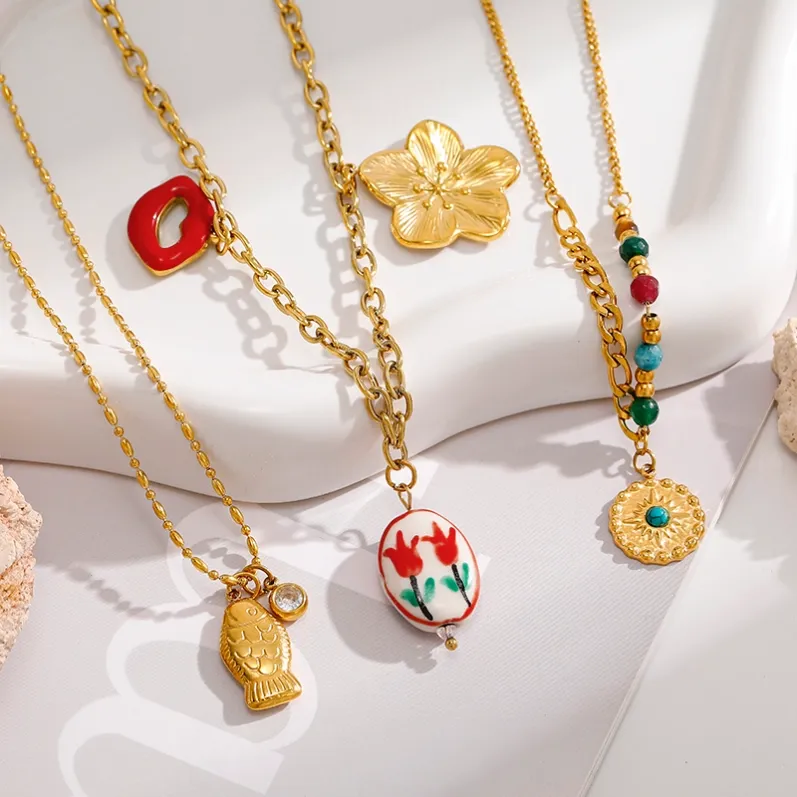
Non-metal jewelry types — resin, glass and natural stone — each solve a different problem: resin buys color freedom at the lightest weight, glass buys brilliance, and stone buys one-of-a-kind character. Knowing what each material is good at — and where it quietly fails — makes the choice easier, whether you are buying one piece or building a line.
This guide compares the three most popular non-metal jewelry materials side by side, then shows how each pairs with stainless steel.
What Counts as Non-Metal Jewelry?
Non-metal jewelry is any piece where the design element itself — the pendant, bead or hoop body — is an organic, mineral or synthetic material, usually set into or hung from a metal frame. The category is broader than it looks:
Material | What it is | Typical jewelry forms |
|---|---|---|
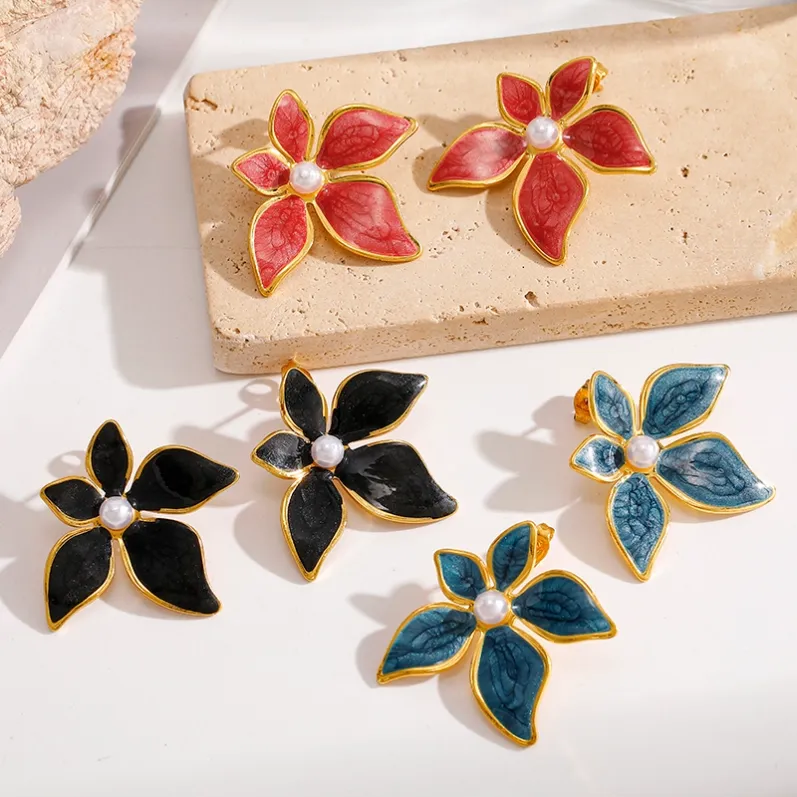
Resin | Synthetic polymer, cast in molds and cured hard | Statement earrings, bangles, beads, flower-filled pendants |
Glass | Molten silica shaped while hot, then cooled | Lampwork beads, fused pendants, crystal-style stones |
Natural stone | Real mineral, cut and polished | Beaded bracelets, cabochon rings, chip earrings |
Wood, shell, ceramic | Organic and fired materials | Lightweight hoops, inlay pendants, beads |
Resin, glass and stone dominate the non-metal category because each delivers something metal cannot copy — from candy-colored translucence to sparkle to mineral patterns that exist exactly once.
Resin Jewelry: Lightest Weight, Most Color Freedom
Resin starts as a liquid, so it can be cast into almost any shape and color — opaque, translucent, glitter-filled, or with real dried flowers suspended inside. Because it is far lighter than metal or stone, oversized earrings and chunky bangles stay comfortable all day, which is why resin owns the statement-earring category.
The trade-offs are physical. Resin scratches more easily than glass or stone — keys, sand and zipper contact leave marks over time — and some resins gradually yellow after years of strong sunlight. High heat, a hot car dashboard above all, can warp or dull the surface. Care is simple: wipe with a soft cloth, keep it away from perfume and solvents, and store it out of the sun.
Resin's superpower is shape and color at near-zero weight — its honest trade-offs are scratching, gradual yellowing over years of sun exposure and sensitivity to heat.
Glass Jewelry: Brilliance That Demands Care
Glass refracts light in a way no plastic can, so glass beads and stones read as real sparkle even in simple designs. Its surface is harder than resin, resisting scratches and keeping its polish for years. Handmade lampwork beads add another layer of appeal — each is shaped by hand over a flame, so textures and color swirls vary.
The weakness is impact. Glass does not bend or flex — a drop onto tile can chip an edge or crack the piece, and a thin glass pendant caught in a drawer is usually finished. Daily wear is realistic if the piece goes on after dressing and lives in a padded compartment between wears.
Glass wins on sparkle and surface hardness but loses to every other material on impact — one knock on a hard floor can end the piece.
Natural Stone Jewelry: Weight and One-of-a-Kind Character
Every natural stone bead or cabochon is a slice of real mineral, so veining, inclusions and color bands differ from piece to piece — collectors treat that variation as the whole point. Quartz-family stones such as agate, jasper and amethyst shrug off daily scratches, which is why stone bracelets survive years of wear.
Weight is the honest cost. Stone is the heaviest material here, and it matters most in two places: large earrings pull on earlobes, and a big stone pendant loads the chain beneath it. Porous stones such as turquoise and howlite also absorb oils, perfume and water, which can darken them permanently.
Natural stone offers patterns and durability that no machine can duplicate — at the cost of real weight and from-stone-to-stone variation that buyers must expect.
Side-by-Side Comparison
Property | Resin | Glass | Natural stone |
|---|---|---|---|
Weight | Lightest | Moderate | Heaviest |
Impact resistance | High — it flexes | Low — chips or shatters | Moderate to high, varies by stone |
Scratch resistance | Low | High | High for quartz family, variable overall |
Water | Fine, but dry after | Fine | Porous types absorb and stain |
Sun and heat | Can yellow and dull over years | Stable | Stable |
Consistency | Highly repeatable | Near-repeatable | Every piece unique |
Everyday care | Soft-cloth wipe, avoid solvents | Padded, separate storage | Avoid perfume contact, gentle wipe |
No single material wins every row — resin leads on comfort and color, glass on surface quality, and stone on character and long-term toughness.
Pairing Non-Metal Materials With Stainless Steel
In practice, resin, glass and stone rarely float alone — they sit in a bezel, hang from a chain, or connect through ear wires, and that frame often decides the piece's lifespan. A frame in 316L stainless steel does not rust, discolor or stain, and holds its polish while the insert does the talking. Our guide to jewelry materials that don't tarnish explains why 316L outlasts them.
For warm-colored designs, PVD 18K gold plated frames pair especially well with resin and stone — with one honest caveat. The plating is bonded for years of wear, not immortal: friction concentrates at spots like the bail and clasp, and those areas gradually dull over the years. Rinsing off chlorine and salt, drying and separate storage all extend the finish's life. Structurally, a heavy stone pendant also needs a chain that will not stretch — the necklace chain types guide covers which link styles carry weight best.
The metal frame around a non-metal piece often outlives or dooms it — 316L stainless steel is the frame material that keeps resin, glass and stone designs wearable for years.
Frequently Asked Questions
Is resin jewelry durable enough for everyday wear?
Yes, with realistic expectations. Resin flexes on impact, so it survives drops that would crack glass, and it is comfortable enough for all-day statement pieces. The enemies are scratches, strong sunlight over years and heat, so wipe it with a soft cloth, apply perfume before dressing, and keep it out of hot cars. With those habits, resin lasts for years.
Does glass jewelry break easily in daily use?
Not through normal handling — glass is harder than resin and shrugs off everyday contact. The risk is impact: a drop onto tile can chip an edge or crack the piece. Wear it after dressing, store it in a padded compartment away from other jewelry, and wipe it with a soft cloth to keep the surface bright.
Why does natural stone jewelry look different from the photos?
Because every stone is real mineral, cut from a different section of a different rock. Veining, inclusions and color bands vary piece to piece, and that variation is a feature, not a defect. If you need matching sets, order from the same production batch, and treat small differences as proof the stones are genuine.
Which non-metal jewelry is best for sensitive skin?
Skin reactions usually come from the metal parts that touch skin all day — ear wires, chains and clasps — rather than the resin, glass or stone itself. Choose frames and findings made of 316L stainless steel, which is skin-friendly and does not discolor, and let the non-metal body be the decorative part that never touches skin.
Can I shower with resin, glass or stone jewelry?
Resin and glass handle water, but soap film dulls both, so rinse and dry them if they get wet. Porous stones are the exception — they absorb water, oils and perfume, which can stain them permanently, so remove those first. If the frame is 316L stainless steel it will not rust, but drying the piece keeps it looking new.
Quick rule of thumb: resin forgives drops but not sun, glass forgives scratches but not floors, and stone forgives years but not perfume.
Wholesale Stainless Steel Jewelry from IVANDA
Looking for a reliable stainless steel jewelry supplier? IVANDA supplies 316L pieces with PVD 18K gold plating - waterproof, skin-friendly and made for everyday wear. MOQ 60 pcs per style, in stock and ready to ship, with OEM/ODM services for custom designs. Message us on WhatsApp or email sales01@ivanda-fa.com for the latest catalog and wholesale prices.