Oct 31, 2026
Stainless Steel Earrings for Healing Piercings Guide
New piercing? Learn how to choose stainless steel earrings for healing piercings, when to change earrings, and how to clean them safely during healing.
A healing piercing is a small open channel in your skin, and the earring sitting in it becomes part of the healing environment — so the metal, the design and the backing you choose during the first months matter more than at any other point in the life of the piercing.
Whether you just got your ears pierced or are planning to, this guide covers how to pick earrings that cooperate with healing, how to clean them, and when you are ready for the first swap.
Why Jewelry Choice Matters While a Piercing Heals
Your starter earring stays in place around the clock, so its surface, weight and shape are in constant contact with tender, forming tissue.
When a piercer creates a new piercing, your body builds tissue through the channel around the jewelry. That takes time: earlobes are often considered settled after a couple of months, cartilage can take the better part of a year, and timelines vary — so your piercer's advice outranks anything you read online, including this guide.
Two habits matter as much as the metal: leave the starter jewelry in until your piercer confirms the channel is healed, and keep your hands off — every twist or test-pull adds friction a healing piercing does not need.
What Makes a Good Earring for a Healing Piercing
Look for smooth, lightweight, corrosion-resistant designs with a low-profile back — every feature that reduces friction and snagging gives the tissue a calmer place to heal.
Feature | Why it helps during healing |
|---|---|
Smooth, polished surface | Less friction inside the channel, fewer spots for residue to collect |
Corrosion-resistant metal | Sweat, saline and humidity will not pit or roughen the surface |
Lightweight design | Less pull on swollen, tender tissue |
Low-profile back | Nothing pressing into the ear while you sleep |
Secure closure | The earring stays put even when brushed by hair or clothing |
Run a fingertip along the post and back before wearing anything new — you should feel nothing but smooth metal. Rough edges, bent posts and loose backs are the most common culprits behind an irritated piercing.
Why Stainless Steel Is a Popular Choice
The 316L grade widely used in jewelry is popular for healing ears because it resists corrosion, holds a smooth polish, and shrugs off the water, sweat and saline that define piercing aftercare.
316L stainless steel is an alloy built to resist rust and pitting — useful when your aftercare routine involves saline spray and regular washing. The surface stays smooth instead of flaking or darkening, and even thin posts keep their shape instead of bending out of alignment.
Material choice for a fresh piercing is a conversation for your piercer, not a decision to make from an article. Many studios fit initial jewelry in specific grades of steel or titanium — follow their recommendation first, then judge every later pair on smoothness and solid construction. If your ears tend to be picky about jewelry in general, our guide to earrings for sensitive ears breaks down what to check before you buy.
Backs and Styles That Cooperate With Healing
Choose simple studs with secure, flat backs for the healing phase, and save heavier hoops and dangling designs for after your piercer gives the all-clear.
Studs sit close to the ear and rarely catch on hair, towels or sweater collars, unlike hoops or drops. The backing matters as much as the front: it should grip firmly so the earring cannot slide out, and sit flat so nothing presses into the piercing during sleep.
Our overview of earring back types compares butterfly backs, flat discs, screw-style backs and safety backs, including which ones suit sleeping and daily wear. During healing, the rule is simple: the smoother the earring, front and back, the better.
A Cleaning Routine You Will Actually Follow
Clean the piercing and the earring together: saline for the piercing, mild soap and water for the jewelry, and a clean, dry finish for both.
Most piercers hand you written aftercare instructions — theirs come first. A typical routine:
- Wash your hands before touching your ears, every time
- Rinse the front and back of the piercing with sterile saline
- Wash the earring gently with mild soap and lukewarm water, then rinse well
- Pat dry with a clean paper towel, not a shared one
Skip alcohol and hydrogen peroxide unless your piercer says otherwise; harsh solutions can dry the surrounding skin. If a stainless steel earring later looks dull from soap film or hard water, our guide to cleaning tarnished stainless steel jewelry covers safe ways to restore the shine.
When Can You Change Your Earrings?
Change earrings only once the piercing is fully settled — no tenderness, no swelling, no discharge — and let a piercer handle the very first swap if you can.
Many earlobes are ready for a change within a few months; cartilage often needs longer. Watch for the signs rather than the calendar: the piercing feels comfortable when the earring moves gently, the surrounding skin looks calm, and there is no crusting beyond what your piercer called normal.
For the first swap, pick a simple, well-made stud in a corrosion-resistant metal. A piercer can confirm the channel is ready, insert the new earring without trauma, and catch early problems you might miss.
What About Plated Earrings During Healing?
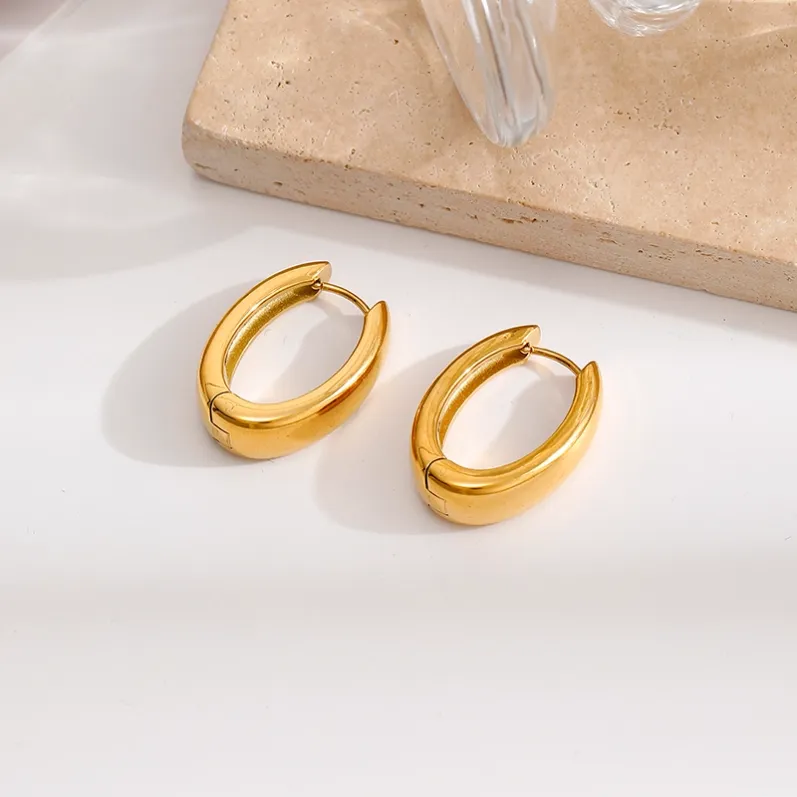
Keep PVD 18K gold plated styles for healed piercings — and know that, like every plating, the finish can gradually dull after years of daily wear, especially where the back rubs against the post.
Fresh piercings do best in plain, unplated metal: there is no coating to think about and cleaning stays simple. Once your piercing is fully healed, PVD 18K gold plated stainless steel gives you the warm gold look over the same easy-care base metal.
Be realistic about plated finishes: PVD bonds strongly and handles daily wear well, but no plating is permanent. After years of daily use, contact points can show gradual fading or fine wear marks. Rotating between pairs and storing pieces separately slows that down.
Frequently Asked Questions
Quick answers to what people ask most about earrings for healing piercings.
Can I wear stainless steel earrings in a new piercing?
Many people do, and 316L stainless steel is widely used in body jewelry because it resists corrosion and stays smooth. Still, the right material for your fresh piercing depends on your skin and your studio's practice — treat your piercer's recommendation as the final word, and choose simple, well-polished designs during healing.
How do I know when my piercing is ready for a change?
Look for a calm, settled piercing: no tenderness when the earring moves gently, no redness or swelling, and no crusting beyond what your piercer described as normal. Earlobes often reach this point within a few months; cartilage can take far longer. When in doubt, ask your piercer before swapping anything.
Why does my healing piercing feel sore some days?
Mild, occasional soreness is common in the early weeks, especially after sleeping on the ear or catching it on clothing. Persistent pain, growing swelling, heat, or fluid that smells or changes color are not normal — see your piercer or a healthcare professional promptly instead of waiting it out.
Can I shower and wash my hair normally during healing?
Usually yes — brief contact with running water is generally fine, and your piercer's instructions take priority. What matters more is what touches the piercing afterward: rinse the area with clean water or saline, pat dry with a clean paper towel, and avoid letting harsh products sit on fresh tissue.
Are hoops okay for healing piercings?
Most piercers prefer studs for the healing phase, since hoops have more surface moving inside the channel and catch on hair and clothing more easily. Some studios do fit small, smooth hoops in certain piercings from day one. Follow your studio's lead, and wait for the all-clear before making hoops your everyday style.
Wholesale Stainless Steel Jewelry from IVANDA
Looking for a reliable stainless steel jewelry supplier? IVANDA supplies 316L pieces with PVD 18K gold plating - waterproof, skin-friendly and made for everyday wear. MOQ 60 pcs per style, in stock and ready to ship, with OEM/ODM services for custom designs. Message us on WhatsApp or email sales01@ivanda-fa.com for the latest catalog and wholesale prices.