Oct 26, 2026
The Complete Guide to Stainless Steel Anklet Styles
Every stainless steel anklet style explained: chain, charm, beaded and layered designs, plus sizing and care tips for retail buyers.
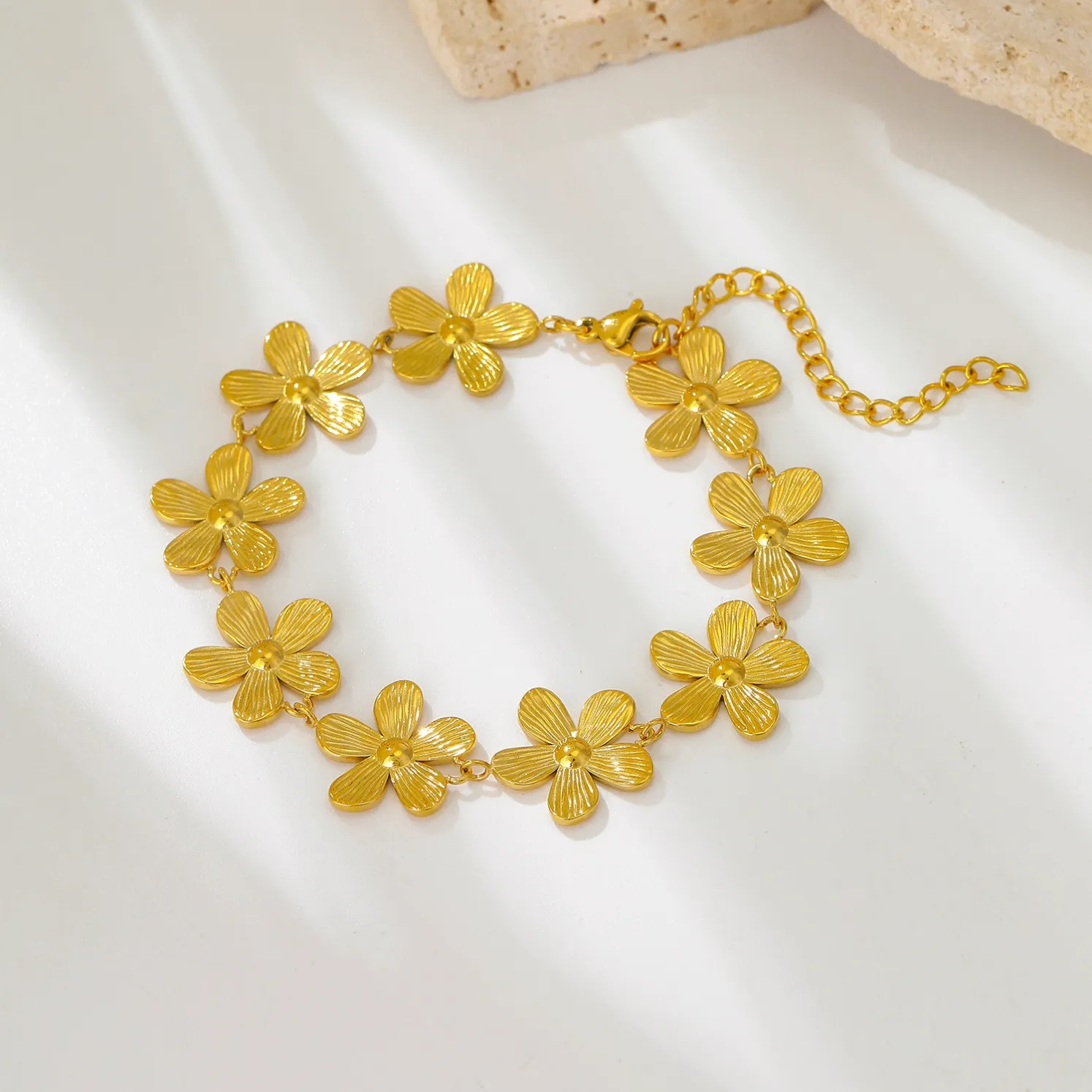
An anklet lives in the harshest conditions of any jewelry category — sweat, shoe friction, sand and water — which is exactly why the styles that last are built on stainless steel.
This guide walks through the full range of stainless steel anklet styles — chain constructions, charm and beaded designs, layered pieces and gold tone options — and closes with sizing and care basics that prevent most customer complaints.
Why Anklets Reward Good Material
The ankle is the toughest wear site a piece of jewelry can be asked to survive, so material comes before style in this category.
An anklet rubs against shoes and socks, sits inside sweat for hours, meets sand at the beach, and taps against furniture all day. Soft alloys scratch, plated brass loses its finish at friction points within a season, and thin base metals pit in humid climates. Stainless steel — 316L in particular — shrugs off all four stresses, which is why it is the default material here. Every style in this guide inherits that durability.
Sizing Before Style
Most anklet fit problems disappear when you size for drape rather than tightness — an anklet should hang, not grip.
Length | Fit and drape | Best for |
|---|---|---|
8 in | Snug, resting on the ankle bone | Slim ankles, minimal movement |
9 in | Standard — light drape below the bone | Most customers; the default stock size |
10 in | Relaxed drape toward the foot | Charm anklets, layered pairs |
9 in with extender chain | Adjustable across preferences | Retail stock — one size serves more fits |
Because ankles vary more than wrists, a piece that adjusts from 9 to 11 inches covers most customers with a single design. Our stainless steel anklets buying guide goes deeper on fit, clasps and stock planning.
Chain Construction Styles
Chain anklets are the backbone of the category, and the chain construction decides both the look and how the piece survives friction.
Style | Look | Behavior on the ankle |
|---|---|---|
Cable | Simple uniform oval links | Classic and low profile; very durable |
Rope | Twisted spiral texture | Catches light; texture hides small scratches |
Cuban (curb) | Flattened interlocking links | Sits flat with a bold, substantial look |
Figaro | Alternating long and short links | Visual rhythm; reads as a designed piece |
Box | Square links forming a crisp line | Sleek and modern; glides over hosiery |
Paperclip | Elongated rectangular links | Light, airy, contemporary look |
For daily wear, cable and rope are the workhorses: no snag points, no flat faces to scratch. Cuban and Figaro carry more visual weight, and paperclip anklets have become a staple of the modern look that layers with almost anything.
Charm and Pendant Anklets
Charms turn an anklet into a storytelling piece, and the charm's drop length decides whether it swings free or rests against the foot.
Popular charm directions include travel symbols — shells, waves, compasses — plus celestial motifs, initials and small symbolic pendants. Two practical notes matter for buyers. A charm adds drop length, so an 8.5–9 inch chain with a charm drapes like a longer anklet; order accordingly. And check the connections: soldered jump rings survive ankle motion far better than open ones, since the ankle works every link thousands of times a day.
Beaded and Stone-Set Anklets
Beaded anklets trade delicacy for presence, and the stringing method is the real durability question.
The most durable construction is all-metal: stainless steel ball chains or solid beads linked with steel connectors, which behave like any other chain anklet. Stone-set line anklets — a row of small cubic zirconia along a 316L base — deliver fine-piece sparkle while surviving water exposure that ruins foil-backed imitations. Approach stretch cord carefully: elastic degrades fastest in exactly the conditions an anklet lives in, which makes it the category's most common breakage complaint.
Layered and Double-Row Anklets
Layered anklets pre-package the stacked look with fixed spacing that cannot tangle — which removes the sizing guesswork of stacking two separate pieces.
The common form is a double-row anklet: two chains of different lengths sharing one clasp, often a rope over a cable or a paperclip over a fine chain. Wrap styles — a long chain looping twice around the ankle — create similar depth with a single line. For retail they are practical: the customer gets the styled look without choosing two compatible lengths, and the fixed spacing never knots.
Gold Tone Anklets: What to Know
Gold tone anklets sell on warmth of color, and the plating process decides how long that warmth survives ankle conditions.
Gold tone pieces here use a PVD 18K gold plated finish over 316L. PVD bonds the color at the molecular level rather than sitting as a surface layer, which matters at the ankle — shoes and sand abrade finishes faster than any other wear site. The honest limit deserves stating too: even a well-bonded PVD 18K gold plated finish is not permanent, and after years of daily wear, high-friction points such as clasp edges and charm bails can lighten slightly. Our guide to PVD coating science for jewelry explains the process. After sea or pool water, a fresh-water rinse keeps both steel and finish at their best.
Choosing Styles for Your Assortment
A balanced anklet wall covers three jobs: a classic chain for daily wear, a charm or beaded piece for gifting, and a gold tone option for occasion dressing.
Stock the 9 inch size with an extender as the default, keep chain styles in both steel and gold tone versions, and rotate charm themes seasonally — beach motifs for summer, celestial and initial charms through the holidays. Because stainless steel resists water and sweat, these pieces carry into autumn and winter as sock-boot layering pieces, keeping the category alive beyond beach season.
Care Basics That Prevent Complaints
Care instructions for anklets are simple: rinse, dry, store separate — and repeat after every beach day.
The 316L base handles water exposure without corroding, so the routine is lighter than for most jewelry categories. Rinse after swimming, pat dry, and store away from other jewelry so chains do not knot. If a piece comes back looking dull, the fix is usually surface grime, and the routine in our guide to cleaning tarnished stainless steel jewelry restores the shine in minutes.
Frequently Asked Questions
Short answers sized for product pages and customer service replies.
What is the standard anklet length?
Nine inches is the standard stock length, because it lets the chain drape just below the ankle bone on most people instead of gripping the ankle. Buyers usually pair it with a one or two inch extender so a single design covers a wider range of ankles. Charm anklets often work best half an inch shorter, since the charm itself adds drop length.
Can you wear a stainless steel anklet in the ocean?
Yes, with a rinse afterwards. A 316L base resists salt water, so a swim will not corrode the metal. The good habit is a fresh-water rinse and a dry after the beach, which removes salt and sand residue and keeps the finish bright for the long term. Sand settled inside chain links is worth rinsing out too.
What is the difference between an anklet and a bracelet?
Length and drape. Bracelets run about 6.5 to 7.5 inches and fit the wrist fairly closely, while anklets run 8 to 10 inches and are designed to hang loosely below the ankle bone. The clasp matters as well: anklets need secure lobster or spring-ring clasps, because the ankle moves thousands of times a day and puts far more work on the connection.
How can I tell if an anklet is real stainless steel?
Look for the stamp first — 316L markings on the clasp or end link are the standard signal in this category. Then ask the seller for the alloy composition in writing; a serious supplier provides it without hesitation. A magnet offers a rough filter only, since some genuine grades react weakly after bending. Weight helps too: genuine steel anklets feel denser than plated alloy imitations.
Wholesale Stainless Steel Jewelry from IVANDA
Looking for a reliable stainless steel jewelry supplier? IVANDA supplies 316L pieces with PVD 18K gold plating - waterproof, skin-friendly and made for everyday wear. MOQ 60 pcs per style, in stock and ready to ship, with OEM/ODM services for custom designs. Message us on WhatsApp or email sales01@ivanda-fa.com for the latest catalog and wholesale prices.