Oct 19, 2026
Stainless Steel Jewelry Finishes: Polished to Hammered
Polished, matte, brushed and hammered stainless steel jewelry finishes compared: how each is made, how it reflects light, and which hides daily wear best.
A finish is not a color — it is the combination of surface texture and light behavior that decides whether a piece reads dressy, casual, vintage or architectural before anyone notices the metal itself.
Two rings can leave the same factory, made from the same 316L steel, on the same day — and look like they belong to different price tiers. The difference is the finish. This guide is the full map of stainless steel jewelry finishes: what each of the four main ones is, how it treats light, how it scratches, how it ages over years of wear, and how to combine several of them in one stack. If you only ever wanted the matte-versus-polished argument settled, we cover that head-to-head in a dedicated comparison; here, the whole spectrum gets its turn.
What a Finish Actually Is: Texture Plus Light
Every finish is two decisions stacked together. The first is texture: is the surface mirror-flat, micro-rough, grooved in one direction, or full of facets? The second is what that texture does to light: reflect it sharply, scatter it softly, send it back as a directional glow, or break it into hundreds of tiny glints.
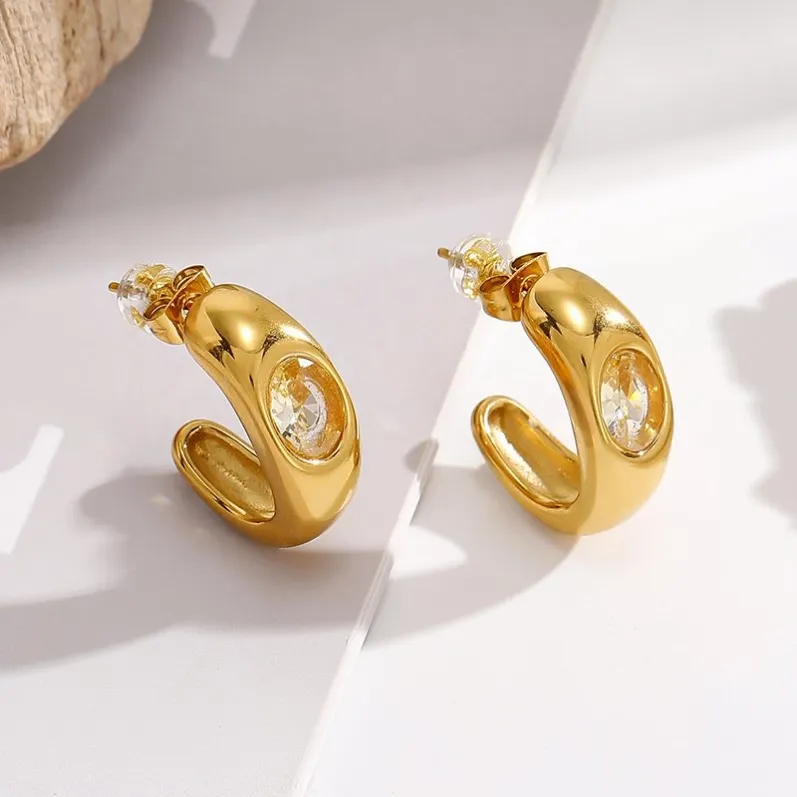
- High polished — flat surface, sharp mirror reflection
- Matte — level surface, light scattered evenly, no reflection at all
- Brushed — parallel micro-grooves, a satin sheen that shifts with the viewing angle
- Hammered — irregular facets, light scattered into moving sparkles
Two pieces of identical 316L steel can look like entirely different products purely because their surfaces answer the light differently.
The Four Main Stainless Steel Jewelry Finishes
Finish | How it's made | Light behavior | Scratch visibility | Fingerprints | Pairs well with |
|---|---|---|---|---|---|
High polished | Progressive buffing through finer and finer compounds | Mirror reflections, maximum shine | Fine hairline marks show early | Visible on wide flat areas | Formal looks, statement pieces, stone settings |
Matte | Fine blasting or abrasive finishing that levels the surface | Soft, even, reflection-free | New marks blend in; high-rub zones lighten slowly | Highly resistant to visible smudges | Minimalist, everyday, quiet-luxury styling |
Brushed | Belt or pad passes in a single consistent direction | Linear satin glow that moves as the piece turns | New marks hide along the existing grain | Moderate | Casual, architectural, utilitarian styling |
Hammered | Peening the surface with rounded tools, one facet at a time | Dozens of facets scatter light into sparkles | Facets and shadow lines swallow new micro-marks | Low | Artisan, organic, vintage-inspired designs |
One clarification belongs beside this table, because it causes the most confusion in the category: polished and matte are not opposites in quality — they are opposites in light behavior, and both are legitimate everyday choices. Choosing between those two specifically is its own decision, so we compare matte vs polished stainless steel in full elsewhere. This guide keeps the entire spectrum in view.
The finish table is really a light table: pick the light behavior you want to wear first, and the texture — plus the maintenance that comes with it — follows naturally.
PVD 18K Gold Plated Steel: The Layer That Works With Every Finish
A common misconception treats plating as a competing finish. It is a layer applied on top of one. PVD 18K gold plated stainless steel starts with a base texture — polished, matte, brushed or hammered — and bonds the warm-tone layer over it, so the same color exists in four different light behaviors.
- PVD over polished reads bright and dressy
- PVD over matte reads soft and contemporary
- PVD over brushed reads warm, with a subtle directional grain
- PVD over hammered reads rich, with facets catching the tone at different depths
One honesty note applies across all four: PVD is a bonded surface layer, and years of abrasion — rings against rails, bangles against desks — gradually thin any plating. Choosing a textured base does not repeal that physics; it only changes where the wear shows first. No jewelry is indestructible, and plated pieces deserve to be described as what they are: the warm tone delivered on the most practical jewelry material there is.
Plating is a color decision made on top of a texture decision — settle the texture first, then choose how the light warms up.
How Each Finish Ages Over the Years
Finishes do not just look different when new; they age in four different directions.
Finish | Year one | After years of wear | Can it be restored? |
|---|---|---|---|
High polished | Mirror bright | Fine hairlines soften the reflection into a subtle haze | Yes — fully, at home |
Matte | Even and soft | High-rub zones burnish to a semi-shine | Partly — re-finishing evens it out |
Brushed | Crisp linear grain | Grain flattens where skin and clothing rub most | Yes — re-brushing along the original direction |
Hammered | Faceted sparkle | Facets keep their geometry; the sparkle barely changes | Rarely needed — the texture outlasts the wear |
The polished row deserves one extra detail: because steel's brightness is the material itself rather than a coating, a dulled polished piece is not damaged, just tired. A proper buffing session brings it back to near-factory shine — the full method is in our guide to polishing stainless steel to a mirror finish.
The more texture a finish carries, the less its aging shows — but only polished steel can be returned to factory-bright at the kitchen table.
Mixing Finishes in One Stack
Finishes mix the way metal tones mix: through contrast and a bridge. The logic that makes mixed-tone stacks work applies directly here.
- Anchor with one polished piece. A single reflective piece gives the eye a focal point; five polished pieces together read noisy.
- Fill with texture. Matte and brushed pieces are the neutrals of stacking — they add width and rhythm without competing for light.
- Use hammered as the accent. Faceted pieces behave like textured stones: one per stack is usually enough.
- Match finish families across tones. A brushed silver-look piece and a brushed PVD 18K gold plated piece sit together naturally, because matching texture lets different tones harmonize — the same principle stylists apply when mixing gold and silver jewelry.
One polished anchor, textured fillers, a single hammered accent — that formula makes any finish mix look intentional rather than accidental.
Which Finish Hides Daily Wear Best
Ranked by how long a finish keeps looking intentional under daily wear, textured surfaces win outright:
- Hammered — its facets are geometry, not smoothness, so micro-scratches disappear into existing shadow lines
- Brushed — new marks along the grain join a pattern that already expects them
- Matte — resists visible marks well, though high-rub zones eventually burnish
- High polished — shows hairlines first, but is also the only finish you can fully restore yourself in minutes
The practical translation: hands-on days and constant-wear pieces favor hammered and brushed. Polished suits pieces worn for evenings and occasions, or wearers who genuinely enjoy a thirty-second cloth ritual. No jewelry is immune to wear — the choice is simply which finish makes the years look deliberate.
If you never want to think about maintenance, choose hammered or brushed; if you love maximum shine and do not mind a cloth, polished rewards the small effort.
Frequently Asked Questions
Which stainless steel jewelry finish is the most durable?
The steel underneath is identical, so durability is really about how wear shows. Hammered and brushed surfaces disguise marks for years; polished shows fine scratches first but restores completely with a cloth and a little compound. Matte sits in between: hard to scratch visibly, but high-rub zones slowly develop a sheen that needs re-finishing to look even again.
Can a matte finish be turned back into polished?
Yes. Matte is created by micro-roughening a smooth surface, and removing that roughness restores reflectivity — progressively finer abrasives followed by buffing take a matte piece all the way back to a mirror. The reverse is equally true: any polished piece can be given a matte treatment. The steel itself does not care which direction you convert it.
Does the finish affect whether jewelry can get wet?
No. Water behavior comes from the alloy, not the surface treatment. A 316L stainless steel piece resists rust and tarnish in polished, matte, brushed and hammered form alike, and the same applies with PVD 18K gold plating bonded on top. Finish affects how light behaves and how wear shows — never whether the piece survives a shower or the sea.
Are matte and brushed the same thing?
They are related but not identical. Both move a surface away from mirror gloss, but brushed is directional: parallel grooves create a sheen that shifts as the piece turns. Matte scatters light evenly in every direction, with no grain and no movement. Run a finger along a brushed surface and you can feel the lay; a matte surface feels uniformly soft.
Which finish should a first everyday piece have?
Choose brushed or hammered if low maintenance is the priority — they keep looking intentional through years of constant wear with no ritual at all. Choose polished if shine is the point and an occasional cloth wipe sounds fine rather than annoying. Matte suits wearers who want quiet presence without any reflection competing with the design.
Wholesale Stainless Steel Jewelry from IVANDA
Looking for a reliable stainless steel jewelry supplier? IVANDA supplies 316L pieces with PVD 18K gold plating - waterproof, skin-friendly and made for everyday wear. MOQ 60 pcs per style, in stock and ready to ship, with OEM/ODM services for custom designs. Message us on WhatsApp or email sales01@ivanda-fa.com for the latest catalog and wholesale prices.Wondering how far the everyday promise goes? It even covers the hours you are asleep - sleeping with stainless steel jewelry is one of the habits steel makes completely effortless.