Oct 23, 2026
The Complete Guide to Stainless Steel Hoop Earrings
Stainless steel hoop earrings explained: sizes, styles, closures, finishes and care — plus honest notes on how PVD 18K gold plated hoops wear over years.
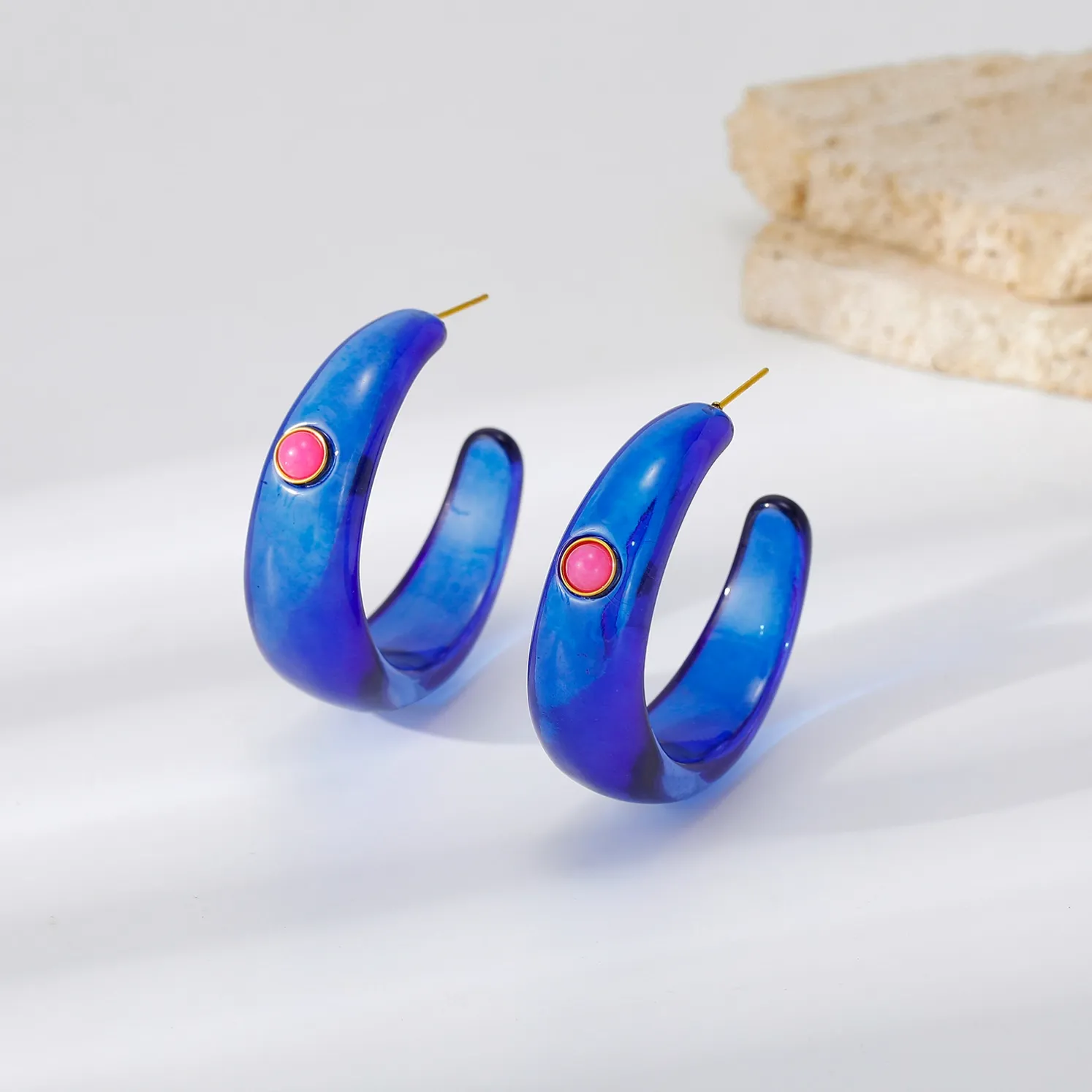
Hoop earrings take more daily abuse than any other style — hair, scarves, collars, phone screens, pillowcases — and 316L stainless steel is the material best built to absorb it. That combination of the most-worn earring shape and the most forgiving metal explains why steel hoops keep topping bestseller lists season after season.
This guide covers everything worth knowing before buying or stocking steel hoops: how sizes actually read on the ear, which styles carry demand, what a PVD 18K gold plated finish honestly delivers, why the closure matters more than expected, and how to keep a pair bright for years.
Why Stainless Steel Suits Hoops So Well
Hoops are the highest-friction earring in any collection, which makes the material decision matter more here than it does for studs or drops.
A stud sits still; a hoop moves constantly — brushing hair every time the wearer tucks it behind an ear, scraping collars and headphone arms, pressing into a pillow at night. Base metals with thin plating lose that fight within months, revealing dull, discoloring metal underneath exactly where everyone can see. 316L stainless steel, by contrast, resists tarnish and rust through showers, sweat and humidity, so the visible surface stays consistent for years. Warm gold tones come from a PVD 18K gold plated finish — a dense vapor-deposited layer that outlasts classic electroplating many times over. The honest limit appears after years of near-daily wear: the points of greatest friction can soften or dull before the rest of the hoop. Because the steel underneath is unchanged, the pair remains wearable — but "the finish never fades" is a promise no honest seller makes.
Hoop Sizes: From Huggies to Statement
Size is the single biggest driver of how a hoop reads — the same design in 12 mm and in 60 mm looks like two different products.
Size | Typical diameter | How it reads | Best for |
|---|---|---|---|
Huggie | 8–12 mm | Snug against the lobe | Work, sleepers, second piercings |
Small | 12–20 mm | Neat, close to the face | Everyday and office wear |
Medium | 20–40 mm | The classic hoop silhouette | Day-to-evening versatility |
Large | 40–60 mm | Face-framing statement | Evenings and bold styling |
Oversize | 60 mm and up | Dramatic fashion piece | Editorial and occasion looks |
Two buying notes. First, diameter is measured across the hoop's widest point, and a few millimeters changes the look noticeably. Second, size drives weight: large hoops in thick, solid tube can grow tiring, which is why many large designs use thinner gauge or hollow tube.
The Main Hoop Styles
Most hoop demand falls into six recognizable styles; a range covering all six answers nearly every customer brief.
Style | Description | Suits |
|---|---|---|
Classic round tube | A clean, polished circle | Everyone — the core style |
Huggie | Small, thick, hugging the lobe | Minimalists; stacked piercings |
Twist or rope | Twisted surface that catches light | Texture lovers |
Flat and wide | Ribbon-like front face | Modern, architectural looks |
Textured or hammered | Organic, uneven surface | Boho and artisan styling |
Geometric | Squares, ovals, hexagons | Statement dressers |
Classic rounds and huggies carry the volume in most stores; the other four justify stronger positioning through design detail rather than material cost.
Finishes: Steel Tone and PVD 18K Gold Plated
Two finishes cover most demand — polished steel tone and PVD 18K gold plated — and the honest difference between PVD and old-style plating is worth explaining to every customer.
Physical vapor deposition bonds the gold-tone layer to the steel in a vacuum chamber, producing a finish far harder and more even than conventional electroplating. It resists water, sweat and the friction that kills plating on base metals. Still, honesty sells better over time: hoops are among the most abraded pieces in jewelry, and after several years of near-daily wear the plating at contact points — where hair brushes the metal, where the hoop passes the collar — can lose some luster before the rest. Customers told this at purchase come back for a second pair; customers promised permanence come back for a refund.
Closures: The Detail Everyone Ignores
The closure decides whether a hoop is easy to put on, stays shut through a workday and survives years of opening and closing.
Three mechanisms dominate. Hinged snap closures — standard on huggies and clickers — swing open and shut with a click; they are the most secure and the most convenient. Latch-back hoops fold a wire post into a closed loop; sturdy, though slightly slower to fasten. Endless hoops thread a thin post through the lobe into the other side of the tube; the look is seamless, but the thin post bends more easily. A quick quality check works for all three: the closure should close with a firm, immediate click and show no sideways play. Our full earring back types guide covers every closure in jewelry, not just hoops.
Weight, Gauge and All-Day Comfort
Comfort failures come from two numbers — diameter and thickness — and both can be judged before buying.
A large hoop in heavy solid tube pulls on the lobe over a full day; the same diameter in a thinner or hollow tube can sit light as a feather. Huggies, despite their small size, can surprise people: the thick tube rests directly against the lobe, so new wearers may want a day of adjustment. For long-shift wearers — healthcare, hospitality, retail — the comfortable ceiling is usually small-to-medium diameters in lightweight tube. And for anyone whose ears tire of earrings quickly, our guide to earrings for sensitive ears covers the design features — smooth surfaces, light but secure closures — that make all-day hoops comfortable.
Care: Keeping Hoops Bright for Years
A two-minute care habit keeps steel hoops bright; even skipping it will not ruin them — one more reason steel wins for everyday wear.
Rinse after pool or sea days, wash occasionally with mild soap and warm water, dry with a soft cloth, and store hoops so they cannot scratch softer pieces sharing the same pouch. That is the entire routine. PVD 18K gold plated hoops follow the same care and ask for nothing more — only honesty about their years-long, gradual wear at friction points. For deeper cleaning questions, including pieces dulled by product buildup rather than material failure, our guide to cleaning tarnished stainless steel jewelry walks through the fixes step by step.
Frequently Asked Questions
Straight answers to the questions shoppers ask before choosing a hoop size and finish.
What size hoop earrings are best for everyday wear?
For most people, 12–30 mm hits the sweet spot: visible enough to read as a hoop, small enough to survive headphones, collars and sleep. Huggies suit minimalists and second piercings, medium hoops flatter nearly everyone and remain the most versatile single choice. Larger sizes work best as occasional statement pieces rather than all-day, every-day wear.
Do stainless steel hoop earrings rust in the shower?
316L stainless steel is built for exactly this kind of exposure: the chromium layer on its surface resists rust and tarnish through daily showers, sweat and humidity. Wearers can leave quality steel hoops on in the shower without harm. The habit worth keeping is simple — an occasional soap-and-water wash and a soft dry wipe keeps the surface bright for years.
Will PVD 18K gold plated hoops fade?
Not quickly — PVD is far more durable than classic plating and typically holds its tone for years of regular wear. The honest limit: hoops live in friction, brushed by hair and clothing, and after several years of near-daily wear the highest-contact areas can dull slightly. The steel beneath never discolors, so the pair stays wearable even then. Setting expectations honestly keeps customers returning.
What is the difference between huggies and small hoops?
Huggies are small hoops with a thick tube that sits snugly against the lobe, usually 8–12 mm in diameter, closed with a hinged snap. A small hoop is usually a thinner circle of 12–20 mm that hangs slightly away from the lobe. Huggies read as minimal and modern; small hoops read as classic. Many wearers keep both in rotation.
Are heavy hoops bad for your ears?
Heavy weights can stretch piercings and cause soreness over long days, especially with large diameters in thick solid tube. The fix is choosing lighter construction — thinner gauge or hollow tube — and matching size to the day's plans. For sensitive ears or long shifts, small-to-medium lightweight hoops with secure hinged closures are the comfortable choice, with a few days of adjustment for new sizes.
Wholesale Stainless Steel Jewelry from IVANDA
Looking for a reliable stainless steel jewelry supplier? IVANDA supplies 316L pieces with PVD 18K gold plating - waterproof, skin-friendly and made for everyday wear. MOQ 60 pcs per style, in stock and ready to ship, with OEM/ODM services for custom designs. Message us on WhatsApp or email sales01@ivanda-fa.com for the latest catalog and wholesale prices.